Original source: Ride-Along Sessions with Cookie!
This video from Ride-Along Sessions with Cookie! covered a lot of ground. 3 segments stood out as worth your time. Everything below links directly to the timestamp in the original video.
Have you ever found yourself so focused on the details of a task that you lose sight of the bigger picture? This common pitfall, highlighted in windsurfing, offers a broader lesson on the importance of vision in achieving fluid, high-performance execution in any skill.
Windsurfers Hamper Gybes by 'Gear Gazing,' Expert Warns
Many windsurfers undermine their gybing performance by focusing excessively on their equipment—their hands, feet, or rig—rather than looking towards the exit point of the turn. This tendency, dubbed "gear gazing," prevents riders from adopting the optimal body position and executing a dynamic rig flip, which are crucial for maintaining speed and control through the gybe.
The critical error of misdirected vision is particularly pronounced during the rig flip, when surfers often instinctively look down or backward. Instead, maintaining a gaze through the sail towards the desired exit point helps to naturally guide the body and rig, facilitating a smoother and more effective transition. This principle, common in many sports, emphasizes looking where one intends to go to influence movement.
"The way to change your body position, your stance, the way to get that whip and dynamic rig flip involves looking to your exit. Look where you want to go."
Marginal Wind Conditions Offer Key for Windsurfing Gybe Improvement
Windsurfing in marginal planing conditions, characterized by moderate winds between 10 to 15 knots, provides an optimal environment for refining gybing technique. While not always allowing for full planing, these conditions force windsurfers to concentrate on fundamental elements such as body movements, counter-balance, and foot positions. This focused practice in less-than-ideal wind allows for a deeper understanding and mastery of the maneuvers, which then translates into improved performance in stronger winds.
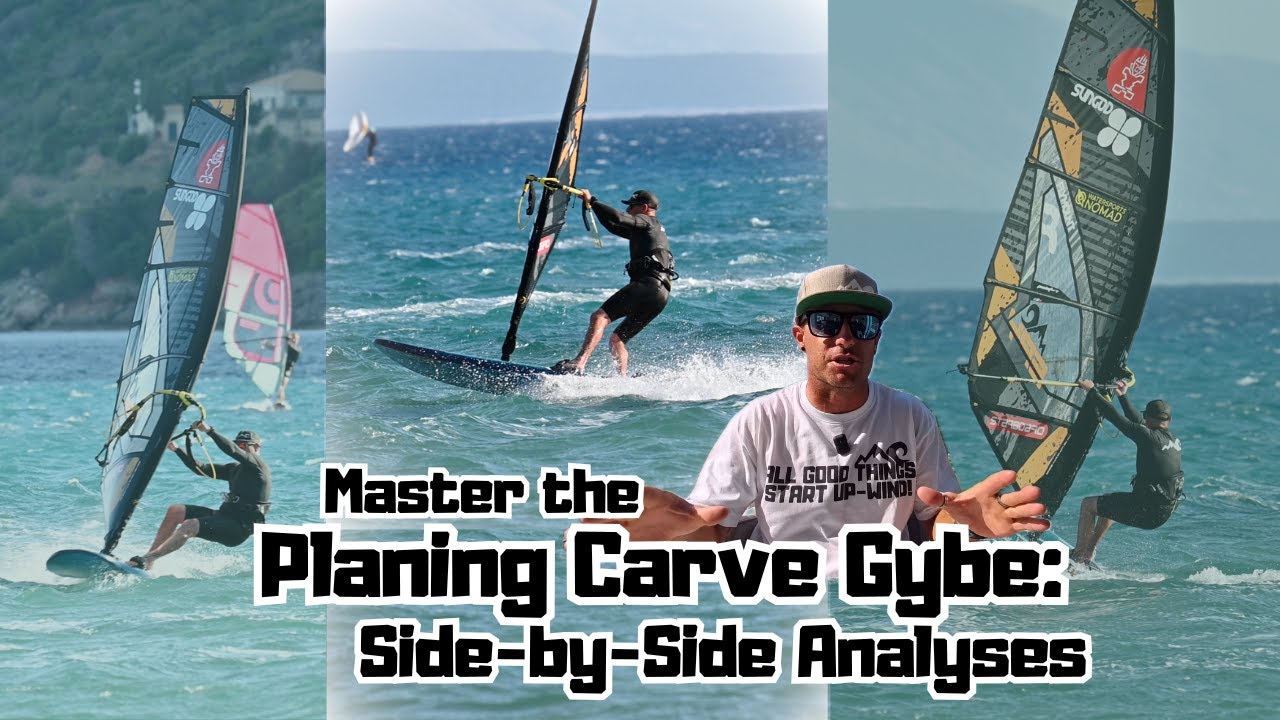
The reality is that the mechanics of a non-planing carve gybe are almost identical to those of a planing gybe. What this amounts to is that practicing in lighter winds builds a strong technical foundation that becomes almost indistinguishable from a high-speed maneuver when accelerated. This is not simply about adapting to conditions—it is about leveraging them to internalize the correct movements, enabling more effective and consistent gybes when the wind picks up.
"If you ever get the opportunity to get out in non-planing conditions, whether you're on 180 to 250 liter boards or you're on your normal kit, but it's not quite planing, it's always going to be super beneficial."
Slow Foot Changes Hinder Windsurfing Gybes, Expert Advises Quick Movement
A primary impediment to executing effective windsurfing gybes is often a slow and indecisive foot change during the mid-jibe to exit phase. Many windsurfers exhibit a half-hearted foot movement, leaving both feet on the tail of the board before belatedly correcting their stance. This hesitation disrupts the flow and balance necessary for a smooth transition, particularly in planing gybes where speed and precision are paramount.
What this amounts to is that while the exact foot placement—whether behind, in front, heel-to-heel, or heel-to-toe—can vary, the speed and decisiveness of the change are non-negotiable for improving gybing performance. This is not simply about moving feet—it is about integrating a rapid, confident foot change as an essential component of the maneuver's dynamic sequence, particularly when practicing non-planing gybes to enhance planing capabilities.
"If you're practicing non-planing jibes to improve your planing jibes, which is what I'm encouraging for this group, make the foot change quick."
Summarised from Ride-Along Sessions with Cookie! · 16:11. All credit belongs to the original creators. Cookie Windsurf summarises publicly available video content.