Original source: Ride-Along Sessions with Cookie!
This video from Ride-Along Sessions with Cookie! covered a lot of ground. 3 segments stood out as worth your time. Everything below links directly to the timestamp in the original video.
Navigating high-intensity sports requires more than just skill; it demands a strategic approach to energy management and psychological resilience. How do you prepare your body and mind for peak performance in demanding situations?
Fueling and Short Sessions Advised for High-Wind Windsurfing
To manage nerves and maintain energy during challenging windy conditions, windsurfers should focus on proper nutrition and strategic session length. Consuming sugary foods and carbohydrates provides essential fuel, counteracting the energy drain caused by heightened nerves and intense physical exertion.
The reality is that extended exposure to high-stress environments, even in recreational sports, can lead to rapid fatigue and diminished performance. What this amounts to is that by limiting sessions to short, intense 20-minute periods, participants can maintain peak concentration and physical output, returning to shore for breaks and adjustments before exhaustion sets in. This is not simply about physical stamina; it is about sustaining mental acuity and enjoyment.
Windsurfers Cautioned Against Undersizing Sails in Strong Winds
Contrary to intuition, selecting the smallest available sails and boards in strong winds can paradoxically make windsurfing more difficult. Very small sails create an "on-off" power dynamic, where slight adjustments lead to abrupt shifts between no power and full power, significantly increasing the challenge of control.
What this amounts to is that matching equipment to conditions requires nuanced understanding beyond simply minimizing size as wind intensifies. This is not simply about speed; it is about maintaining a stable, controllable platform that allows a rider to leverage wind forces effectively rather than being overwhelmed by them. Proper equipment selection is thus a critical determinant of both safety and performance in variable conditions.
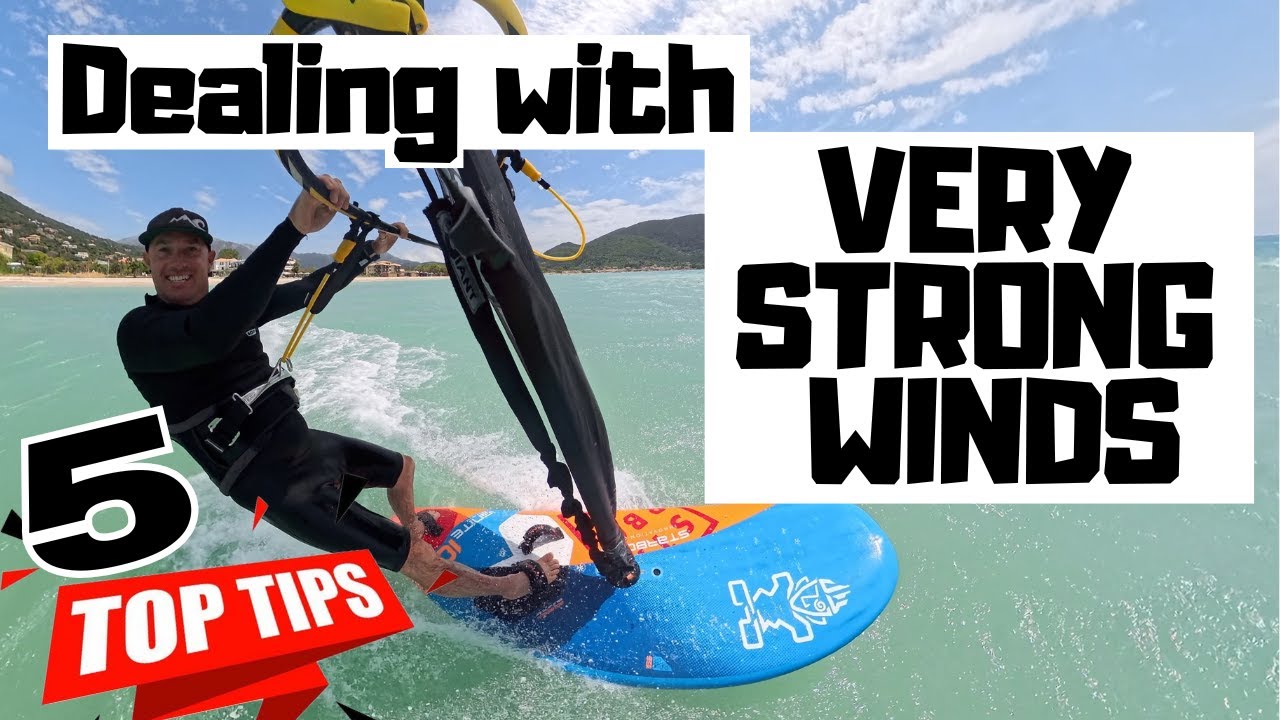
Expert Details Top Five Strong Wind Windsurfing Strategies
For effective and safe windsurfing in strong winds, an expert outlines five key considerations: carrying safety equipment such as a whistle, engaging in short, sharp sessions, making continuous kit adjustments, engaging foot straps early while maintaining a loose grip on the boom, and mastering multiple water start techniques.
The reality is that strong wind conditions fundamentally alter the demands on a windsurfer, necessitating a proactive and adaptable approach rather than relying on standard techniques. This is not simply about individual skill; it is about integrating safety, equipment optimization, and advanced maneuvering to navigate challenging environmental factors effectively. What this amounts to is a comprehensive strategy for both performance and personal security.
Summarised from Ride-Along Sessions with Cookie! · 16:55. All credit belongs to the original creators. Cookie Windsurf summarises publicly available video content.