🌐 Also available in: 🇪🇸 Español
Original source: Urbana Play 104.3 FM
This video from Urbana Play 104.3 FM covered a lot of ground. Streamed.News selected 8 key moments and summarises them here. Everything below links directly to the timestamp in the original video.
Understanding how legal tax avoidance—not just evasion—directly impacts school and hospital quality is key to Argentina's economic struggles.
Álvarez Agis: Business Tax Avoidance Weakens State, Traps Public Services
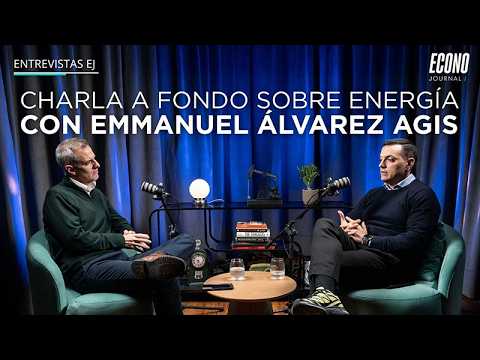
Emanuel Álvarez Agis exposes a harmful Argentine trend: businesses profit locally but move tax residency to low-tax havens like Uruguay. These same entities then criticize poor public services, labeling taxes "theft," ignoring how their reduced payments starve state funds for education and health. He calls this a global issue driven by tax competition; countries like Uruguay attract capital with low rates. Álvarez Agis believes a global minimum tax is the only real fix, though unlikely. Argentina faces a dilemma: fair tax policies risk accelerating capital flight.
"The state, with fewer resources, naturally provides worse education and healthcare. But that's because you decided not to pay taxes. We're falling into a trap there."
Álvarez Agis: Premature End to "Cepo" Harmed Confidence, Repeated Past Failures
Emanuel Álvarez Agis argues both Mauricio Macri's 2018 government and the current administration erred by lifting "cepo" (currency controls) prematurely. They ignored Argentina's economic history. Allowing unlimited dollar purchases before trust was solid fueled capital flight, forcing controls back. Álvarez Agis calls this "overspending," a failure to understand that normalcy takes time. He states this policy inconsistency destroys credibility, easily lost but hard to regain. Each reversal of liberalization reinforces distrust, highlighting a methodological flaw: drastic actions replaced gradual steps, delaying sustainable economic normalization.
"Confidence, like life, is easily lost but recovered with much effort. And again, with effort; Argentina won't fix itself just by talking."
Álvarez Agis: Argentine Opposition Destabilizes Economy to Win Elections
Emanuel Álvarez Agis argues Argentine politics fosters a destructive, bipartisan trend: opposition actively destabilizes the incumbent's economy to win elections. He cites Mauricio Macri challenging Kirchnerism with vulture funds, Alberto Fernández pressuring Macrism with LEBACs, and Javier Milei branding the peso "excrement" and advising against renewing deposits. This strategy, though electorally effective, harms the populace through induced uncertainty and crises. Álvarez Agis likens politicians to King Solomon's judgment, willing to "cut the baby" (the country) in half rather than let opponents claim it. He concludes citizens' failure to punish this irresponsibility at the polls perpetuates a cycle where ruining an opponent's government ensures power.
"We're in a sort of Solomonic dynamic. [...] Argentine politics says, 'Yes, yes, cut it.' And I'll keep my half."
Álvarez Agis: Market Distrust in Trump Undermined US Aid Promise to Argentina
Emanuel Álvarez Agis dissects a pledge by then-US Treasury Secretary Steve Mnuchin to “do whatever it takes to save Argentina.” He explains this phrase usually calms markets, recalling powerful central bank interventions like the European Central Bank during the Greek crisis, which stabilized markets through words alone. But in Argentina, the promise met deep skepticism because of Donald Trump. Álvarez Agis states the issuer's credibility was low. Markets, recalling delayed aid to Ukraine and Trump's negotiation style, demanded tangible proof over rhetoric: “show me the money.” This mirrored 2018, when Macri's government announced a massive IMF deal that failed to stop a currency run; economic agents wanted to see the dollars, not just a promise. Distrust neutralized a statement that might otherwise have calmed the crisis.
"If you speak with credibility, negotiation comes free; you don't have to show the other party you have the money."
Álvarez Agis: Two Generations of Stability Needed to Heal Argentine Financial System Distrust
Emanuel Álvarez Agis highlights the exceptional complexity of Argentina’s financial market, noting that maneuvers like the “rulo” are nearly incomprehensible even to international experts. This financial sophistication among ordinary citizens isn't a virtue, but a result of economic instability and the need to protect against a systematically devaluing currency. Distrust in the peso and the system is a deep “scar” left by decades of recurrent crises. Rebuilding trust, especially after a collective trauma like the 2001 “corralito,” demands considerable time. Citing bank crisis studies, Álvarez Agis estimates at least two generations of stability are needed for people to fully trust banks again—for example, to make a two-year fixed-term deposit. This historical memory of crises, passed down through generations, shapes economic behavior and makes short-term normalization attempts extremely difficult, as society acts with learned, deeply rooted distrust.
"People will only put money back into banks when the last person affected by the corralito dies."
Álvarez Agis Explains Dollar Crisis with Bathtub Metaphor: Market Anticipates Draining
Emanuel Álvarez Agis uses a bathtub metaphor to explain Argentina's recurring dollar shortage. In this model, exports are the faucet pouring water (dollars) into the tub, while imports and foreign spending are the drains. External debt payments act like “a kid with a bucket, scooping out water,” abruptly and significantly draining reserves. Analysts, by this analogy, determine if the drains empty the tub faster than the faucet fills it. The problem: financial markets don't wait for the tub to fully empty. As soon as they perceive an unsustainable drop in water levels, economic agents preemptively withdraw dollars for protection, accelerating a process that might otherwise take months to materialize. This anticipatory behavior turns a flow problem into an acute crisis.
"If you see the outflow hole is larger than the inflow, one day it ends, and I prefer to leave before it does. That's why these processes always accelerate."
Álvarez Agis: Lack of Financial Literacy Drives Argentines to Unpayable Loans Amid High Inflation
Emanuel Álvarez Agis describes the origin of his debt-as-drug metaphor, linking it to a 2018 encounter with a cameraman. The man took an UVA loan for a car, but inflation made payments unbearable. Agis advised him to sell the vehicle. This experience, Agis says, illustrates credit's initial allure followed by severe long-term costs when conditions in unstable environments aren't properly assessed.
Agis argues this anecdote reveals Argentina's alarming lack of financial literacy. People often borrow without asking interest rates, focusing only on the first payment. He proposes a simple rule: compare the loan's interest rate with projected salary increases. If an annual 70% rate far exceeds likely income growth, the loan becomes unsustainable. This lack of basic analytical tools, he maintains, needs addressing with mandatory financial education in schools.
"In Argentina, it's rare to ask for the interest rate when you get a loan. That's because we lack significant financial education."
Álvarez Agis: Capital Controls Offer Short-Term Dollar Savings, Discourage Future Investment
Emanuel Álvarez Agis explains how to tackle dollar flight. One option, "shrinking the bathtub hole," translates to Argentina's "cepo" (capital controls). This measure restricts dollar access for individuals and businesses, immediately saving state reserves. However, Agis deems this an apparent, strictly short-term solution with severe medium- to long-term consequences.
This policy risks deterring new investments while curbing capital outflow. He uses an analogy: "Nobody enters a party they can't leave." Argentine companies, unable to repatriate profits, not only stop investing but will withdraw every possible dollar at the first chance. Thus, the "cepo" becomes a trap, prioritizing immediate stability but undermining sustainable economic growth.
"Nobody enters a party where they tell you: 'You can never leave.' The party's great, but you can never leave."
Also mentioned in this video
- Host asks if financial aid is effective. (2:00)
- Álvarez Agis: No quick fixes for dollar problem. (18:38)
- Álvarez Agis explains exchange rate issues with anecdotes. (20:36)
- Álvarez Agis gives quick "yes or no" answers to listener questions. (31:38)
- Listener asks if campaign promises are real. (38:55)
- Tension: economic technique vs. political demand. (41:19)
Summarised from Urbana Play 104.3 FM · 46:10. All credit belongs to the original creators. Streamed.News summarises publicly available video content.