🌐 Also available in: 🇫🇷 Français
Original source: The WindsurfingTV Podcast
This video from The WindsurfingTV Podcast covered a lot of ground. Streamed.News selected 8 key moments and summarises them here. Everything below links directly to the timestamp in the original video.
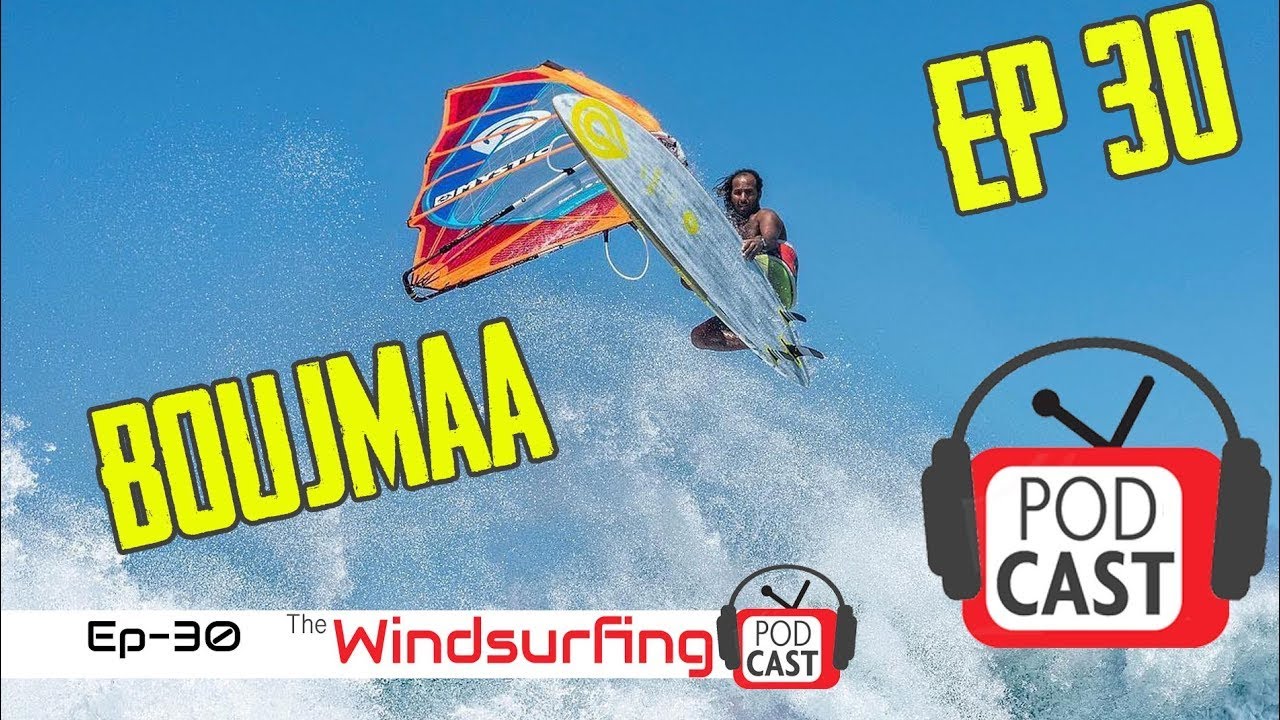
The spectacular crashes in extreme sports often hide a more profound story of psychological recovery. Boujmaa Guilloul's experience reveals the hidden, and often heaviest, costs of pushing human limits.
Boujmaa Guilloul Reveals Lasting Psychological Trauma from 2011 Near-Fatal Crash
Windsurfer Boujmaa Guilloul has detailed the lasting psychological toll of his near-fatal triple forward attempt in April 2011, an event of which he has no memory due to trauma-induced amnesia. He identifies the concussion-related anxiety and mood swings as more debilitating than his physical injuries, which included brain swelling and a broken wrist.
It's about the notion that in extreme sports, the invisible injuries often pose the most significant long-term challenge to an athlete's career and well-being. The implications of this are clear: the conversation around athlete safety must extend beyond immediate physical harm to encompass sustained mental health support following major trauma.
"Scientifically it is proven that concussion causes mental weaknesses. You get depression, you get anxiety, which I've never met before I had this accident."
Guilloul Explains Strategic Decision to Abandon Triple Forward Attempts After Crash
Following his recovery, Boujmaa Guilloul made a conscious decision not to pursue further triple forward loops, citing a strategic shift in his risk assessment. He noted concerns about safety and access to adequate medical care outside of specialized locations like Maui, which tempered his ambition to re-attempt the dangerous maneuver.
We're seeing a dynamic where an athlete's mindset evolves with experience, prioritizing longevity over high-risk, unproven feats. Observing that other top riders like Philip Köster and Ricardo Campello also avoid the move, Guilloul concluded he had nothing left to prove, reframing his career objectives.
"The older I got, the less I've seen it happening until I gave up on it. I was like, what's the point? I don't need to prove anything to nobody."
Boujmaa Guilloul Links Athletic Innovation to Pushing Physical and Creative Boundaries
Boujmaa Guilloul reflected on the scientific basis for avoiding high-level competition on an empty stomach, noting that depriving the brain of energy exposes athletes to unnecessary danger. This disciplined approach to physical limits contrasts with the creative risks he took between 2007 and 2011, a period when his video edits showcased groundbreaking maneuvers.
His attempts at moves like the double goiter and a massive stall double that impressed industry veteran Keith Taboul illustrate a strategy of relentless innovation. It’s a dynamic where athletic progression is driven as much by creative vision as by physical prowess.
"To a certain level you can do sport on an empty stomach... but then once you get over that level you start exposing yourself to danger."
PWA Tour Structure and Ramadan Posed Unique Challenges, Says Guilloul
Boujmaa Guilloul addressed the structural bias of the PWA windsurfing tour, which predominantly features port tack conditions that put him at a competitive disadvantage. He pointed to his best results, such as a fifth-place finish in Guincho, occurring in his favored starboard tack environments, highlighting how tour composition can influence outcomes.
This institutional challenge was compounded by the physical demands of competing during Ramadan without food or water, which led to a serious Lisfranc injury. This incident forced a strategic decision to no longer fast during competitions, illustrating the difficult compromises athletes face when personal convictions conflict with professional demands.
"When sailing with an empty stomach, you lose focus and I got injured pretty bad. That's when I broke my ankle and I had the Lisfranc injury, and that year I decided to stop fasting during the events."
Guilloul Used Innovation as a Strategy to Overcome Competitive Weakness
Professional windsurfer Boujmaa Guilloul explained that his drive to innovate with daring moves like the 'black shot' was a direct strategic response to his struggles in port tack sailing. In a highly competitive field, he recognized that he could not excel on the PWA tour's dominant conditions and therefore needed to stand out in other ways.
It's about the notion that competitive necessity can be the primary driver of creativity in sport. By pushing the boundaries with unprecedented aerial maneuvers, he carved out a unique identity and secured his place among the elite, turning a potential career weakness into a defining strength.
"I could not prove it sailing port tack because I was terrible... I had to do it somehow and do it in starboard."
IWT Victory Marked a Key Strategic and Psychological Pivot for Boujmaa Guilloul
Winning the IWT world tour was a significant comeback for Boujmaa Guilloul following his 2011 crash, representing a strategic pivot in his career. He shifted his focus to the IWT's starboard tack-dominant locations, aligning his competitive schedule with his strengths and the financial support of sponsors like Starboard.
This move was not just tactical but also psychological, as it helped him rediscover the passion for competing. The implications are that finding the right competitive environment can be crucial for an athlete's career longevity, allowing for the development of a winner's mindset and technical skills like gear tuning.
"The IWT helped me to get back my windsurfing drive and my windsurfing passion and my competition mindset."
Guilloul Calls for PWA and IWT to End Rivalry for the Good of Windsurfing
Veteran competitor Boujmaa Guilloul has called for an end to the rivalry between the PWA and IWT professional windsurfing tours, advocating for greater cooperation to grow the sport. Drawing on his experience organizing events for both bodies, he argues for a unified model, citing the combined event in Maui as the ideal future for the sport.
We're seeing a dynamic where institutional competition risks harming the very sport it claims to serve. Guilloul warns against 'separatism', arguing the strategic priority should be promoting windsurfing to a non-surfing audience, which requires a collaborative rather than a fractured approach from its governing bodies.
"The sport doesn't need rivalry... separatism just creates war. I think the future of both tours is to co-work and to cooperate."
Guilloul Outlines Strategy for Growing Windsurfing Through Youth Accessibility
To grow the popularity of windsurfing in countries like Morocco, Boujmaa Guilloul proposes a strategy focused on making the sport accessible to young people. He advocates for programs, run in cooperation with government and other organizations, that introduce youth to the sport in camps, creating a pipeline of new talent.
It's about the notion that grassroots development is essential for the long-term health of niche sports. Guilloul suggests leveraging the second-hand gear market to lower the financial barrier to entry, ensuring that once a passion is ignited, aspiring windsurfers have a path to continue in the sport.
"From the youth you will get hooked windsurfers that will prosper and grow with the sport. If you have 10% of that group of people, you gain 10 windsurfers for the community."
Summarised from The WindsurfingTV Podcast · 1:24:41. All credit belongs to the original creators. Windsurfing TV Podcast summarises publicly available video content.