🌐 Also available in: 🇫🇷 Français
Original source: The WindsurfingTV Podcast
This video from The WindsurfingTV Podcast covered a lot of ground. Streamed.News selected 8 key moments and summarises them here. Everything below links directly to the timestamp in the original video.
What separates the best big-wave riders from the rest? Marcilio Browne explains that comfort in giant surf isn't about a lack of fear, but about a decade of learning, preparation, and capitalizing on perfect conditions.
Marcilio Browne Credits Experience and Favorable Conditions for Jaws Mastery
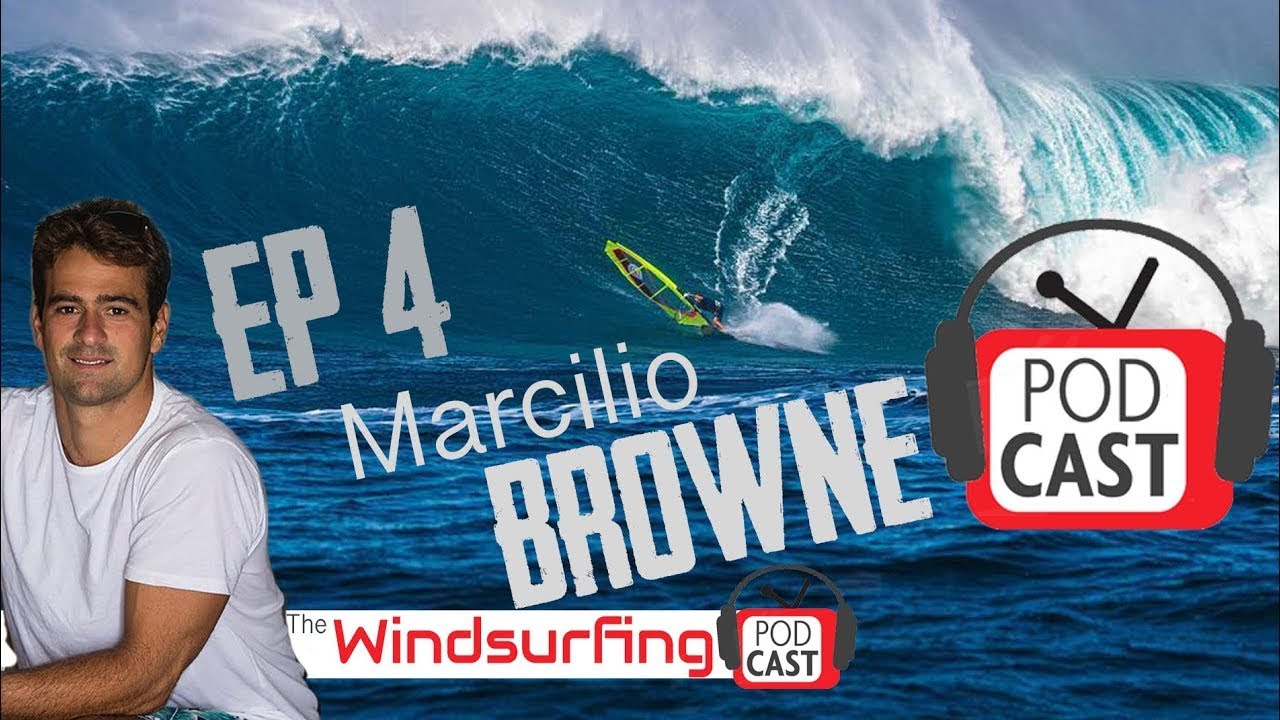
Professional windsurfer Marcilio Browne attributes his apparent comfort at the notoriously dangerous big-wave spot Jaws to a decade of accumulated experience, which allows him to learn from past mistakes. A particularly favorable year with four days of steady, uncrowded wind was also crucial, providing rare opportunities for high-volume practice and immediate feedback. He stresses that while he still feels fear, this deep familiarity with the break is the key to his performance.
The implications of this are that top-tier performance in extreme conditions is a function of accumulated knowledge and specific circumstances, not just innate talent. This dynamic demystifies big-wave sailing, framing it as a discipline of meticulous, long-term preparation.
"I still feel scared but I've been there so many times over the past 10 years that slowly you got more used to it. You remember the mistakes and things you did on sessions before... you do that over and over and over so many times."
▶ Watch this segment — 1:01:12
Marcilio Browne Recalls Relaxed Mindset as Key to 2007 Freestyle World Title
Recalling his first freestyle world title in 2007, Marcilio Browne attributes his success to maintaining a relaxed approach and consciously avoiding the pressure of the championship outcome. He details the final, decisive heat against Ricardo Campello in Sylt, which ran in near-darkness amid multiple delays. In that moment, he says the logistical and mental support from coach Nick Baker proved critical to navigating the challenging conditions.
We're seeing a dynamic where the psychological component of competition can outweigh pure technical skill. Browne's experience suggests that for some athletes, detaching from the magnitude of the moment is the most effective strategy for succeeding in it.
"The fact that I didn't put that pressure on myself and didn't even think about the world title, maybe that made it happen at the time. I was just feeling really relaxed with the whole thing."
Broken Foot in 2010 Catalyzed Marcilio Browne’s Shift to Wave Sailing
A broken foot in 2010 proved to be a pivotal moment in Marcilio Browne's career, prompting his decision to abandon competitive freestyle windsurfing. The forced two-to-three months of recovery gave him time to reflect, leading him to realize his passion was overwhelmingly directed towards wave sailing. He concluded it would be impossible to achieve a wave world title while dividing his energy and focus between two disciplines.
We're seeing a dynamic where a significant injury can act as a strategic catalyst. The setback provided Browne with the clarity needed to specialize, a move he deemed essential for competing at the highest level in the more complex discipline of wave sailing.
"I just started feeling a little bit overwhelmed with doing two disciplines. I felt like it would be really hard to get a wave title if I was still focusing on freestyle."
Fewer Variables Allow Younger Athletes to Dominate Freestyle, Says Marcilio Browne
Marcilio Browne explains that freestyle windsurfing allows younger athletes to reach the top ranks faster than wave sailing because it involves fewer variables. Freestyle training is more accessible and performance is less dependent on specific conditions or whether the wind is from the left or right. In contrast, wave sailing demands years of experience to master complex variables like currents, varied waves, and technical proficiency on both port and starboard tacks.
The implications of this are that a sport's intrinsic complexity directly shapes athlete development curves. The accessibility of freestyle makes it a young person's game, whereas the nuance of wave sailing requires a longer apprenticeship to achieve mastery.
"In waves I think there's a lot more variables. First of all, starboard and port. That's the biggest one for me; it took a really long time."
Gear and Mentality are Inseparable in Wave Sailing, Says Marcilio Browne
According to Marcilio Browne, equipment and mental strength are completely interconnected in high-performance wave sailing. He argues it is difficult to maintain a strong, confident mentality if a rider lacks trust in their gear. Specific board and sail characteristics are critical for success in varied conditions, from the powerful waves of Maui to the challenging currents of Europe.
It's about the notion that in a technical sport, the mind-body connection extends to the equipment itself. Browne credits fellow professional Francisco Goya with teaching him to analyze these crucial design details, underscoring that trust in one's gear is a prerequisite for peak performance.
"It's really hard to have a strong mentality if your gear is not feeling right. So I think all of it connects."
▶ Watch this segment — 1:13:05
Marcilio Browne Laments Shift From Feature Films to Short Social Media Edits
Reflecting on his involvement in feature-length windsurfing films like 'Four Dimensions' and 'Mind's Wide Open', Marcilio Browne recalls the creative friction between athletes and producers. While he and other riders wanted the best tricks featured regardless of aesthetics, filmmakers prioritized visually superior shots. This tension was part of a process dedicated to creating a significant final project, he notes.
It's about the notion that the medium shapes the message, and the move to short social media edits has changed the sport's culture. Browne expresses a preference for the anticipation and immersive quality of a full-length movie, a format that he feels has been devalued in the current media landscape.
"I really like that feeling... you heard that they scored a really good trip here... and then you don't know what you're gonna get and you're really excited to see that movie. When it comes to your hands, finally you can watch it. I really like that feeling."
Freestyle Training Was Key to Innovating in Wave Sailing, Says Browne
Marcilio Browne describes the integration of freestyle moves like the 'air taka' into his wave riding as a natural evolution of his skills. Having extensively practiced similar rotational maneuvers thousands of times on flat water for freestyle competitions, adapting them to a wave face felt intuitive. The goal, he explains, was to apply these highly technical tricks to the most critical and powerful part of the wave.
We're seeing a dynamic where skills from one discipline can be used to revolutionize another. Browne’s freestyle background gave him a significant advantage, allowing him to introduce a new dimension to wave riding that was less accessible to pure wave specialists.
"It was so easy for us at the time to do it on flat water... for me it was the most natural thing to kind of go hit the wave and and try to put that on the most critical part of the wave I could find."
Browne Reflects on Early Freestyle Scene as a Launchpad for Wave Sailing Careers
Marcilio Browne reflects on his first feature film, 'Committed', noting the lack of immediate feedback in that era of filmmaking; he often didn't see shots until the final edit. He identifies freestyle as the key discipline that launched the careers of his generation of top wave sailors, including himself, Ricardo Campello, and Kauli Seadi, because it offered an exciting and accessible path for young talent.
The implications of this are that specific disciplines can act as crucial development pipelines. For a generation of windsurfers, freestyle offered a faster route to sponsorship and recognition, serving as an effective incubator for future wave sailing champions.
"For kids, that excitement of having something new to work on, it's the best thing. And it was also an easier way for the younger generation to get exposure at the time for sponsors."
Summarised from The WindsurfingTV Podcast · 1:29:59. All credit belongs to the original creators. Windsurfing TV Podcast summarises publicly available video content.