Original source: Pilot Debrief
This video from Pilot Debrief covered a lot of ground. Streamed.News selected 8 key moments and summarises them here. Everything below links directly to the timestamp in the original video.
A pilot's decision to press on into a storm was based on information that was dangerously out of date. This analysis shows how a single missed update can initiate a chain of events leading to disaster.
Pilot in Fatal Crash Relied on Four-Hour-Old Weather Data
A critical failure in pre-flight planning occurred when the pilot, Don, neglected to obtain an updated weather briefing during a fuel stop in Tennessee. His flight plan and weather information were from four hours prior, before he had even departed Michigan. While he was on the ground in Tennessee, conditions at his destination in Panama City had deteriorated significantly from scattered clouds to instrument flight rules (IFR) conditions with a broken ceiling at 1,800 feet.
What needs to be understood is that this omission created a profound disconnect between the pilot's understanding of the weather and the reality he was flying into. Believing he was merely “beating the storms,” he was in fact heading directly into an area where an AIRMET, a weather advisory for pilots, was already warning of hazardous IFR conditions. This reliance on outdated information was a foundational error that set the stage for the subsequent crisis.
"The forecast that Don had was old, the conditions were rapidly getting worse, and this wasn't just a simple case of trying to beat the storms because the storms were already there and Don just didn't know it."
Controller Loses Contact as Aircraft Disappears from Radar in Final Moments
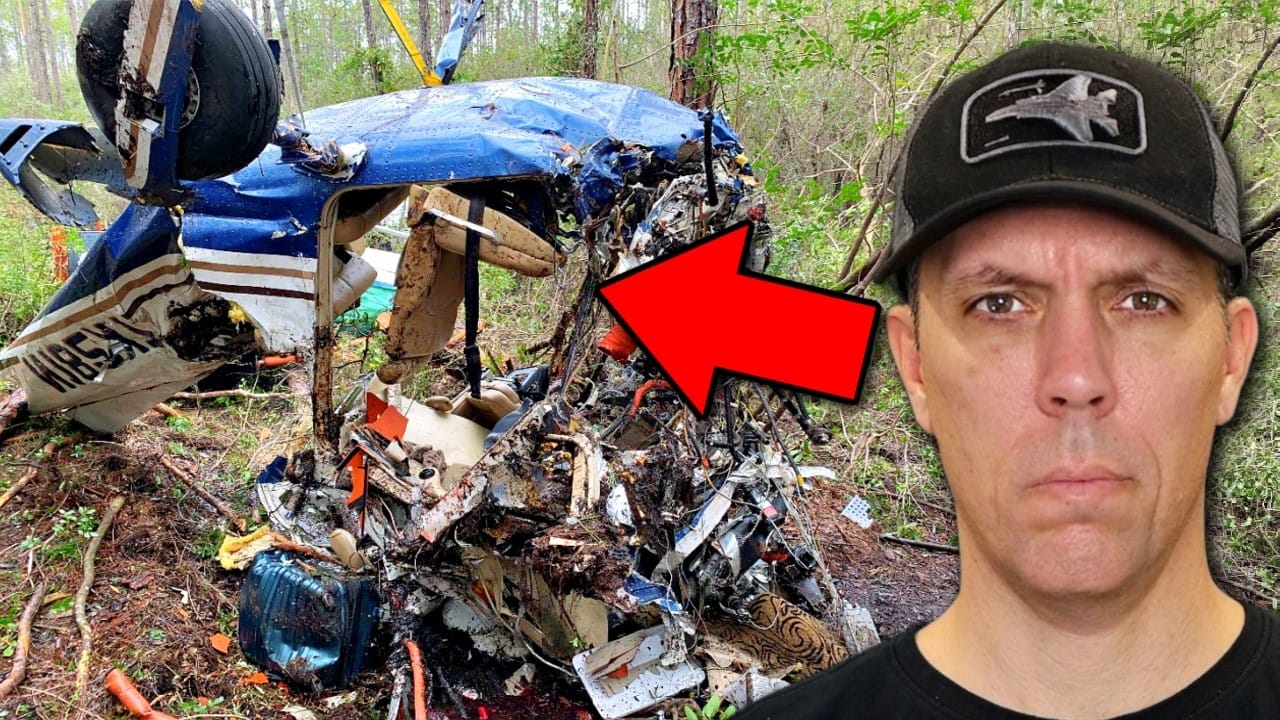
The final moments of the flight were marked by a loss of control and communication as air traffic controllers watched the aircraft drift off course. After a final, unanswered radio check, the plane vanished from the radar scope, prompting the controller to alert emergency services. The aircraft crashed a few miles from the runway, killing the pilot and his wife, Diane.
The reason why this holds significance is that the tragic outcome was the culmination of a series of avoidable errors. Had the pilot re-evaluated the severe weather upon approaching the destination area and diverted to his designated alternate airport in Dothan, which reported clear skies, the accident could have been prevented. The crash serves as a stark illustration of a pilot exceeding their personal capabilities when confronted with challenging conditions they were unprepared to handle.
"Archer, uh he disappeared from the scope. I'm not sure if uh where he's at. Uh in a minute, I got to ring the crash phone."
Flight Data Reveals Pilot Was 700 Feet Below Safe Altitude on Final Approach
Analysis of flight data reveals a critically unstable approach in the moments before the crash. The pilot, Don, crossed the final approach fix 700 feet below the specified altitude and at one point descended as low as 800 feet, triggering a low altitude alert from air traffic control. In addition to this vertical deviation, the aircraft's track shows it weaving laterally as the pilot struggled to maintain course while hand-flying in the dark through poor weather.
What needs to be understood is the missed opportunity to use the passenger as a safety resource. The pilot's wife, Diane, was in the co-pilot's seat but was likely unable to recognize the extreme danger. A simple pre-flight briefing on critical parameters, such as minimum safe altitudes or airspeeds, could have empowered her to voice concern and prompt a life-saving go-around, applying a basic principle of crew resource management even with a non-pilot.
"All Don needed to do was brief her on a few simple things that she could have helped him with like monitoring his altitude. And then he could have said, 'Hey, if it feels scary to you, just tell me to go around.'"
Pilot in Fatal Crash Lacked Required Night Flying Currency, Recent Instrument Experience
An examination of the flight plan from Michigan to Florida reveals multiple risk factors were present before the aircraft ever departed. The pilot, Don, had over 680 hours of flight time but only 3.5 hours of actual instrument time in the six months preceding the accident. To compound the issue, he had logged only half an hour of night instrument flight in that same period and had not flown at night at all within the last 90 days, meaning he did not meet FAA currency requirements to legally carry a passenger after dark.
The reason why this holds significance is that these deficiencies were set against a demanding flight profile. The seven-hour journey was undertaken in an aircraft without a fully functional autopilot, destined for an unfamiliar airport after sunset, with a forecast calling for deteriorating weather. This combination of limited pilot proficiency, the potential for fatigue, and challenging conditions created a high-risk scenario from the outset, well before the final, fatal instrument approach began.
"He didn't meet the FAA requirements to be legal for the flight, and he never should have taken off to begin with."
Pilot Flew Past Alternate Airport with Clear Skies as Destination Weather Worsened
As the pilot flew the final leg of his journey to Panama City, the weather at his destination deteriorated rapidly. In the span of just over an hour, reports went from an 800-foot overcast ceiling to just two miles of visibility with a 300-foot ceiling. This placed conditions at the very edge of the minimums required for the instrument approach, creating a far more challenging scenario than the one anticipated hours earlier.
What needs to be understood is the critical failure to divert to a safe alternative. The flight path took the aircraft directly past its designated alternate, Dothan Regional Airport, where the weather was reported as clear skies with 10 miles of visibility. The decision to press on toward a deteriorating target instead of executing a pre-planned contingency highlights a hazardous form of mission continuation bias, where the desire to reach the destination eclipses safer operational alternatives.
"He might have remembered that Dothan Regional was his alternate airport and when he flew past it, he might have diverted there because the weather in Dothan was clear skies with 10 mi visibility."
Controller's Warning of Safer Airports Met with Pilot's Resolve to Continue Approach
In a final attempt to avert disaster, an air traffic controller explicitly advised the pilot that other nearby airports had better weather, offering a clear opportunity to abandon the difficult approach into Panama City. Despite this direct suggestion, the pilot responded with his intention to “try this down to minimums and then go around if need be,” indicating a fixed commitment to attempting the landing. This exchange occurred approximately one minute before the aircraft crashed.
This response suggests the pilot was experiencing a state of cognitive tunneling, a common effect of extreme stress. Overwhelmed by the task of hand-flying the aircraft in instrument conditions at night, he was likely unable to fully process the controller's life-saving suggestion, having become fixated on the single goal of landing. The moment tragically illustrates the dangerous psychological effects of task saturation on a pilot's ability to make sound decisions.
"Okay, Cessna 2 X-ray Tango, one more thing and then I'll I won't transmit again. There are other airports nearby with uh better weather conditions."
Pilot in Fatal Crash Had Previously Failed Instrument Rating Test on Approach Procedures
The pilot's training history reveals specific difficulties with the type of flying required on the night of the accident. Records show it took him three attempts to earn his instrument rating. One of his previous failures was attributed to a loss of situational awareness during emergency operations, while another was specifically for deficiencies in executing an instrument landing system (ILS) approach—the very task he was performing when he fatally crashed.
The reason why this holds significance is not to question the pilot's qualification, but to emphasize the concept of establishing personal minimums. A pilot’s known weaknesses, such as a documented struggle with instrument approaches, should compel them to set stricter personal weather limitations than the legal minimums. This history, when combined with his lack of recent experience, should have served as a clear internal warning against attempting such a demanding approach in deteriorating conditions.
"He failed again, but this time it was for instrument approach procedures during an ILS approach, but he eventually passed on the third try."
Analysis: Pilot Attempted Difficult Night Instrument Approach with Limited Recent Experience
The pilot's statement to air traffic control that he would “give it a try” when informed of the 200-foot ceiling signaled a hazardous mindset, suggesting the approach was an experiment rather than a controlled procedure. What needs to be understood is the immense difficulty of the task he faced: hand-flying a precision instrument approach down to legal minimums, at night, without a functional autopilot, and into an airport where he had not landed in at least three years.
This challenging situation was made untenable by his lack of recent practice. With minimal instrument flight time in the preceding six months and no night flying at all in the last 90 days, his proficiency was not at a level sufficient for the challenge. His apparent surprise at the weather report from the tower further indicates he was not maintaining adequate situational awareness, a critical failure for a pilot operating alone in such demanding conditions.
"Remember, Don is most likely hand flying the approach without the autopilot, at night, at an unfamiliar airport with very little recent instrument experience, and he hadn't even flown at night within the last 90 days."
Also mentioned in this video
- The segment opens with a controller attempting to warn a pilot, Donald, about… (0:00)
- The story begins on March 8th, 2022, detailing Donald and Diane's plan to fly… (0:31)
- Donald's aviation history is detailed, including his first solo flight in 1980,… (1:04)
- The segment details a long-standing issue with the autopilot in Don's 1979… (3:17)
- Three days before the crash, Don dismissed a fellow pilot's concern about… (7:56)
- Don checks in with Panama Tower, requesting an ILS approach to runway 16, and… (12:05)
- The controller offers to brighten the approach lights for Don, who affirms the… (14:04)
- Controllers discuss Don's erratic flying, noting his S-turns and deviation from… (15:15)
Summarised from Pilot Debrief · 18:59. All credit belongs to the original creators. Streamed.News summarises publicly available video content.