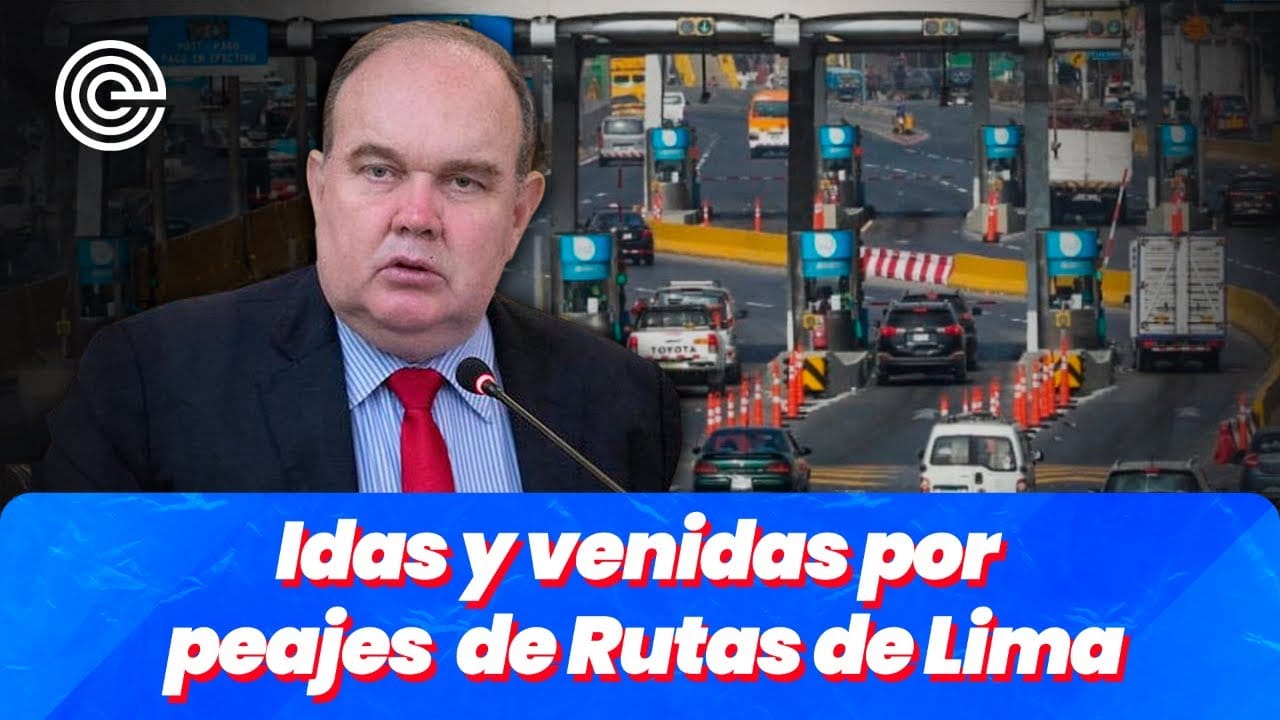
Original source: Epicentro TV
This video from Epicentro TV covered a lot of ground. Streamed.News selected 8 key moments and summarises them here. Everything below links directly to the timestamp in the original video.
Peru's ruling coalition shows internal fracture, resorting to repression as protests resurface. Understanding this dynamic is key to anticipating the country's political future.
Analyst Warns of 'Implosion Risk' in Peru's Executive-Congress Alliance
Peru's ruling alliance faces an 'implosion risk,' analyst Juan de la Puente warns. He states both government and parliament show self-damaging tendencies, failing to manage key political variables like citizen protests. They struggle to build consensus and resort to repression.
This fragility stems from an 'original weakness,' when the government abandoned its transitional role to stay until 2026. This decision, coupled with protest repression, caused a structural legitimacy loss. De la Puente asserts, 'Every police baton strike against a demonstrator erodes government legitimacy.'
"If there were room for a return, it would be to transition again—to say this government wants to call elections."
Asháninka Victims Stigmatized, Now Linked to Terrorism in Protests
Former truth commissioner Sofía Macher expressed deep concern over the stigmatization of 'Asháninka holocaust' descendants. Protesters now link them to terrorism. Macher called it an 'infamy' to associate a primary victim group of Sendero Luminoso with the terrorist organization, noting many women were investigated as terrorists even after rescue.
Macher attributes these 'racism-tinged' narratives to intelligence services. She warns they repeat the dangerous pattern of 'building an enemy,' which fueled massacres during Peru's internal armed conflict. Its resurgence threatens to reopen deep wounds in Peruvian society.
"It's absolutely concerning how these narratives again (...) build an enemy. And in some way, it's tinged with racism."
▶ Watch this segment — 1:01:03
New Factions Further Fragment Peruvian Congress, Hindering Governance
Peru's Congress grows more fragmented with the creation of 'Nueva Constitución Socialista,' a new bloc. This brings the total to thirteen, potentially reaching fifteen. Analyst Juan de la Puente states this fragmentation, driven by 'perverse incentives' like staff and committee access, makes building political majorities for governance increasingly difficult.
This dynamic causes parliament to focus on internal benefit disputes, disconnected from national issues. De la Puente concludes real politics unfold outside Congress, marked by renewed citizen protests and an incipient economic crisis.
"Most parliamentarians believe politics happens in parliament. Life today shows politics happens outside parliament."
Analyst: Bicameralism Crucial to Curb Peru's "Parliamentary Hegemony"
Analyst Juan de la Puente argues a bicameral system is vital for Peru to restore presidential power and curb legislative overreach. He blames the lack of a Senate for "parliamentary hegemony," which fractured the balance of power, stemming from ex-President Martín Vizcarra's refusal to back reform. De la Puente adds this imbalance causes legal uncertainty, a major driver of economic slowdown by deterring investment.
"The breakdown of power balance also breaks legal certainty, heavily impacting the economy."
Peru: Weak Government Fuels "Punitive Political Populism"
Analyst Juan de la Puente warns Peru's weak government fuels two forms of populism. One involves unrealistic promises of public works lacking funding. The other is a dangerous "punitive political populism," proposing repressive measures like sanctioning protest organizers, even journalists. This blend of empty pledges and strong-arm tactics fails to solve Peru's deep-rooted issues, which demand political and economic consensus. De la Puente blasts business leaders' "capitulation," as state "policialization" and insecurity stall the market economy.
"There's a dangerous populism: punitive political populism."
Castañeda Administration's 2016 Agreements Cost Lima S/230 Million in Arbitration
Lima must pay concessionaire Rutas de Lima S/230 million, a ruling sparked by minutes signed in June 2016 by ex-Mayor Luis Castañeda Lossio's administration, reports former councilman Víctor Aguilar. Despite the public Odebrecht scandal and CEO Marcelo Odebrecht's Brazil conviction, the city signed the agreements. These minutes, granting Rutas de Lima toll rights, became key evidence in the company's international arbitration against Lima, validating their claims and resulting in a massive fine for city residents.
"The evidence allowing Rutas de Lima to win that international arbitration was the minutes signed by Mr. Castañeda's administration."
López Aliaga Inconsistent: Criticized Odebrecht, Backed Corrupt OAS Deal
Lima Mayor Rafael López Aliaga's anti-toll corruption rhetoric is inconsistent, says former councilman Víctor Aguilar. While López Aliaga champions "Out with Odebrecht," he overlooks the Yellow Line concession, awarded to Brazilian firm OAS, also embroiled in the Lava Jato scandal. Aguilar recalls López Aliaga, then a councilman in 2009, enthusiastically supported that deal. Financial reports from the era indicated the municipality could have built the projects with projected toll revenue, eliminating the need for a concession. This history reveals the mayor's double standard, raising doubts about his strategy and risking social conflict.
"When someone talks about corrupt tolls, López Aliaga isn't exempt from that history."
New Book Reveals Daily Resistance of Asháninka, Settler Women Held by Sendero Luminoso
Former truth commissioner Sofía Macher's new book, "Prohibida la tristeza" (Sadness Forbidden), explores the lives of Asháninka and settler women held captive for over a decade by Sendero Luminoso in Satipo's jungle. Analyzing nearly 300 testimonies, Macher examines their everyday resistance, focusing on how they survived an environment where even sadness was prohibited. A key finding reveals these women never identified with Sendero's ideology, contrary to prior belief. From the start, they viewed the terrorists as a burden to feed, understanding they were only valued as labor. Mostly illiterate, they felt completely alienated from the group's ideology.
"These women never bought into the Sendero discourse. Never."
Also mentioned in this video
- Presenters discuss hydrocarbon spills (3:10)
- Analyzing Congress President Alejandro Soto's situation (7:39)
- Juan de la Puente analyzes political fragility (14:19)
- Víctor Aguilar criticizes Mayor Aliaga's broken promise (37:19)
- Sofía Macher invites to her book presentation at the Book Fair (1:05:15)
- Daniel & David reflect on historical brutality (1:06:16)
Summarised from Epicentro TV · 1:09:30. All credit belongs to the original creators. Streamed.News summarises publicly available video content.