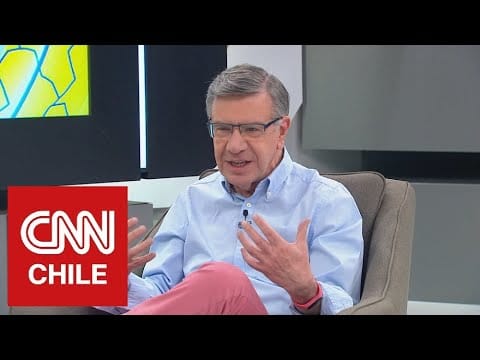
Original source: CNN Chile
This video from CNN Chile covered a lot of ground. Streamed.News selected 5 key moments and summarises them here. Everything below links directly to the timestamp in the original video.
Balancing public order and citizen rights challenges any democracy. Chile's social crisis scrutinized its police, sparking debate on their methods and future.
Lavín: 'Control Public Order, But Not At Expense of Human Rights'
Joaquín Lavín addressed Chile's dual crisis, calling both public disorder and human rights violations unacceptable in a democracy. The state must ensure order without violating fundamental rights, he said, citing state agents' excessive force that must not recur and requires full investigation. His position underscores the need for deep Carabineros reform. Carabineros must adopt proportional force crowd control techniques, as used elsewhere. Lavín's statement reflects Chile's complex debate on modernizing security forces to meet democratic standards.
"You must achieve public order, but not at the cost of human rights violations."
Lavín Pushes Semi-Presidential System for Chile's New Constitution
Joaquín Lavín proposed Chile's constitutional process as a chance to debate a shift to a semi-presidential system, arguing it could provide more flexibility during crises. He called President Sebastián Piñera's leadership the most difficult since democracy's return. Lavín praised Piñera's decision not to redeploy armed forces, which he said facilitated the political agreement for a new Constitution. Lavín's proposal for Chile's presidential system reflects a search for institutional solutions amid political fragmentation. His analysis balances criticism of government rhetoric — like the 'we are at war' phrase — with recognition of key decisions that prevented further conflict.
"President Piñera faced Chile's most difficult situation since democracy's return."
Lavín Predicts End of Chile's Market Economy, Shift to Welfare State
Joaquín Lavín predicted Chile's economic model is about to change. He projected a transition from a market economy to a 'welfare state,' implying a more robust state, stronger social policies, and higher tax collection. While short-term measures matter, the country needs a clear roadmap for this transformation, Lavín argued. This vision entails economic restructuring beyond fiscal adjustments. Lavín emphasized complexifying the Chilean economy, developing new industries to export knowledge, not just natural resources. This aims to create better-paying jobs and sustain a new social pact.
"We'll move from a market society and economy to a welfare state society. [...] This will obviously mean greater tax collection than we have today."
Lavín Backs New Constitution, Fully Elected Convention
Joaquín Lavín reaffirmed his support for a new Chilean Constitution, calling it vital for national unity. He will vote for a 100% citizen-elected constitutional convention, trusting the two-thirds quorum will ensure a "sensible and prudent" outcome. Lavín's position highlights a center-right shift towards deep institutional reform. He also advocated for a new charter granting the state a larger role, moving past the current subsidiary model.
"I fully trust that democratically elected Chileans, with a two-thirds quorum, will reach a sensible outcome."
Lavín Condemns "Hate," Warns Against Personal Violence and "Funas"
Joaquín Lavín voiced concern over surging violence and hatred in Chile, both on streets and social media. He differentiated between Carabineros' procedural "errors" and punishable "crimes." Lavín specifically warned against escalating personal threats like "funas" (public shaming), calling them a precursor to greater violence. His remarks reflect political fear that public discourse could devolve into physical attacks on individuals. Lavín linked a peaceful March and a positive 2020 to a clear social agreement on reforms, suggesting uncertainty fuels conflict.
"The 'funa' is like the beginning, but remember that in countries like Bolivia [...] it escalated to violence against people, which is a greater degree, and please, let's be careful about that."
Summarised from CNN Chile · 34:59. All credit belongs to the original creators. Streamed.News summarises publicly available video content.