Original source: Guy Kawasaki
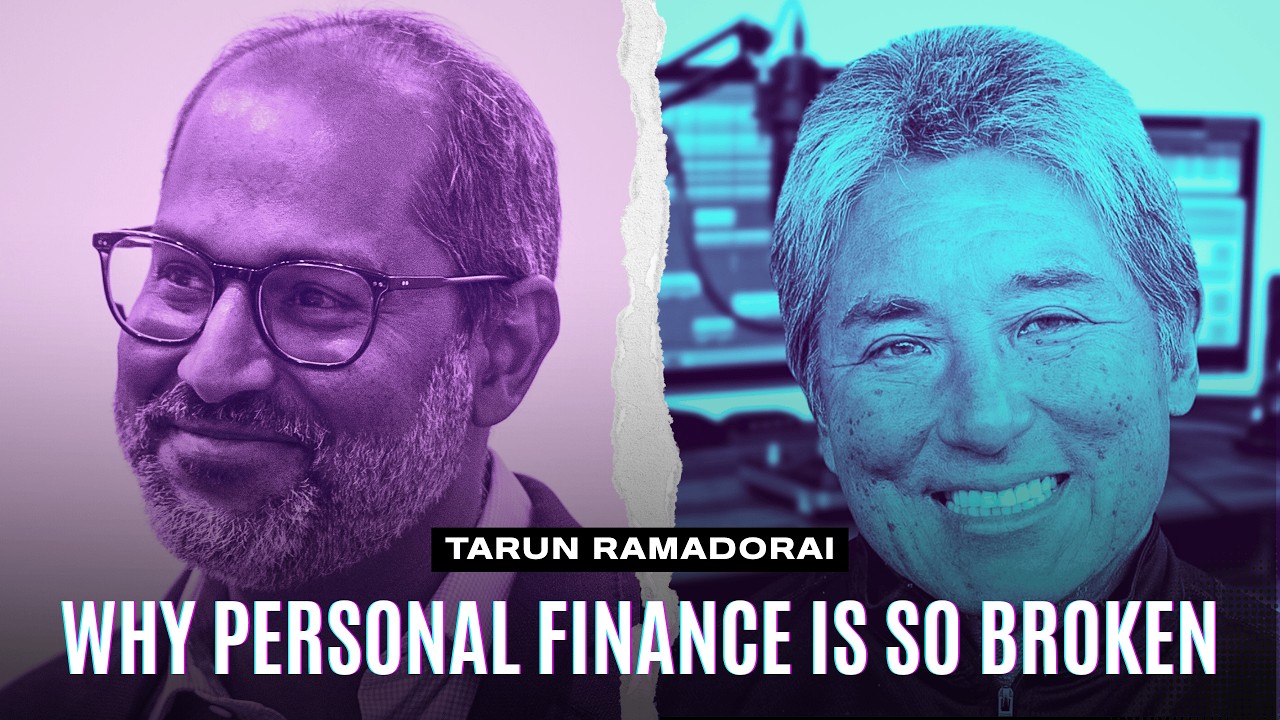
This video from Guy Kawasaki covered a lot of ground. Streamed.News selected 8 key moments and summarises them here. Everything below links directly to the timestamp in the original video.
Understanding the hidden costs and motivations behind investment products can fundamentally change your approach to building long-term wealth.
Mutual Funds Face Scrutiny for High Costs and Conflicts of Interest
Traditional mutual funds present significant drawbacks for investors, primarily due to high fees and inherent conflicts of interest. Investors often fail to search for low-cost alternatives, leading them to products that can cost 1% or more annually, significantly eroding lifetime wealth through compounding costs. Financial advisors may also steer clients toward high-commission products that benefit the advisor more than the client.
The recommended alternative for diversified investing is low-cost index funds that track broad market performance. For optimal long-term returns, investors should adjust their asset allocation in these funds based on age and wealth, with younger individuals taking on more stock exposure and older investors shifting towards safer assets like bonds. Target date funds offer an automated solution by adjusting allocations over time.
"A 1% fee when you compound that on your total lifetime wealth. Now, to make matters worse, there are conflicts of interest."
Long-Term Stock Investments Advised Despite Perceived Risk
Despite common perceptions of high risk, investing in stocks represents a positive expected value proposition over the long run. Historically, stocks have outperformed bonds by an average of 4-6% annually across various countries and economic cycles. This sustained outperformance makes a diversified stock portfolio a crucial component for wealth creation.
Experts advise that everyone should allocate a portion of their portfolio to a broad-based, diversified stock index. The ideal allocation, typically ranging from 40% to 80%, should be adjusted based on an individual's age and wealth level, ensuring participation in the market's long-term growth while managing personal risk tolerance.
"Over the very long run, stocks have outperformed bonds by 4 to 6% per annum. On average over a long taken. What does that mean? It means that it's a positive expected value bet."
Nudges Proven Less Effective and Prone to Unintended Consequences
Behavioral "nudges," once heralded as powerful tools for guiding decisions, are proving less impactful than initially believed, often leading to unintended negative consequences. Research now indicates that many nudges are substantially less effective than suggested by early studies, partly due to publication bias favoring successful outcomes. This casts doubt on their broad applicability and long-term efficacy.
For example, auto-enrollment in retirement savings plans, a common nudge, can inadvertently push individuals into debt if contribution rates are set too high and they fail to monitor deductions. This scenario highlights how seemingly benevolent interventions can negatively impact financial well-being, necessitating a more cautious approach to their implementation in policy.
"We've realized that they're not the silver bullet they were thought to be, and there are some hidden costs."
Global Best Practices Offer Pathways to Improved Personal Finance
Identifying and adapting international best practices in personal finance can significantly enhance global financial well-being. Different countries excel in specific areas; for instance, Denmark's mortgage market is lauded for its flexibility, allowing even delinquent borrowers to refinance and offering portability for mortgage deals, a feature not commonly found elsewhere.
Similarly, Australia boasts an exemplary pension system. By studying and strategically integrating such proven models, while respecting national differences, countries can develop more robust and equitable financial systems. This approach allows for the creation of a 'financial starter kit' of best-in-class products and regulations, tailored to local needs.
"The Danish mortgage market is a very good example, as is Australia's excellent pension system."
Zero-Commission Platforms Like Robinhood Undermine Investment Gains Through Overtrading
While platforms like Robinhood offer zero-commission trading, they can paradoxically destroy investment benefits through encouragement of excessive trading and gamification. Frequent trading often leads to investor losses, as the market operates on the principle that one person's gain is another's loss, making continuous short-term success highly improbable for individual traders.
The gamified elements, such as celebratory confetti for trades, incentivize behavior that contradicts sound investment principles. This active churn of a portfolio, rather than long-term passive investment, typically results in diminished returns, despite the absence of direct trading fees. The true cost lies in misinformed decisions and lost opportunities for sustained growth.
"Trading a lot is really a great way to destroy returns. Because you know, often the bets that you're making, you don't have a lot of information."
Market Mechanisms Exploit Financial Frailties, Creating Predatory Practices
The inherent power of market mechanisms in personal finance is often corrupted by companies that exploit human frailties, selling products people want rather than what they genuinely need. This dynamic, dubbed the "Predatory Paradox," mirrors historical deceptive advertising, such as past claims made by tobacco companies, where perceived benefits are aggressively marketed despite underlying harm or unsuitability.
Instead of competing to deliver optimal outcomes, firms capitalize on misperceptions and failures to search for better financial products. This results in a market driven by demand for appealing but often detrimental offerings, trapping individuals in predatory cycles. The fundamental trust in market efficiency is thus perverted, leading to widespread financial vulnerability.
"If the market were competing on the basis of the products that were best for us, we'd get the great outcomes of the market economy. But actually, the market unfortunately will compete on the basis of the things that we demand."
Common Financial Mistakes Hinder Sound Decision-Making
Individuals frequently fall prey to four key financial mistakes that impede rational decision-making. These include anchoring to initial values, such as the purchase price of a house, rather than current market realities; demonstrating exponential growth bias, which involves misunderstanding the power of compounding; extrapolating from limited personal experiences; and struggling to learn from infrequent financial decisions, like selling a home.
These cognitive biases collectively undermine an individual's ability to accurately assess value, project future growth, and apply lessons learned from past actions. The infrequent nature of major financial events, such as a home sale, particularly restricts opportunities for effective reinforcement learning, perpetuating suboptimal financial choices.
"We tend to anchor. So rather than thinking about the value of that house today, we tend to think about the price at which they bought the house."
Emergency Savings Crisis Leaves Millions Vulnerable
A critical financial best practice dictates that individuals should maintain emergency savings sufficient to cover at least three months of routine expenditures. However, a significant portion of households globally falls short of this essential buffer. Nearly half of households in the United States and the United Kingdom lack this safety net, while the situation is even more precarious in emerging economies, with 90% of South African households failing to meet this standard.
This widespread lack of emergency funds highlights a profound financial vulnerability, leaving millions susceptible to economic shocks. Without adequate savings, unforeseen events like job loss or health crises can quickly push families into deeper financial distress, underscoring the urgent need for improved financial resilience.
"If you actually think about trying to figure out what percentage of the population does that kind of thing, in the US something like 48% do not have three months emergency savings."
Summarised from Guy Kawasaki · 59:40. All credit belongs to the original creators. Remarkable People summarises publicly available video content.