Original source: Jason Bay
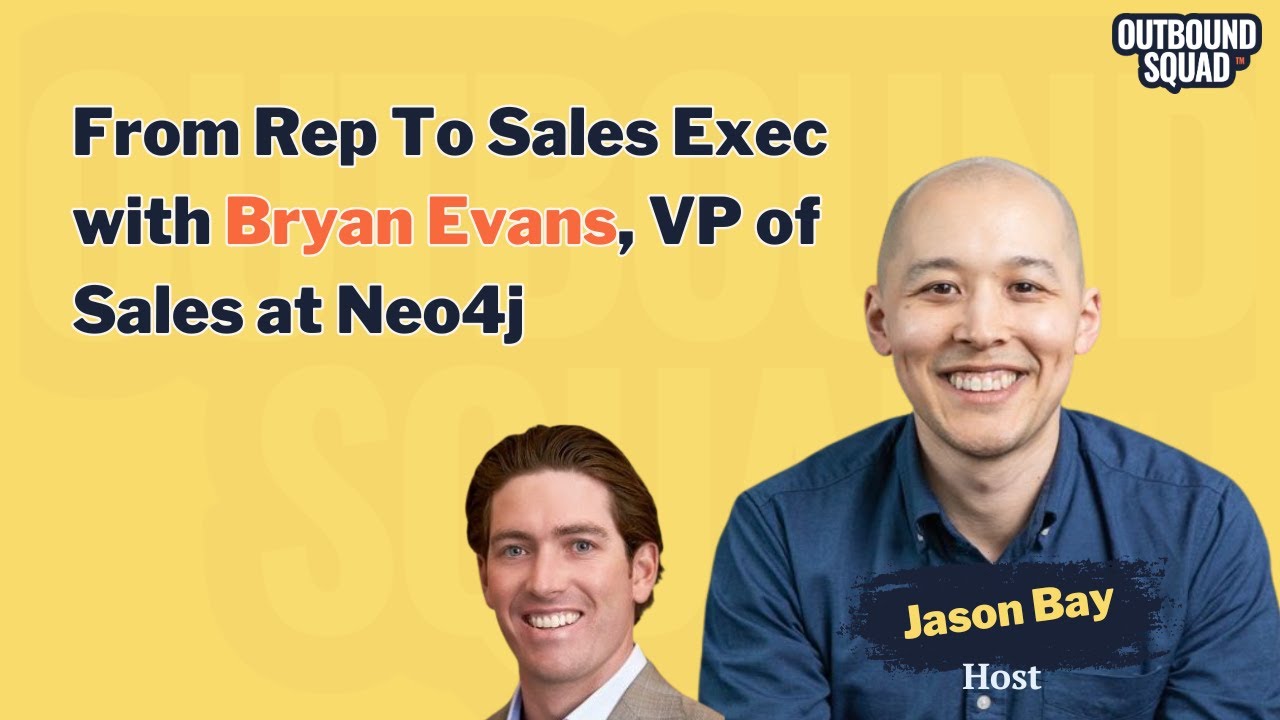
This video from Jason Bay covered a lot of ground. Streamed.News selected 8 key moments and summarises them here. Everything below links directly to the timestamp in the original video.
When you get promoted, do you focus on fixing your weakest links or multiplying your biggest strengths? This story explores the counterintuitive math of where a new leader should invest their time.
New Sales Leader Recounts Early Mistakes of Prioritizing Friendships Over High-Impact Coaching
In his first sales leadership role at Everbridge, Bryan Evans made two classic rookie mistakes: trying too hard to be friends with his former peers and focusing excessively on underperformers. Taking a prideful approach, he invested his energy in trying to turn his lowest-performing reps into club achievers, a strategy that neglected his most valuable assets.
The reality is that this approach misallocates a leader's time. A lightbulb moment came from feedback from his top-performing rep, who requested more coaching. The math equation just doesn't work when spending high effort on low-impact individuals; nurturing top talent to exceed their targets provides a far greater return on investment for the team.
"My top performer put in her annual review, 'I want to spend more time with Brian... show me the path, teach me some new things.' That was coming from our top performer. That was a lightbulb moment."
A Former Leader's Attention to Detail Taught a Lasting Lesson in Sales Management
Bryan Evans recalls a powerful lesson from a former leader at Akamai, Doug Tilford, who took the time to know the specific deals recently closed by every individual on the inside sales team. During a team dinner, Tilford congratulated each rep by name on their recent wins, demonstrating a level of care that Evans found deeply impactful.
The key takeaway for Evans was that effective leadership hinges on genuinely caring about your people and what is important to them. This principle informs his advice to his younger self: new VPs should lead with their core strengths—like deal strategy—to build trust and scale the skills that earned them the role in the first place.
"He knew the opportunities that I had closed the month prior, and he knew everybody at the table's deals. The takeaway for me there was you just got to give a damn about the people and what's important to them."
A New Leader's Priority Is Trust, Not Friendship, Earned by Removing Obstacles and Driving Results
When entering a new leadership role, Bryan Evans's priority is not to be a friend but to become a trusted leader who removes obstacles and helps his team achieve their goals. The mindset shift is clear: a team doesn't need another comedian or inspirational speaker as much as they need someone who can fix dysfunctional processes and coach them effectively.
The reality is that trust is a byproduct of performance. Evans evaluates his team not just on historical results but on cultural fit and activity levels. If a rep is a positive cultural contributor and doing the right activities, he is confident their performance can be developed; however, performance remains binary and is the ultimate expectation.
"They don't need another friend... They don't need anything other than somebody that they can trust and follow who can remove obstacles and help them achieve what they want to achieve personally and professionally."
New 'Accountability One-on-One' Meeting Replaces Ineffective Forecast Calls
To combat inaccurate and perfunctory forecast calls, Bryan Evans implemented a new monthly meeting called the 'accountability one-on-one'. He observed that traditional forecast calls were often a one-way update from reps, providing little coaching value and resulting in forecasts that were repeatedly revised down as they moved up the chain of command.
The new format focuses on two binary metrics—pipeline and forecast—to determine if a rep is on or off plan, with no yellow light. This structure allows Evans to get the accurate business data he needs while ensuring his reps receive the strategic deal coaching they want, focusing on unblocking deals and defining next steps.
"I can get what I want as a sales leader, which is the accurate forecast data, if I really lean in with these reps and give them what they want, which is 'help me unblock my deals, help me figure out where my gaps are.'"
Sales Executive Manages Stress Through Exercise, Hobbies, and Clear Boundaries
To manage the stress of a demanding sales executive role, Bryan Evans relies on a structured routine of exercise, hobbies, and compartmentalisation. He starts his days with early-morning group workouts, which he finds essential for his mental state, and participates in a men's league hockey team twice a week to disconnect.
He also establishes clear boundaries with his team to protect his personal time, particularly when coaching his sons' sports teams. By communicating his unavailability in advance, he unplugs completely, ensuring that not every issue is treated as urgent and reinforcing a sustainable work-life balance for himself and his team.
"When I coach, the phone's in the bag. I tell the team, 'Hey, between 6:15 to 8, you're not going to get an answer from me, but I'll reply at 8 once I get back home.' That's just a really good way to unplug."
VP Builds Trust With New Team by Focusing on Deal Strategy, Not Immediate Friendship
When taking over a new team at Neo4j, Bryan Evans's strategy for building trust was to add tangible value as quickly as possible, rather than attempting to forge immediate friendships. He conducted one-on-one meetings with each account executive to assess their level of buy-in and then focused his efforts on his primary strength: deal strategy.
By engaging directly in complex opportunities, he helped his team identify weaknesses in their deals and 'look around corners' to anticipate challenges. This shoulder-to-shoulder approach to problem-solving demonstrated his commitment to their success, earning him the respect and trust that he considers the foundation of effective leadership.
"I did not at all try to take the approach of like, 'Hey, I want to be buddies and friends with everyone.' It was, 'Hey, let's talk about your deals. Let's talk about your opportunities.'"
To Implement Change, Leaders Must Sell the 'Why' and Foster Co-Authorship
When rolling out new initiatives, Bryan Evans follows a clear process to secure buy-in, beginning with a detailed explanation of the 'why' behind the change. For his accountability one-on-ones, he created a presentation that not only outlined the problem with the old process but also provided a clear, sample-driven vision of the new one.
For changes that involve other departments, such as sales enablement, he brings partners into the process early to help co-author the solution. By giving them a voice and incorporating their ideas, the initiative becomes a shared effort rather than a top-down mandate, which significantly increases engagement and the likelihood of a successful rollout.
"It's really key to get cross-departmental partners involved in any potential change early to help them author the process. Give them the opportunity to have a voice, have a say, have an opinion."
Early Sales Career at ADP Forged a Direct, Value-First Approach
Bryan Evans's sales style, developed during his time at ADP, was a high-volume approach focused on quickly identifying a business problem his product could solve. Rather than prioritizing rapport-building first, he took a more direct, East Coast-style approach to determine if there was a foundation for a valuable business conversation.
If he could provide a meaningful outcome, then a relationship and rapport could be built. He found that trying to establish a friendship before establishing value can come across as disingenuous. This instinct, honed over years of high-volume prospecting, taught him to quickly discern genuine interest from conversations that were a waste of everyone's time.
"My style was trying to understand if there was value that I can provide. If I can, then we can talk about having a really good relationship and building rapport. But I didn't try to do the opposite first."
Summarised from Jason Bay · 57:41. All credit belongs to the original creators. Outbound Squad Press summarises publicly available video content.