🌐 This article is also available in Spanish.
Original source: Jeff Bajorek
This article is an editorial summary and interpretation of that content. The ideas belong to the original authors; the selection and writing are by Streamed.News.
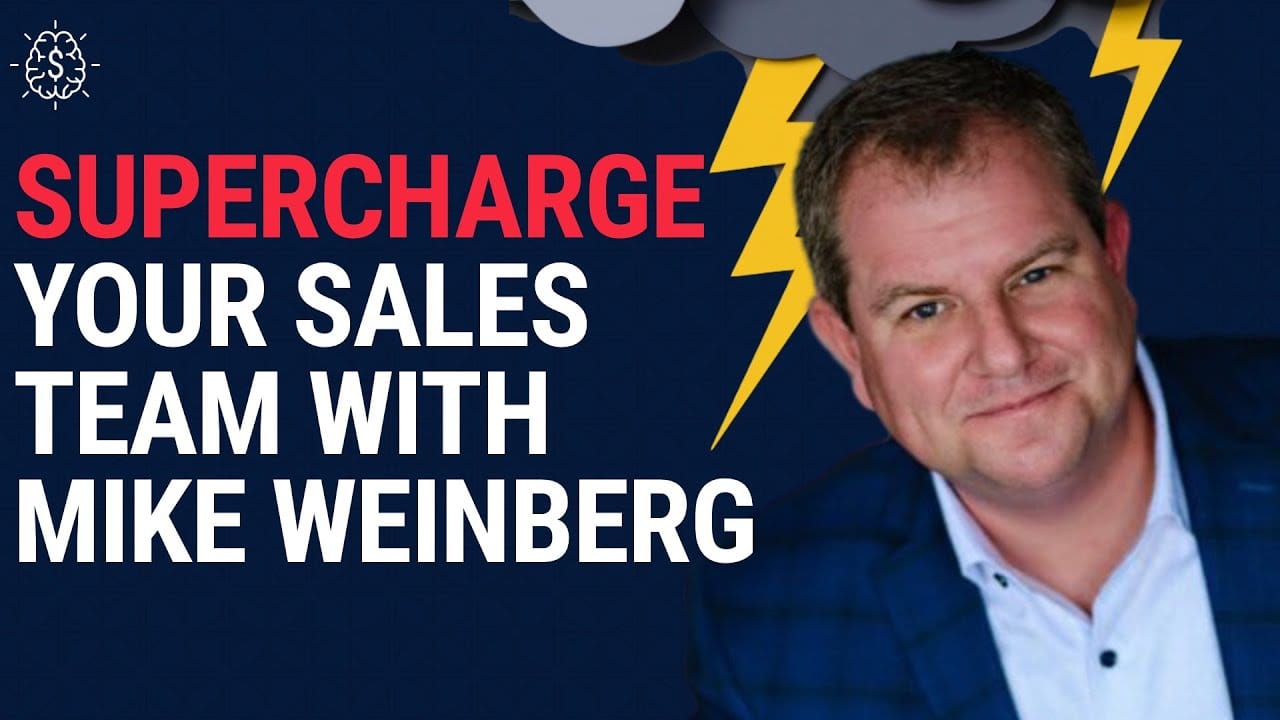
This video from Jeff Bajorek covered a lot of ground. 6 segments stood out as worth your time. Everything below links directly to the timestamp in the original video.
Most managers instinctively soften bad news with encouragement. Weinberg's argument is that doing so in the wrong meeting is exactly why underperformers stay comfortable enough to keep underperforming.
Sales Consultant Argues Accountability Meetings Must Leave Underperformers Feeling Uncomfortable
Mike Weinberg argues that the single most important discipline a sales manager can adopt is a monthly 15-minute one-on-one structured around three questions in strict order: Did the rep hit their number? Is the pipeline healthy enough to make the next number? If not, what activity is actually happening? Critically, Weinberg insists this meeting must never drift into coaching — and that a struggling salesperson should leave it feeling what he calls an "icky" feeling, a deliberate discomfort tied to their own underperformance. That discomfort, he argues, is what drives behavior change.
The counterintuitive advice cuts against the instinct most managers have to encourage and support their people. Weinberg draws a sharp line: coaching is vital, but it belongs in a separate conversation, scheduled the next day if necessary. Mixing reassurance into an accountability review, he warns, dilutes the only mechanism that actually compels a rep to change — the honest, uncomfortable mirror of their own results.
"I want your struggling salespeople to leave discouraged and frustrated that they didn't produce — so they change their behavior, because they don't want to have that meeting with you again."
Regular Accountability Reviews Force Underperformers to Either Improve or Self-Select Out, Weinberg Says
Consistent accountability meetings, Weinberg argues, produce one of two outcomes for underperforming salespeople: either they lift their effort because they can no longer tolerate showing up empty-handed, or they eventually admit the role is not right for them — and both outcomes benefit the organisation. He describes a client who reached the midpoint of sales training, declared the work made complete sense but that he had no desire to do it, and was subsequently moved into a different role within the same company where he is now thriving without even changing his office address.
The broader point is that accountability functions as what Weinberg calls a "magnifying glass of truth" — surfacing not only individual performance gaps but also team-wide coaching needs that can then be addressed collectively. Without that regular exposure to reality, he argues, no sales methodology, training program, or best practice will work consistently, because the underlying problem — a mismatch between person and role — remains hidden.
"Accountability becomes your magnifying glass to identify the truth. And the truth is, if you don't like standing up and representing your own results on a monthly basis, then maybe this isn't the right place for you."
The Psychology of Sales Accountability Mirrors the Psychology of Selling, Weinberg Observes
During a live conversation, Mike Weinberg arrived at an analogy he says he had never consciously made before: the productive discomfort a sales manager creates in an accountability meeting is structurally identical to the tension a skilled salesperson creates in the mind of a prospect. In both cases, the goal is to make someone feel that their current state is insufficient — not to humiliate them, but to generate the internal motivation to move toward a better one. The insight reframes accountability not as a disciplinary exercise but as a form of leadership selling.
The analogy matters because it reorients how managers should think about their own role. Just as a salesperson is trying to shift a prospect from satisfaction with the status quo toward desire for a different future, a sales manager is trying to shift a rep from comfort with mediocre results toward hunger for better ones. The emotional mechanics, Weinberg argues, are the same — and so is the failure mode: push too hard and it feels punitive, back off entirely and nothing changes.
"We're not trying to make anybody feel bad. The goal is to improve results. And if you don't stick their nose in their poor results and their pathetic pipeline, why would they change their behavior?"
Weinberg Recommends a 3x Pipeline Multiplier as the Core Metric in Accountability Reviews
Weinberg lays out the mechanical structure of an accountability review with a concrete benchmark: if a salesperson closes roughly one-third of their pipeline, they need at least three times their monthly target in qualifying opportunities to have a realistic chance of hitting their number. If a rep targeting $100,000 in revenue carries less than $300,000 in live pipeline — or in an extreme case less than $100,000, meaning they could not hit the number even closing every deal — the conversation moves immediately from pipeline to activity: what are you actually doing, who are you targeting, and what's on the calendar. The entire sequence, Weinberg stresses, should happen privately, without an audience.
He is sharply critical of the common alternative — group pipeline reviews where every salesperson presents their numbers to the full team. Beyond being tedious, he argues these meetings create shame without purpose and hollow out the team meeting's proper function, which is to motivate, equip, and energize. Individual accountability belongs in private; collective learning and encouragement belong in a group setting.
"I think the team meeting's supposed to encourage and equip and energize — accountability is best done in private."
Sales Reps Who Resist Accountability Reviews May Signal a Talent Problem, Not a Management One
Weinberg offers a sharp diagnostic: the accountability meeting, because it is short and focused on real numbers, is something competitive salespeople actively welcome. He illustrates the point with a top performer who is 240 percent of quota — that conversation lasts 94 seconds, ends with praise, a quick pipeline check, and an offer of support. The only people who resist the format, Weinberg argues, are those who prefer to "blow smoke" — filling conversation with activity narratives to avoid confronting actual results and pipeline health. A rep who finds the format micromanaging or unpleasant, he says, may simply not be a salesperson.
This reframes a common management anxiety. Many leaders avoid rigorous accountability reviews because they fear damaging morale or seeming oppressive. Weinberg inverts the concern: a healthy, competitive salesperson finds clarity in a results-focused check-in. If the meeting feels threatening, the problem is not the meeting.
"Any salesperson that bristles at a leader who wants to sit down and look at actual numbers and do a true pipeline analysis — I could argue that's not a salesperson. And that would reveal that you have a talent problem."
Weinberg: The Only Goal of Prospecting Is to Get the Meeting — Not to Qualify
Weinberg draws a direct line between prospecting philosophy and accountability metrics, arguing both are corrupted by the same mistake: measuring activity instead of outcomes. His position on prospecting is deliberately provocative — qualifying, he says, happens at the discovery meeting, not before it. Demanding that a cold prospect answer a battery of screening questions before earning a calendar invite is, in his view, both ineffective and disrespectful. When your outreach targets a carefully selected list of ideal prospects, the only question that matters is whether you got them into a meeting.
This philosophy reshapes what accountability should actually measure. Rather than tracking call volumes, email sequences, or time blocks, Weinberg's preferred accountability question is simply: "What opportunities did you create?" The shift from activity metrics to pipeline-creation metrics, he argues, captures both quantity and effectiveness in one question — and simultaneously points managers toward the specific coaching gaps their teams need addressed.
"In the process of prospecting, there's one goal — it's to get the meeting. My favorite accountability question is: what opportunities did you create?"
Also mentioned in this video
- Jeff Bajorek le da la bienvenida a Mike Weinberg, felicitándolo por su futura… (1:26)
- Mike Weinberg expresa su entusiasmo por abordar la prospección y la rendición… (2:29)
- Jeff Bajorek critica las reuniones de equipo que se usan para la rendición de… (12:19)
- Jeff Bajorek se enfoca en cómo los líderes pueden mantener reuniones de… (13:10)
Summarised from Jeff Bajorek · 27:26. All credit belongs to the original creators. Streamed.News summarises publicly available video content.
Streamed.News
This publication is generated automatically from YouTube.
Convert your full video library into a digital newspaper.
Get this for your newsroom →