Original source: The Good, The Bad & The Rugby
This video from The Good, The Bad & The Rugby covered a lot of ground. Streamed.News selected 8 key moments and summarises them here. Everything below links directly to the timestamp in the original video.
What really builds a sporting dynasty? Lewis Moody breaks down the relentless, interconnected culture that made Leicester Tigers nearly unbeatable.
Lewis Moody Credits Hard Work and Club-Wide Connection for Leicester Tigers' Dynasty
Lewis Moody identifies the 'special sauce' of the dominant Leicester Tigers era not as a single ingredient, but as a culture built on relentless hard work and deep, club-wide connection. He points to former players being embedded throughout the club's structure and a relentless demand for toughness from youth level upwards, creating an unwavering belief that intense effort would guarantee success on the weekend.
This environment, which Moody admits was sometimes detrimental to player health, fostered a unique resilience. It demonstrates how a club's internal values and standards, driven by figures like coach Pat Howard, can be more critical to sustained success than any tactical innovation alone.
"The simplest way of putting it was that hard work just got us to where we we knew we wanted and needed to be."
Lewis Moody Reveals Tactical Role During Wilkinson's World Cup-Winning Drop Goal
Lewis Moody has detailed his specific role during Jonny Wilkinson's 2003 World Cup-winning drop goal, explaining he was positioned on the right wing as a 'get-out option'. His job was to hold the defensive width, ready for a cross-field kick if the Australian defence tightened up and prevented Wilkinson from getting a clean shot. He recalls the quiet excitement of seeing the space available for him as the play unfolded.
This tactical insight underscores that the historic play was not just a moment of spontaneous genius. It was a well-rehearsed plan with built-in contingencies, demonstrating the depth of preparation behind England's triumph.
"My job was to hold the width on the right-hand side... if they tighten up around the breakdown... we need a plan B. And the plan B was Benny on the left and me on the right."
▶ Watch this segment — 1:03:49
Lewis Moody Describes Leicester's Brutal Wednesday Training as Key to Success
Lewis Moody recalls the intimidating environment of the Leicester Tigers changing room, where an expectation of toughness was paramount for survival. He identifies the brutal Wednesday training sessions—where the non-starting players would face the starting XV in full-contact drills—as the crucible that forged the team's character. These sessions were often more physically demanding than the weekend's match.
This relentless internal competition was designed to weed out the weak and ensure every player constantly proved their worth. It highlights how a culture of uncompromising physical demand created Leicester's legendary resilience.
"Those Wednesday training sessions at Leicester... you've got the guys that are super happy and not wanting to get injured and a load of guys that are the angriest people on earth wanting to kill guys that are starting."
Julian White and Fritz van Heerden Named Leicester's Toughest in Hypothetical 'Royal Rumble'
Reflecting on Leicester Tigers' unique and sometimes excessive culture, Lewis Moody entertained a hypothetical 'royal rumble' to determine the squad's toughest player. After considering a host of legendary hard men including Martin Johnson, Neil Back, and the Deacon brothers, he named prop Julian White and former Springbok lock Fritz van Heerden as the two finalists who would outlast all others.
While hypothetical, the discussion highlights the premium placed on physical intimidation and raw strength within that dominant Leicester era. The names chosen reinforce the club's identity as a team built around uncompromising enforcers.
"Having seen Backy and Whitey fight in a training session, like there's one winner there, it's Julian White every day."
Moody Pinpoints 2003 Charge Down Against South Africa as Career-Defining Moment
Lewis Moody cites his charge down against South Africa in the 2003 Rugby World Cup as his career's single most significant moment. Called into the starting lineup just days before the pivotal pool match to replace an injured Richard Hill, he executed a play based on specific video analysis with defence coach Phil Larder. The charge down led directly to a crucial try by Will Greenwood.
This moment highlights the blend of individual execution and meticulous off-field preparation that defined England's campaign. It demonstrates how detailed coaching insights can translate into decisive, match-winning actions under the highest pressure.
"To have a moment... and know that the research and the time that we spent off the field... and it just so happened in that moment that he did it. I recognized it."
Lewis Moody Recalls Wild Night Out During 2003 World Cup That Ended in a Faked Training Injury
Lewis Moody shared a story from the 2003 World Cup detailing a drunken night out with hooker Steve Thompson. The evening included a retaliatory 'plum flick' from Moody that was met with an uppercut to the testicles, and later, Thompson accidentally head-butting a door frame, splitting his eyebrow open.
To hide the injury from coaches, the players had to stage a fake collision during a game of touch rugby the next morning so Thompson could get stitched up by the physio. The anecdote reveals the wilder, less-documented side of the famously disciplined World Cup-winning squad.
"We went out on the training pitch. We had to fake a collision in the game of touch rugby so that he could go off and get his eye stitched."
Simple 'Tackle' Advice Fuelled Lewis Moody's Two-Try Leicester Debut
Lewis Moody recalls his Leicester debut at 18 as a 'terrifying' experience, stepping onto Welford Road to play alongside his childhood heroes like Dean Richards and Rory Underwood. To calm his nerves, coach Dossa Smith gave him a simple three-point plan: tackle, tackle, and tackle. This focused instruction freed him from the pressure of the moment, and he went on to score two tries.
This anecdote demonstrates the effectiveness of targeted coaching for a young player's first big game. By simplifying the task to a core strength, the coach enabled Moody to perform naturally rather than being overwhelmed by the occasion.
"He was like, 'Just three things, really simple. Tackle.' 'Got it.' 'Second thing, tackle.' 'Fair enough.' 'The third one, tackle.' And it just took the pressure off."
Lewis Moody Recalls Humiliating Offload That Hit Martin Johnson in the Head
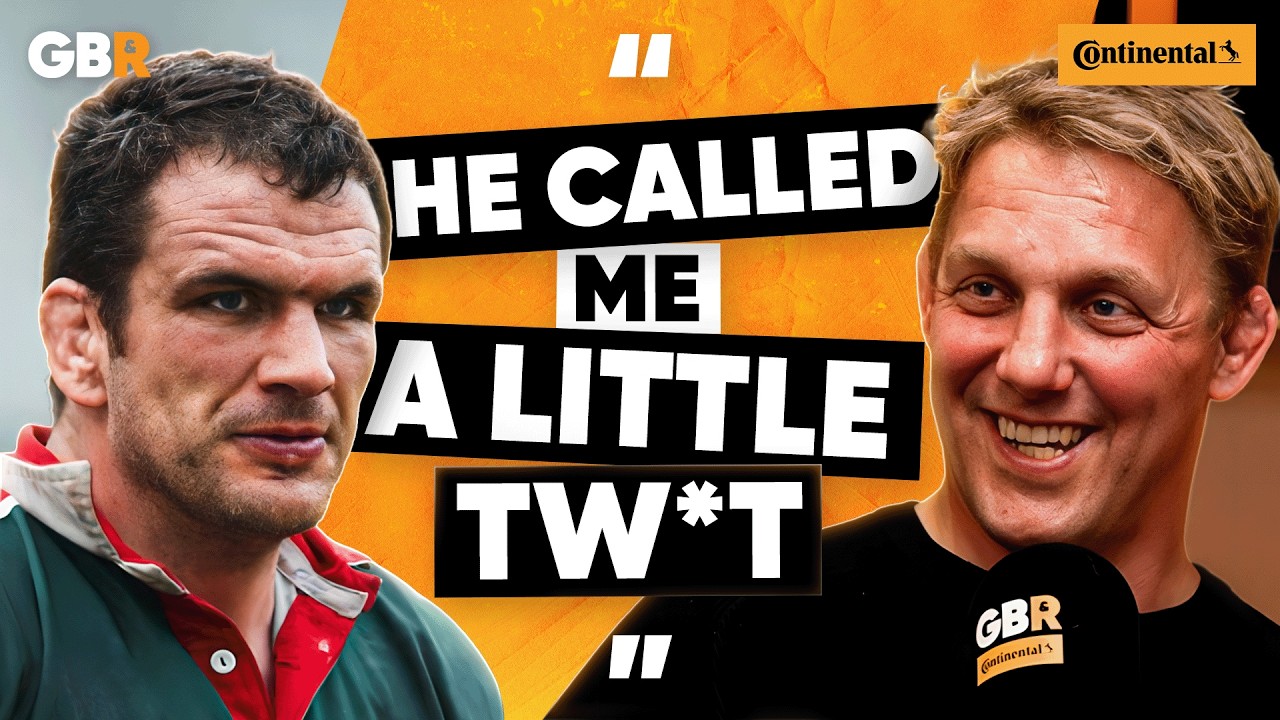
In an early game for Leicester, a young Lewis Moody received clear instructions from captain Martin Johnson to secure possession from a kickoff. Instead, Moody attempted a flamboyant offload that hit Johnson squarely on the forehead, bounced forward, and resulted in an opposition try. Johnson immediately picked him up off the floor and called him a 'little twat'.
The humbling experience served as a swift and brutal lesson in the Leicester way: prioritise the team's needs over individual flair. It highlights the direct, uncompromising leadership that was a hallmark of the Johnson era.
"I just flicked it up the back like that, thinking he is going to go the length... And I watched it all the way until it hit him directly on the forehead."
Summarised from The Good, The Bad & The Rugby · 1:17:42. All credit belongs to the original creators. The Good the Bad and the Rugby summarises publicly available video content.