🌐 Also available in: 🇫🇷 Français
Original source: Squidge Rugby
This video from Squidge Rugby covered a lot of ground. Streamed.News selected 8 key moments and summarises them here. Everything below links directly to the timestamp in the original video.
This unprecedented mid-cycle coaching change highlights the intense pressure on the All Blacks to maintain their dominance, raising questions about whether New Zealand rugby can truly embrace a new tactical philosophy or if it must always adhere to its ingrained traditions to succeed on the world stage.
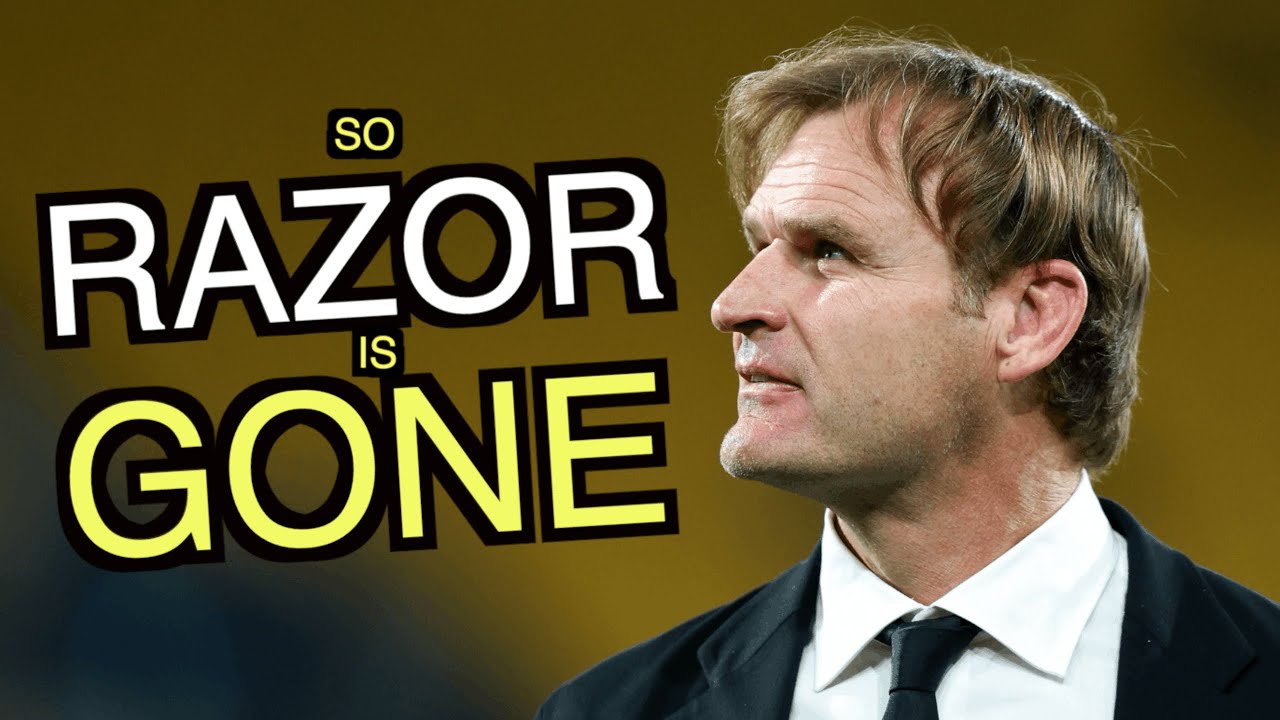
All Blacks Fire Coach Scott Robertson Amid Identity Crisis, Diverging from Traditional DNA
The New Zealand All Blacks have dismissed head coach Scott Robertson, a move driven by concerns that his "auteur" coaching style diverged significantly from the traditional All Blacks' rugby DNA, which has been passed down through generations of coaches since 1905. Robertson's Crusaders-inspired approach, focused on a more conservative, set-piece, and kicking-oriented game, struggled to fully integrate with the All Blacks' customary offloading and attacking flair. This strategic misalignment was further exacerbated by the absence of key player Richie Mo'unga, whose unique playmaking style was integral to Robertson's vision, leaving the team uncertain of its tactical direction.
"Scott Robertson is the first ever coach to come in to this All Black system like a coach who has certain ideas and philosophies on the game."
Scott Robertson's All Blacks Grappled with Identity Crisis, Shifting from Attacking Roots
Under Scott Robertson, the All Blacks experienced a profound identity crisis, as the team transitioned from its traditional offloading and attacking rugby to a more conservative, set-piece, and kicking-focused style, mirroring Robertson's successful Crusaders teams. This strategic pivot, while effective in Super Rugby, failed to fully translate to international success, leaving the All Blacks in a state of tactical limbo. The absence of key playmaker Richie Mo'unga further complicated matters, as the team struggled to find a consistent attacking rhythm within the new framework.
"I think the All Blacks were going through an identity crisis. I think they're in a situation where they had naturally built up and it was similar to what Scott Robertson did with Jason Ryan alongside him at the Crusaders, which was build the most conservative team in Super Rugby."
All Blacks Dismiss Scott Robertson Mid-Cycle Over 2027 World Cup Concerns
The New Zealand All Blacks have taken the rare step of firing head coach Scott Robertson mid-cycle, a decision driven by concerns that the team was not on track to win the 2027 Rugby World Cup. Despite being ranked as the third or fourth best team globally, the New Zealand Rugby Union, under chairperson David Kirk, deemed this trajectory insufficient for a team expected to consistently contend for every World Cup title. This marks only the second time a head coach has been dismissed in the professional era and the first mid-contract termination.
"This decision has been made pretty much entirely because they felt they were not on track to win the 2027 World Cup."
All Blacks' Decision to Fire Robertson Based on Stagnation, Not Just Losses
David Kirk, chairperson of New Zealand Rugby, clarified that the decision to dismiss coach Scott Robertson was not solely based on recent match losses, but rather on the team's perceived lack of "trajectory" towards winning the 2027 World Cup. Kirk emphasized that the All Blacks remained static throughout the year, failing to show consistent improvement in key areas necessary for global dominance. This stagnation led to a feeling of identity crisis within the squad, as players struggled to reconcile a new, more conservative game plan with the traditional All Blacks DNA.
"This decision has been made pretty much entirely because they felt they were not on track to win the 2027 World Cup."
Jamie Joseph Emerges as Front-Runner for All Blacks Coaching Role
Jamie Joseph is widely reported as the leading candidate to succeed Scott Robertson as the All Blacks' head coach, aligning with a renewed focus on the team's traditional high-tempo, skillful rugby DNA. Joseph's coaching résumé includes a Super Rugby title with the Highlanders and a historic 2019 World Cup campaign with Japan, where his team achieved a pool victory and reached the quarterfinals with an expansive, offloading game. His approach emphasizes skilled forwards playing like centers and a counterattack focus, positioning him as a strong philosophical fit for the All Blacks' enduring identity.
"When you think of the All Black way in terms of 1322 most likely pattern they'll play in terms of spreading their forwards across the pitch, short little passes and offloads, getting their pack playing like centers across the board. You look at that Japanese team and also that Highlanders team, they were both known for all of the above."
Jamie Joseph's Potential All Blacks Appointment Could Poach Springboks Coach Tony Brown
A significant strategic element of Jamie Joseph's anticipated appointment as All Blacks coach revolves around the potential recruitment of Tony Brown, currently the Springboks' attack coach. Brown, a long-time collaborator with Joseph, is highly regarded for his innovative attacking strategies. His move to New Zealand would not only bolster the All Blacks' tactical prowess, especially in fostering a high-tempo, skillful game, but would also critically weaken their primary rivals, South Africa, by removing a key architect of their attack.
"Tony Brown, he's the current Springboks attack coach and he has done wonders. It's not only getting in probably the best attack coach in the world, but also taking a rook out of that South African chess board."
All Blacks' Mid-Cycle Coaching Change Reflects High-Stakes World Cup Gamble
The All Blacks' decision to fire Scott Robertson mid-cycle, rather than waiting until the end of his contract, represents a high-stakes gamble reminiscent of Australia's controversial move to replace Dave Rennie with Eddie Jones before the 2023 World Cup. David Kirk, chairman of New Zealand Rugby, acknowledged the risk but argued that staying static was a greater threat to their 2027 World Cup aspirations. This proactive change underscores the All Blacks' unwavering goal: anything less than winning the World Cup is considered a failure, pushing the board to take decisive, albeit risky, action to secure future success.
"If you were asked right now gun to your head are the All Blacks going to win the 2027 Men's World Cup you would say no. What they want is to be winning that World Cup and anything less than a final is a failure."
Player Feedback Drove Scott Robertson's Dismissal from All Blacks
The decision to remove Scott Robertson as All Blacks coach was largely influenced by player feedback, rather than a direct revolt, with nearly 20 senior players expressing concerns about the team's trajectory and their ability to achieve World Cup ambitions. David Kirk and Kevin Mamu led a review that gathered consistent sentiment that the team was not moving forward under Robertson. While not a unanimous desire for his departure, the collective input from experienced players, including Ardian Savea, indicated a fundamental disconnect with the current environment.
"They consistently got feedback saying, 'I don't feel like we're moving forwards.' And when they spoke at the players's ambitions, they felt that they weren't going to be met in the current environment."
Summarised from Squidge Rugby · 38:49. All credit belongs to the original creators. Squidge Rugby Press summarises publicly available video content.