🌐 This article is also available in Spanish.
Original source: Rick Beato
This article is an editorial summary and interpretation of that content. The ideas belong to the original authors; the selection and writing are by Streamed.News.
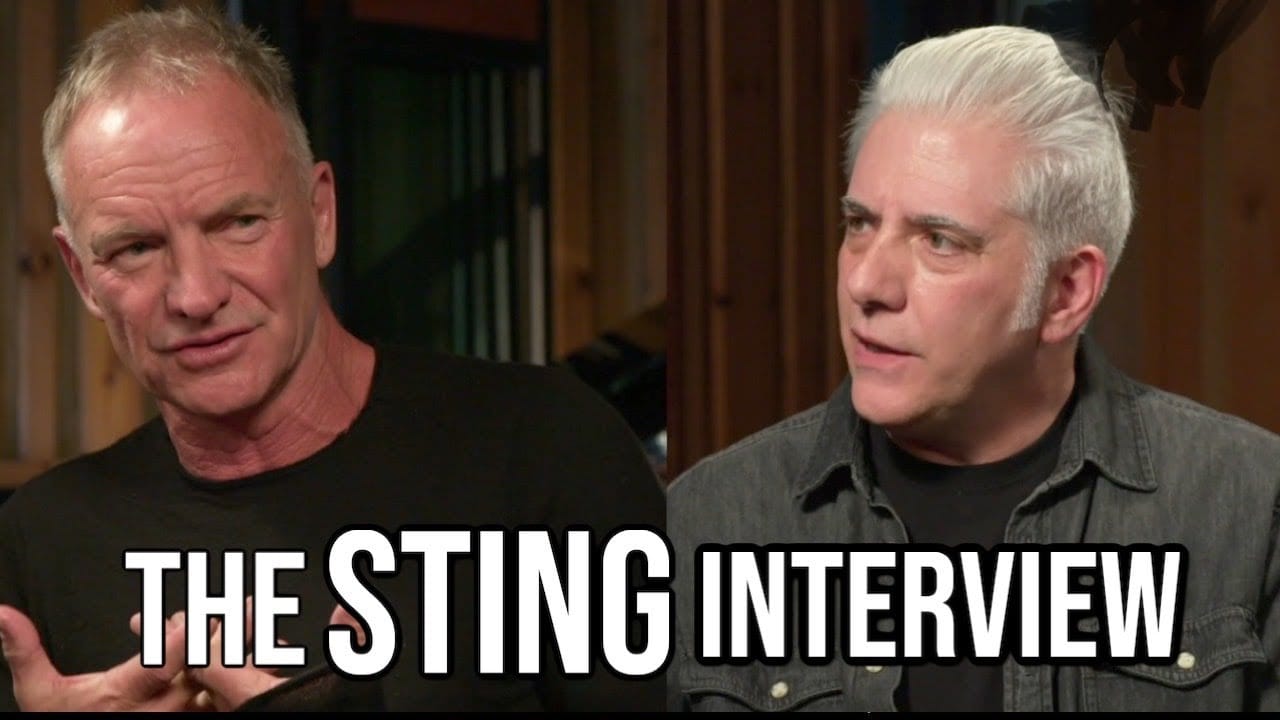
This video from Rick Beato covered a lot of ground. 6 segments stood out as worth your time. Everything below links directly to the timestamp in the original video.
If pop music feels increasingly hollow, Sting has a structural explanation — and it goes deeper than lyrics or production.
Sting Argues Modern Pop Has Abandoned the Bridge — and Lost Its Soul With It
Sting contends that contemporary music has stripped out the bridge — the structural section that provides a song's emotional turn and resolution — replacing it with circular, repetitive forms that go nowhere. In his view, the bridge is not merely a compositional device but a form of therapy, a moment where a song earns its ending by working through tension rather than simply looping it.
"The bridge is therapy — it's where the song resolves, where you get the narrative resolution that current circular song structures lack."
Hip-Hop's Most Sampled Guitar Riff Was a Classical Warm-Up Exercise Its Author Never Meant to Release
The guitar figure at the heart of 'Shape of My Heart' — one of the most sampled musical phrases in hip-hop — began as a private technical exercise by guitarist Dominic Miller, inspired by the chord voicings of European classical piano. Miller had no intention of recording it; it was Sting who heard it, recognized it as a song, and walked it into a finished piece within a day after a solitary listening session outdoors. Miller acknowledges with some amusement that rappers who have built tracks around that riff are, unknowingly, channeling classical European harmony.
"Unbeknownst to them, they're actually playing classical music from Europe."
Sting Describes Songwriting as Fishing: Show Up Daily or Catch Nothing
Sting frames the anxiety that underlies his creative process not as a problem to be solved but as a permanent condition of the craft. His guiding principle is one of disciplined presence — he compares writing to fishing, arguing that inspiration only comes to those who consistently turn up, wait, and stay patient. His longtime collaborator Dominic Miller describes his own role as absorbing Sting's chord sequences and obsessing over them while Sting moves on, eventually returning with harmonic options to feed back into what he calls a tennis-match exchange.
"Unless you go to the river with a line, you ain't going to catch a fish. Turn up. Be patient. Something will happen."
Sting and Miller Mourn the Death of the Album as a Listening Ritual
Sting and Dominic Miller still sequence their records with the logic of vinyl — deliberating over which track opens a side, ensuring no two consecutive songs share a key or tempo — even as they acknowledge that streaming has made such care largely invisible to listeners. Both describe the old ritual of buying a record, sitting with it for forty minutes, and turning it over mid-listen as an irreplaceable mode of engagement that digital platforms have dissolved into background shuffle.
"We're obsessing about the order of an album — spending days on it — and nobody gives a damn."
Sting Names 'Soul Cages' His Most Personal Album, Written Through Grief He Didn't Consciously Recognize
Sting identifies 'The Soul Cages' as the record that carries the most personal weight — written after both his parents died in the same year, though he says he was not fully conscious of the connection while making it. The album has since attracted a quiet constituency of bereaved listeners who approach him to say it helped them through loss, which he describes as the highest form of a song's utility. He also explains his commercial philosophy: that he will not commit to making a record unless it contains at least one song strong enough to serve as a flagship single, capable of pulling radio attention toward the denser material surrounding it.
"If you're asking about a record that means something to me deeply, it's The Soul Cages. It's my least understood record — but it has a constituency of the recently bereaved."
Sting: Surprise Is the Only Rule of Composition Worth Following
Sting articulates a single governing principle behind his approach to writing music: if a piece does not surprise him within the first eight bars, he stops listening. He traces this instinct to the example of Bach, whose music he and Miller both study, and describes it as a felt sense rather than theoretical knowledge. His affinity for waltz time — three-four and six-eight signatures — flows from the same impulse, favoring rhythmic forms that feel unusual in contemporary pop precisely because of their unfashionability.
"The essence of all music is surprise. If I'm not surprised within the first eight bars, I've switched off."
Also mentioned in this video
- His songwriting process, describing how he starts with a small melodic germ,… (2:30)
- Sting and Beato discuss whether Roxanne and the Police's music would still be… (8:38)
- His desire for a broader musical palette led him to leave the Police format… (11:07)
- The risks of artistic reinvention, and Dominic Miller shares the humorous story… (13:50)
- Leading a band as both singer and bass player gives him unique harmonic and… (27:28)
- Dominic Miller shares a lesson from guitarist Jason Rebello about practicing… (31:09)
- Sting and Miller discuss the new album as their most collaborative record yet,… (36:00)
- Dominic Miller plays an improvised jazz version of 'Yesterday,' and Sting names… (39:35)
- His broad musical upbringing in Newcastle (42:10)
- The origins of 'Every Little Thing She Does Is Magic,' explaining how the whole… (50:00)
- Sting and Dominic Miller perform a live acoustic version of 'Every Little Thing… (51:12)
- Sting and Dominic Miller perform a live acoustic version of a new song from… (54:01)
- Sting announces the new record's release date and that it will be available on… (56:33)
Summarised from Rick Beato · 58:42. All credit belongs to the original creators. Streamed.News summarises publicly available video content.
Streamed.News
This publication is generated automatically from YouTube.
Convert your full video library into a digital newspaper.
Get this for your newsroom →