Original source: Windsurfing_in_Perth
This video from Windsurfing_in_Perth covered a lot of ground. 3 segments stood out as worth your time. Everything below links directly to the timestamp in the original video.
Most beginner windsurfing failures happen before anyone touches the water. A few rigging checks can make the difference between a successful first session and a frustrating one.
Sail Size and Boom Height Top the List of Beginner Windsurfing Setup Mistakes
A correctly rigged windsurfing sail demands attention to four fundamentals: boom height set at arm level for leverage and control, a tight boom with no play, a flat sail free of wrinkles, and an appropriately sized sail. For learners, a 5.5 square metre sail is the recommended starting point — smaller than the 6.3 square metre competition sail shown in the demonstration.
Getting the setup right before hitting the water prevents the most common frustrations new windsurfers face, where poor rigging decisions — not lack of skill — cause loss of control from the outset.
"Some beginners, when the boom is set very high, they're struggling to get up to the boom and they've got no control — and at the other extreme they're down too low without any leverage on the rig at all."
Dryland Drills Offer Beginners a Dry Way to Master Windsurfing Balance
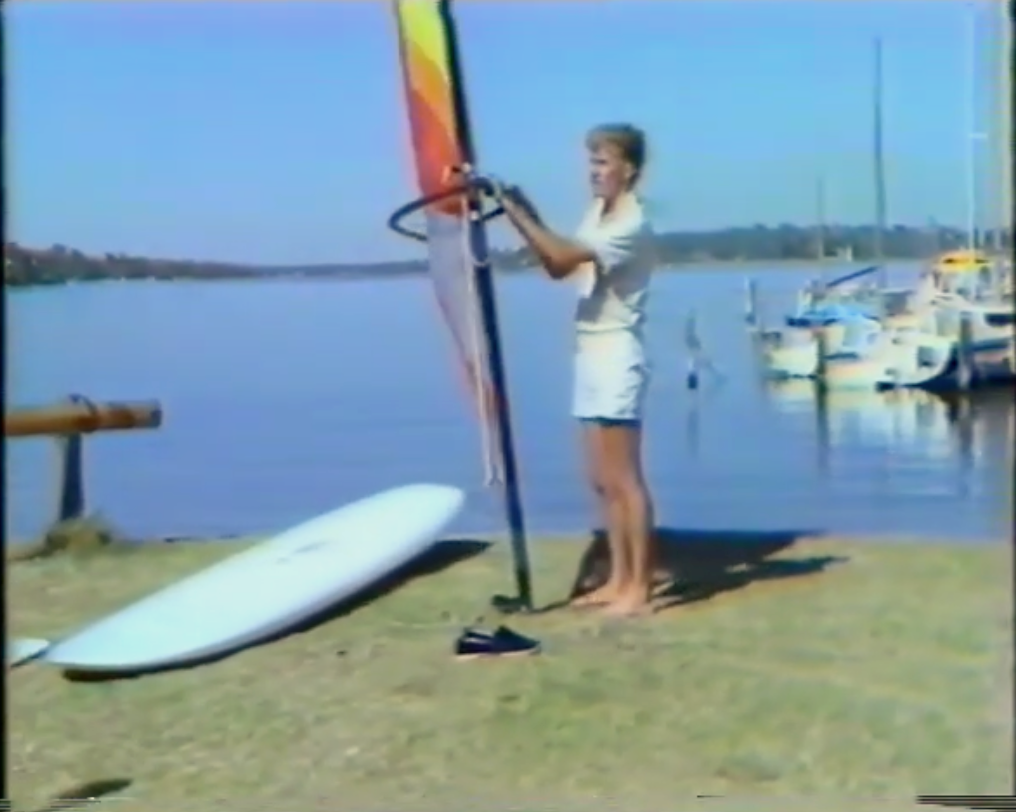
Practicing with a grounded rig — the mast foot fixed in a hole to prevent movement — lets beginners develop feel for sail forces without the penalty of falling into water. The correct stance requires bent elbows, the sail held close to the body, and a slight backward lean to counterbalance the wind's push. The most common beginner error, a hunched back with straight arms, leaves the rider with no leverage and guarantees a capsize the moment a gust hits.
Dryland training removes fear of falling from the learning equation, allowing beginners to build muscle memory before committing to open water.
"As soon as a gust hits that sail, the whole rig pushes in and the rider goes into the water."
Offshore Winds Pose Hidden Danger for Novice Windsurfers, Instructors Warn
Choosing the wrong location or wind direction is the single biggest safety risk for beginner windsurfers. Offshore winds — blowing from land toward open water — can carry an inexperienced rider progressively further out as conditions strengthen, with no easy route back to shore. Instructors recommend sheltered rivers or lakes with sandy, waist-deep shores, no boat traffic, and onshore winds that push riders back to land if control is lost.
The advice carries real stakes: offshore wind incidents account for a significant share of water-sports rescues, and the risk is highest precisely when beginners feel most confident in calm near-shore conditions.
"Definitely never sail in offshore winds — you'll get gradually blown out further and further, and the wind is getting stronger and stronger."
Summarised from Windsurfing_in_Perth · 24:37. All credit belongs to the original creators. Streamed.News summarises publicly available video content.