Original source: Launch Pad Windsurf & Foil Academy
This video from Launch Pad Windsurf & Foil Academy covered a lot of ground. 3 segments stood out as worth your time. Everything below links directly to the timestamp in the original video.
If you've ever watched a windsurfer and had no idea what any of the equipment was called, this breakdown answers that question before you ever get wet.
Windsurfing Instructor Breaks Down the Gear Beginners Need to Know
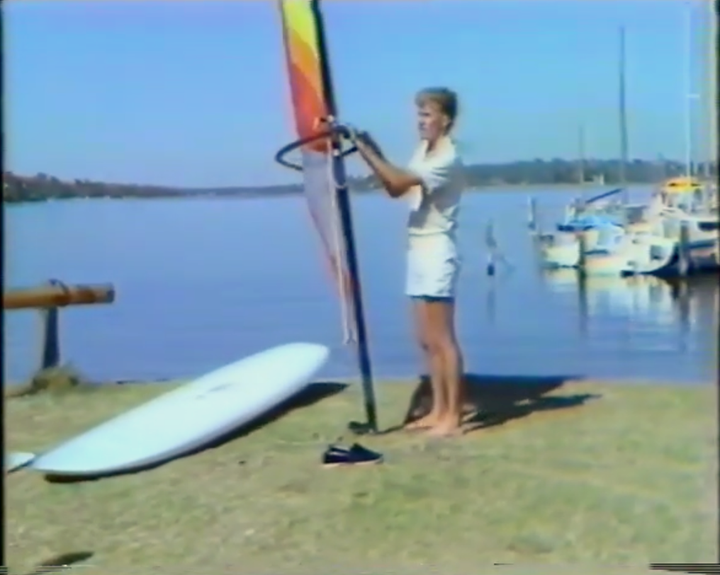
Before a beginner ever sets foot on water, understanding the equipment is essential. Instructor Carl Spece walks through the key components of a windsurfing rig: the board's bow and stern, the centerboard and skeg that guide it through water, and the universal joint — the patented pivot that allows the sail to rotate in any direction. Above that sits the mast, the uphaul line used to raise the sail, and the boom (also called a wishbone), which the sailor grips to control power.
For anyone new to the sport, the terminology can feel like a foreign language. Mapping these names to functions early removes a major barrier to learning proper technique on the water.
"Wind surfers are pretty light, pretty easy to get to the beach, pretty easy to set up."
The Neutral Position Is the First Skill Every New Windsurfer Must Master
Getting upright on a windsurfing board follows a precise sequence: kneel first, place the front foot near the universal joint, then haul the sail out of the water hand-over-hand using the uphaul line. As the sail clears the surface, it behaves like a weathervane, pointing directly downwind and telling the sailor exactly where the wind is coming from. From there, the goal is simply to hold still — what Spece calls the neutral position — with bent knees and eyes fixed on the horizon rather than the feet.
The emphasis on looking up, not down, echoes advice given in cycling, skating, and gymnastics. Balance in any dynamic sport depends on a fixed distant reference point, and windsurfing is no different.
"The only thing that's going to mess you up in this neutral position is if you're spending all of your time looking at your feet."
The 'Archery Method' Gives Beginners a Controlled Way to Get a Windsurfer Moving
Rather than grabbing the sail and hoping for the best, Spece teaches a deliberate technique for generating forward motion: tilt the mast beyond vertical until the boom is horizontal, place the front hand on the mast, then use just two fingers of the back hand to pull the boom in slightly — mimicking the draw of a bow and arrow. The front leg straightens, the back knee bends, and the board begins to move across the wind. Crucially, releasing those same two back fingers at any moment returns the sail to the neutral position instantly, preventing a wipeout.
The emphasis on a two-finger release rather than letting go with the front hand addresses the most common beginner mistake: dropping the wrong hand and sending the sail crashing into the water.
"If you always remember to let go just with those back two fingers, the sail will always just naturally go back to the neutral position."
Summarised from Launch Pad Windsurf & Foil Academy · 13:28. All credit belongs to the original creators. Streamed.News summarises publicly available video content.