🌐 Also available in: 🇪🇸 Español
Original source: The Prof G Pod – Scott Galloway
This video from The Prof G Pod – Scott Galloway covered a lot of ground. Streamed.News selected 8 key moments and summarises them here. Everything below links directly to the timestamp in the original video.
Understanding these dynamics can help you gauge the potential impact on global energy prices and the broader economy, especially as Middle East tensions persist. How resilient are global supply chains to prolonged conflict?
China and India Receive Preferential Oil Access Amidst Middle East Tensions
China and India are reportedly receiving preferential treatment for crude oil shipments through the Straits of Hormuz, despite the ongoing geopolitical tensions in the Middle East. This strategic advantage, though lacking full transparency in exact vessel numbers, allows these nations to maintain their energy supplies. The broader oil market has seen initial price spikes, but prices remain below historical crisis levels due to factors such as robust U.S. oil exports, China's substantial crude oil stockpiles, and seasonal demand shifts as the world enters spring and summer months.
The current stability in oil prices, despite heightened regional conflict, signals a fundamental shift in global energy dynamics. The U.S. has achieved energy self-reliance, with Gulf oil increasingly directed towards Asia, while China's strategic reserves provide a significant buffer against supply disruptions. However, the potential for a prolonged conflict or the mining of the Straits of Hormuz by Iran remains a critical concern that could severely disrupt global supply chains and lead to substantial oil price increases, illustrating the precarious balance between geopolitical events and market stability.
"If we had this crisis 20 or 30 years ago, clearly oil would not have been at $100. I believe that from day one, 20 years ago, oil would have spiked to $150, if not $200."
Post-War Middle East Predicted to Be Unstable, Fragmented Under Jerusalem's Influence
Following the conclusion of the current conflict, the Middle East is projected to undergo a significant geopolitical transformation, becoming more unstable and fragmented. Future geopolitical decisions in the region are anticipated to be heavily influenced by Jerusalem, with Israel maintaining military superiority supported by the United States. This structural shift is expected to lead to the emergence of smaller, more disparate states, fostering long-term instability that raises considerable concern in Beijing due to its extensive commercial investments.
This predicted fragmentation and Jerusalem-centric geopolitical alignment pose substantial risks to China's economic interests, particularly regarding its significant commercial investments and infrastructure projects in the Gulf region. The potential for unpaid construction contracts and negative returns on investment for Chinese firms underscores the precarious balance between commercial ambition and regional instability. The future of Iran, post-conflict, with scenarios ranging from a unified state to multiple fragmented entities, further exacerbates these concerns, highlighting the complex and evolving nature of power dynamics in the Middle East.
"When this war is over, it's going to be a very different Middle East. The Middle East geopolitically is moving towards a Middle East that is led and thought by what Jerusalem decides."
BYD Explores Motorsports Entry to Elevate Global Brand Identity
Chinese electric vehicle (EV) manufacturer BYD is reportedly evaluating entry into major motorsports, including Formula 1 or the FIA World Endurance Championship. This strategic initiative aims to significantly bolster BYD's global brand presence, particularly after the company surpassed Tesla in worldwide EV sales. Such a move would mark a notable entry for a Chinese automaker into a sport historically dominated by European and American teams, signifying BYD's ambition to compete on a global stage beyond volume sales.
BYD's potential foray into high-profile motorsports represents a broader strategic shift within the Chinese auto industry towards establishing premium and luxury market credibility. Beyond the immediate brand-building implications, this initiative reflects a desire to challenge established Western dominance in high-performance automotive sectors. The substantial financial investment required for such an undertaking underscores the long-term vision of Chinese manufacturers to redefine their image and compete at the apex of automotive engineering and marketing.
Pentagon Shifts Assets to Middle East as Iran Conflict Escalates
The Pentagon has initiated a significant reallocation of military assets, including missile defenses and warships, from the Indo-Pacific to the Middle East, signaling a renewed focus on the escalating conflict with Iran. This strategic pivot contradicts years of stated U.S. policy prioritizing Asia and underscores the immediate challenges posed by Iran's formidable military capabilities. According to John Sakyanakus, chief economist at the Gulf Research Center, the United States is now committed to a prolonged and difficult engagement in the region.
This reorientation of U.S. military resources suggests a structural recalibration of global strategic priorities, at least in the short to medium term. The assertion that Iran is a "force to reckon with" implies that any resolution will demand substantial military commitment, potentially delaying the U.S. pivot to Asia and creating new dynamics for regional and global security architectures. The enduring military capacity of Iran, shaped by decades of conflict, necessitates a more sustained and robust U.S. presence than initially anticipated, complicating diplomatic and strategic pathways.
"They're back into the region and this is not going to be a short-term event. It's going to be far longer than what they anticipated or what they portrayed to the rest of the world."
Divergent University Rankings Highlight Quality vs. Quantity in Chinese Research Output
Recent global university rankings present a complex picture of research power, with different methodologies yielding contrasting results. While the QS World University Rankings continue to place U.S. institutions prominently, the CWTS Leiden ranking shows Chinese universities dominating, with 19 of the top 25 institutions being Chinese. This discrepancy arises from the Leiden ranking's reliance on bibliometrics—quantifying published papers and citations—which tends to favor China's immense scientific output, particularly in fields like AI research.
This divergence in rankings underscores a critical debate concerning the quality versus sheer volume of China's scientific advancements. While Chinese universities are rapidly increasing their publication count, raising questions about the depth of innovation behind these numbers, Western-centric rankings often incorporate broader criteria such as teaching quality, employability, and internationalization, where Chinese institutions currently lag. The strategic national push by the Chinese Communist Party to elevate its universities reflects a long-term institutional goal to accrue academic prestige, but the true measure of its impact on global innovation remains a subject of analytical scrutiny.
"There's an argument that China is vastly overproducing or rather producing way more in terms of AI-related research than any other country. But then this begs the question, what is the quality of this research?"
Formula 1 Enthusiasm Surges in China, Driven by Youth and Government Support
Formula 1 racing is experiencing a notable surge in popularity across China, particularly among young female demographics, as evidenced by record attendance at the recent Shanghai F1 Grand Prix. The event attracted approximately 230,000 spectators, marking the highest attendance in two decades, while tourism data from Trip.com indicated a 20% year-on-year increase in inbound tourism bookings and a 96% rise in Shanghai hotel reservations during the F1 weekend. This burgeoning enthusiasm suggests a broader, government-supported trend akin to previous national initiatives for sports like snow skiing.
The growing appeal of Formula 1 within China aligns with the government's broader economic strategy to promote experience-economy-related tourism and consumption. The deliberate promotion of high-profile events, coupled with the visibility of figures like Chinese driver Zhou Guanyu and Lewis Hamilton's visits, indicates a concerted effort to leverage international sports for economic and soft power gains. This phenomenon is not merely a spontaneous cultural shift but a structured institutional push designed to stimulate domestic spending and enhance China's global cultural footprint, reflecting a deliberate policy choice to cultivate specific leisure activities.
"It's clear that the government seems to be in favor... of these sorts of experience economy-related tourism."
China Adopts Strategic Non-Involvement in Middle East Conflict, Prioritizing Commercial Interests
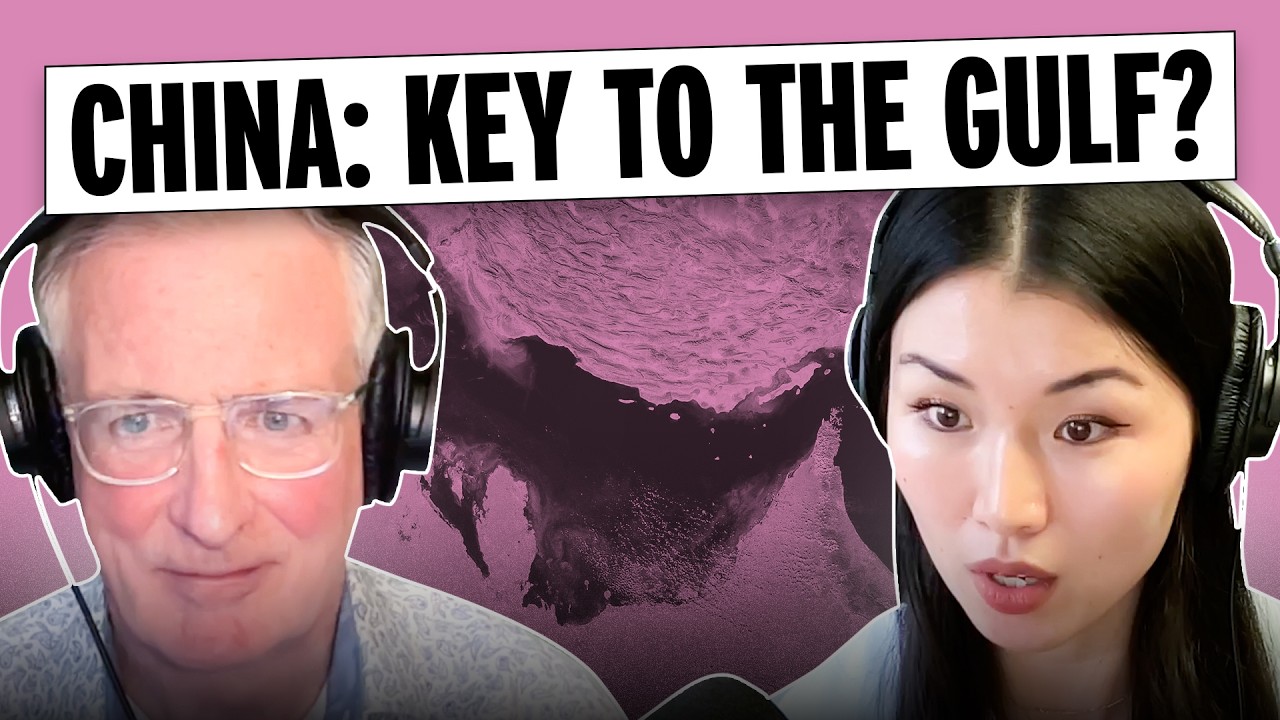
China is maintaining a strategic posture of non-involvement in the escalating Middle East conflict, prioritizing its commercial interests and the safeguarding of energy passage over military engagement. Despite previous diplomatic efforts to mediate between Iran and Saudi Arabia, Beijing has remained conspicuously quiet on the current hostilities. Its primary objective is to ensure the unimpeded flow of energy resources, particularly oil from Iran, which largely transits to China, while observing the U.S. and Israel's active role in reshaping the region's geopolitical landscape.
This cautious approach reflects China's long-term geopolitical calculus, which assesses that direct military intervention in the Middle East offers minimal gains and substantial risks, especially when juxtaposed against the U.S.'s deep engagement. China's preference to remain an observer and commercial partner, rather than a military actor, demonstrates a clear differentiation of strategic interests, underscoring its focus on economic stability and energy security rather than regional power projection through military means. This stance also implicitly acknowledges the distinct spheres of influence, where China expects reciprocity in non-interference regarding its own strategic priorities in Asia.
"I don't see any interest, any true gains that the Chinese can have by getting involved in the Middle East besides the commercial interests, besides safeguarding the freedom of passage and vessels that provide and cater for the energy needs of China."
Chinese Universities Ascend Global Research Rankings, Signaling Shift in Science and Technology Power
Recent global university rankings indicate a significant shift in the locus of scientific and technological research power, with Chinese universities rapidly climbing the ranks. One prominent index now features eight Chinese institutions among the top ten, while traditionally dominant U.S. universities, such as Harvard, have seen their positions decline. This ascent is attributed to China's substantial state investment in scientific output, dramatically scaling up its research volume.
This structural transformation in academic rankings suggests that Asia, particularly China, is becoming an increasingly critical hub for higher education and advanced research. While some analysts debate whether these rankings primarily reward the quantity of publications over the quality of discoveries, the sheer scale of China's investment and output undeniably reconfigures the global landscape of science and technology. This trend has significant implications for international collaboration, talent migration, and the future distribution of intellectual property and innovation worldwide.
Summarised from The Prof G Pod – Scott Galloway · 49:40. All credit belongs to the original creators. TheProfGPod summarises publicly available video content.