🌐 Also available in: 🇪🇸 Español
Original source: The Prof G Pod – Scott Galloway
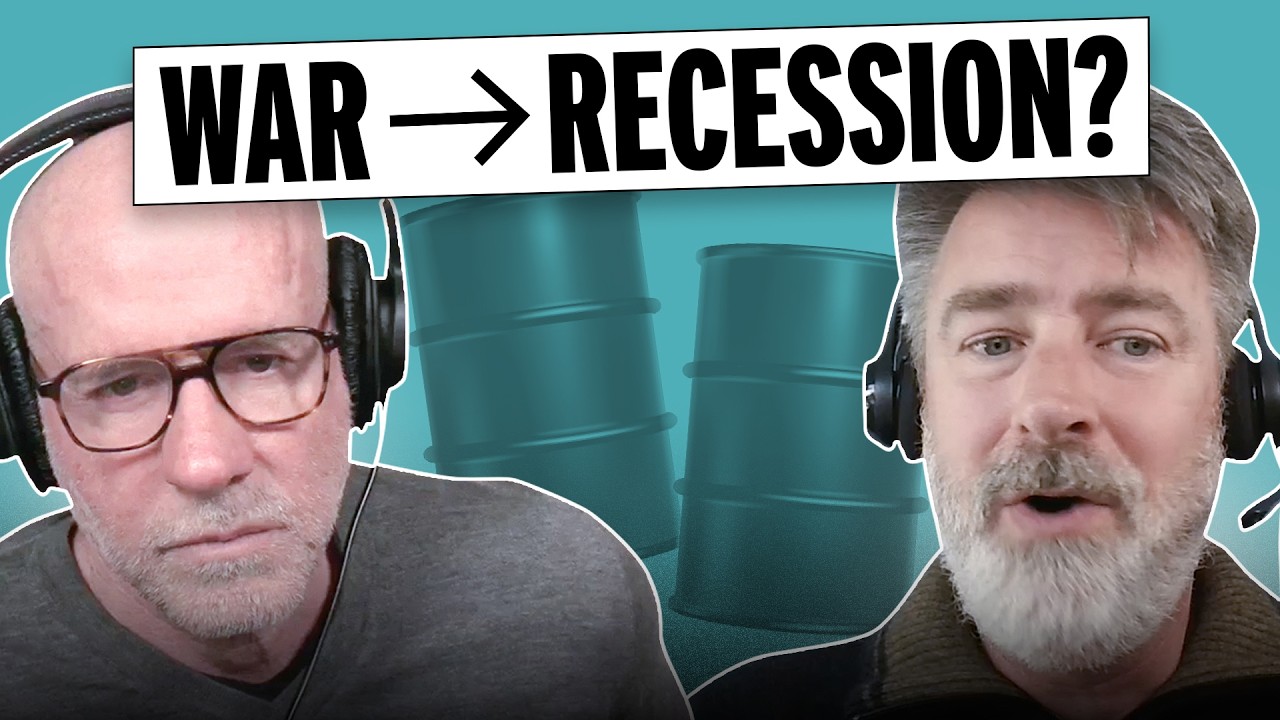
This video from The Prof G Pod – Scott Galloway covered a lot of ground. Streamed.News selected 8 key moments and summarises them here. Everything below links directly to the timestamp in the original video.
Understanding the simultaneous threats to major oil suppliers is crucial for comprehending the escalating global energy crisis. This situation directly impacts energy prices, supply chains, and the geopolitical stability of nations reliant on imported oil.
Global Oil Supply Faces 'Perfect Storm' as Europe Seizes Russian Tankers Amid Persian Gulf and US Export Threats
The global crude oil market faces an unprecedented crisis as European nations escalate seizures of Russian tankers, complementing U.S. and Indian actions against Venezuelan and Iranian shadow fleets. This convergence of events, detailed by Peter Zeihan, creates a scenario where the world could simultaneously lose significant volumes of oil from the Persian Gulf, Russia, and potentially the United States, exacerbated by the U.S. President's authority to halt all oil exports with a simple directive, as granted by the 2015 omnibus bill during the Obama administration.
This structural vulnerability in the global energy supply chain portends severe economic repercussions. The systematic dismantling of shadow fleets, coupled with potential disruptions in the Persian Gulf, suggests a fundamental reordering of oil geopolitics. The prospect of such a widespread supply shock highlights the fragility of existing energy security frameworks and the profound impact of state and private actors on critical resource flows, signaling a period of intense volatility and strategic realignment.
"We're in a situation here where the world might lose Persian, Gulf, Russian, and American crude all at the same time."
Iran's Drone Strategy Threatens Persian Gulf Oil Supply, Overwhelming Interceptor Defenses
Iran's strategy of deploying thousands of inexpensive Shahed drones against Gulf nations has severely compromised their expensive interceptor defenses, according to Peter Zeihan. With interceptors costing approximately $4 million each compared to $40,000-$50,000 per drone, and Iran capable of producing 700 drones weekly versus the U.S. producing 700 interceptors annually, Gulf nations are days away from exhausting their defensive capabilities. This asymmetric warfare has created a critical vulnerability, posing a very real possibility that the Persian Gulf could cease to be a significant global hydrocarbon source within the week.
This development signifies a profound shift in regional power dynamics and military efficacy. The economic implications of losing Persian Gulf oil, which accounts for half of internationally traded oil, would extend far beyond the Middle East, precipitating a global energy crisis. The inability of advanced, costly defense systems to counter mass-produced, low-cost weaponry highlights a critical structural flaw in contemporary military doctrines, forcing a reassessment of defense spending and strategic priorities worldwide.
"We are literally days away from there being no interceptors. And while you can't hit a moving ship with a Shahed, you can absolutely hit a pumping station or an oil field or a refinery or a loading platform."
Sustained $100+ Oil Prices and Persian Gulf Closure Threaten East Asian Economies, Says Zeihan
Persistent crude oil prices exceeding $100 per barrel, coupled with the potential closure and damage to physical assets in the Persian Gulf, threaten to collapse the economic models of most East Asian nations, particularly China. Peter Zeihan notes that while initial market reactions to targeted energy assets might be excessive, the underlying vulnerability is severe. The Persian Gulf typically supplies 20 million barrels per day, half of internationally traded oil, with 80% destined for East Asia. China, the largest consumer, may have as little as 40 days of import cover, making it acutely susceptible to prolonged disruption.
This scenario outlines a structural economic shock with global ramifications. The cessation of Persian Gulf exports would trigger an energy crisis that extends beyond merely high prices, potentially leading to widespread deindustrialization in import-dependent regions like East Asia. This vulnerability underscores the intertwined nature of energy security and global manufacturing supply chains, highlighting how regional conflicts can cascade into systemic economic breakdowns, especially if European actions against Russian oil tankers further constrict global supply.
"If this conflict lasts for, let's just pick a number, a month, that's enough to probably break the economic models of most of East Asia."
Starlink Policy Change Undermines Russian Communications, Aids Ukrainian Offensive
Starlink's recent policy change, which now prohibits its use for guiding Russian missiles and drones, has significantly hampered Russia's communication capabilities along the Ukrainian front, according to Peter Zeihan. Previously, portable Starlink terminals allowed Russian forces to guide Shahed drones and cruise missiles to moving targets in real-time, effectively bypassing limitations on straight-line flight and pre-selected targets. Following evidence presented by Ukrainians that Starlink was inadvertently assisting in attacks, the company implemented restrictions, requiring white-listed terminals and preventing in-theater mobile use.
This strategic adjustment by a private technology company has demonstrably altered military dynamics, leading to recent Ukrainian offensives and territorial gains. The incident highlights the emergent role of non-state actors in modern warfare and the profound impact that commercial technology policies can have on strategic outcomes. Russia, already possessing poor pre-war communication infrastructure, now lacks a sophisticated fallback, underscoring how private sector decisions can shape geopolitical trajectories and the conduct of conflict.
"In doing that, they basically gutted the ability of the Russians to communicate to and from and among the front. And so in the last month, the Ukrainians have been on the offensive throughout many parts of the front and actually captured a lot of territory."
Strait of Hormuz Blockade Triggers Global Energy Recession
The Strait of Hormuz has been blocked for the first time in history, leading to a 98% reduction in oil traffic and an estimated 15 million barrels per day not reaching global markets, according to Peter Zeihan. This disruption, already on its tenth day, has resulted in 4 million barrels per day of crude being shut in. Even if the strait were to reopen immediately, the recovery of this production would take at least 60 days. The simultaneous blockage of 20% of global Liquefied Natural Gas (LNG) from Qatar further exacerbates the crisis, as these facilities require even longer to reactivate.
This unprecedented disruption fundamentally alters global energy supply dynamics, creating an immediate energy-induced recessionary environment. The structural fragility of the global energy system, heavily reliant on narrow choke points, is now acutely exposed. The long-term implications extend beyond immediate price surges, threatening industrial stability and economic growth worldwide, irrespective of the ongoing conflict's resolution.
"We're already in a global recessionary environment."
Iran's Asymmetric Drone Strategy Outpaces US Missile Defense Capabilities
Iran possesses an asymmetric advantage in its conflict, effectively overwhelming sophisticated U.S. and Israeli missile defense systems with mass-produced, inexpensive Shahed drones. While the U.S. has successfully targeted Iran's more complex, imported missile systems and their specialized 50-ton truck launchers, Iran can produce thousands of Shahed drones in informal settings, such as garages. These drones, which use rudimentary components like styrofoam and plywood, can be launched from simple rail systems on pickup trucks, with a single welder assembling a launcher in about four hours.
Despite their lower accuracy and ease of interception, the sheer volume of these drones — hundreds fired daily — is projected to eventually deplete the limited and costly interceptor supplies of opposing forces. This dynamic highlights a critical structural challenge in modern warfare: the economic unsustainability of defending against cheap, abundant offensive technologies with expensive, limited defensive munitions. The efficacy of this low-cost, high-volume strategy underscores a significant vulnerability in conventional defense paradigms, potentially forcing a re-evaluation of military procurement and strategic planning.
"If you keep firing them a few hundred a day, which is exactly what has continued to happen, eventually enough are going to get through to make a difference because we will run out of interceptors."
Disappearance of Persian Gulf Crude Threatens End of Europe and China as Manufacturing Powers
Should Persian Gulf crude oil disappear from global markets, Europe would confront agonizing choices regarding its relationship with Russia and Ukraine, according to Peter Zeihan. This scenario would force European nations to prioritize national security over environmental objectives, likely leading to a resurgence in coal consumption, specifically lignite. Such a dramatic shift would precipitate the decline of "Europe Inc." as a significant global manufacturing presence. Concurrently, "China Inc." would also face its end as a major manufacturing power, as its economic model is heavily reliant on Persian Gulf oil imports.
This analysis underscores a critical inflection point for the global industrial order. The structural dependencies on Middle Eastern hydrocarbons mean that a supply shock of this magnitude would not merely cause an energy crisis but fundamentally reconfigure the global economic map. The simultaneous unraveling of Europe and China's manufacturing bases would represent a global catastrophe, signaling a profound de-globalization and a recalibration of international power dynamics driven by energy scarcity and forced strategic realignments.
"We are certainly looking at the end of Europe Inc. as a major manufacturing presence in the world. At the same time, we're looking at the end of China Inc. as a major manufacturing presence in the world."
Iran Nuclear Detonation Becomes 'Realistic Scenario' Amid Leadership Crisis, Targets Houston or NYC
Peter Zeihan dismisses concerns about a U.S. debt crisis, arguing that the Federal Reserve could easily repurchase bonds at a fraction of their cost. However, he now considers a nuclear detonation by Iran a "very realistic scenario." This assessment stems from Iran's current leadership vacuum, with a deceased supreme leader, and demands for unconditional surrender. In such a desperate situation, Iran might perceive building and using a nuclear weapon as its only recourse.
While delivery to the United States would be complex, Zeihan identifies Houston or New York City as the most logical targets, suggesting a cargo facility at a port where screening occurs on land rather than at sea. This shift in threat assessment from unlikely to a leading scenario underscores a dramatic escalation in geopolitical risk, transforming a previously theoretical concern into a tangible and immediate strategic consideration. The implications for global security and U.S. urban planning would be profound.
"Now, I see that as a very realistic scenario because if you're Iran and you've got you're a dead supreme leader and you're being demanded to surrender unconditionally, why would you not build and use a nuke?"
Summarised from The Prof G Pod – Scott Galloway · 47:34. All credit belongs to the original creators. TheProfGPod summarises publicly available video content.