🌐 Also available in: 🇫🇷 Français
Original source: TomBrendtCoach
This video from TomBrendtCoach covered a lot of ground. Streamed.News selected 3 key moments and summarises them here. Everything below links directly to the timestamp in the original video.
Ever feel like you're not progressing fast enough on the water? The problem might not be your technique, but the very nature of the sport itself.
Tom Brendt on Learning Duration: Windsurfing Is More Time-Consuming, Not Inherently Harder
Tom Brendt explains that windsurfing is not necessarily more difficult to learn than other sports, but it is fundamentally more time-consuming. The primary obstacle is not the complexity of the maneuvers themselves, but the environmental factors that limit the frequency of practice repetitions, a crucial distinction for managing expectations and staying positive during training.
Understanding this dynamic is essential if one aims to maintain a productive mindset. It reframes slow progress not as a personal failure but as an inherent characteristic of the sport, preventing the frustration that arises from comparing its learning curve to that of sports practiced in stable conditions.
"Windsurfing isn't actually really harder to learn than any other sport, it's only more time consuming."
Repetition Density: Why Changing Conditions Make Windsurfing a Slower Learn Than Tennis
Tom Brendt contrasts windsurfing with a static sport like tennis to illustrate the challenge of skill acquisition. While a tennis player can execute hundreds of repetitions in an hour on a consistent court, a windsurfer gets far fewer attempts at a maneuver due to constantly changing conditions of waves, chop, gusts, and wind holes. This variability dramatically lowers repetition density, extending the time required to master a new skill.
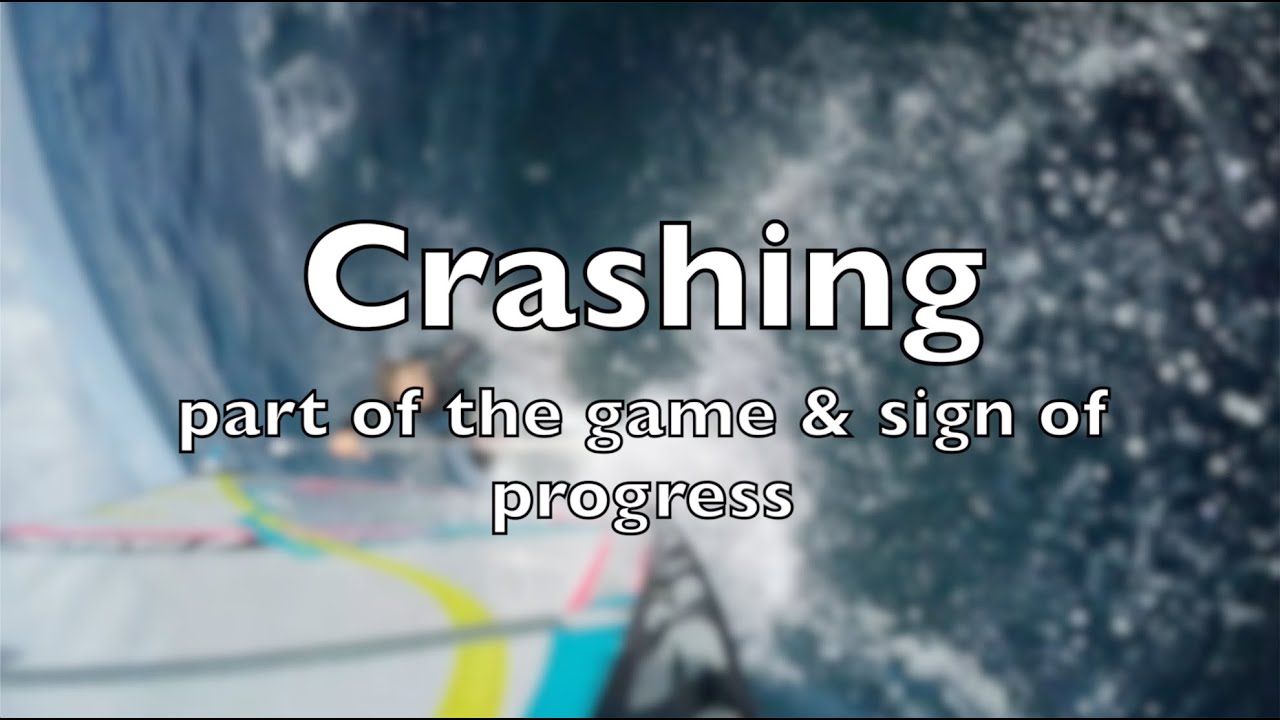
This reality requires a different mental framework, where falling is an accepted part of the game. A key point to practice is focusing on the quality of each unique attempt rather than becoming frustrated by the lower quantity of repetitions possible in a session.
"In windsurfing every time you go for a new attempt, the conditions are different. The water surface is different, there's waves, there's chop, there's flat water, there can be gusts of wind."
📊 Technical data
Metrics: hundreds of attempts per hour (tennis comparison)
Training: variable conditions: waves, chop, flat water, gusts, wind holes
Accelerate Progress by Deconstructing Maneuvers into Step-by-Step Goals
To speed up the learning curve, Tom Brendt advises against focusing on an entire maneuver at once, as this creates too much cognitive load. The key is to deconstruct the skill into its smallest component steps and practice each one in isolation. This methodological approach allows for tangible progress on every attempt, even if the final move isn't completed.
Celebrating the successful execution of a single step before moving to the next is essential for maintaining a positive mindset. This strategy transforms crashes from failures into valuable data points within a structured and faster learning process.
"Go step by step, and every step you learn will bring you closer to your goal, to your new maneuver."
📊 Technical data
Training: step-by-step maneuver learning
Summarised from TomBrendtCoach · 5:11. All credit belongs to the original creators. Tomb Brendt Coach summarises publicly available video content.