🌐 This article is also available in Spanish.
Original source: McFarlin Stanford
This article is an editorial summary and interpretation of that content. The ideas belong to the original authors; the selection and writing are by Streamed.News.
This video from McFarlin Stanford covered a lot of ground. 6 segments stood out as worth your time. Everything below links directly to the timestamp in the original video.
If your sales team is always scrambling at month-end, Weinberg's argument is that the problem was baked in weeks earlier — when no one was filling the top of the pipeline.
Sales Consultant Mike Weinberg Argues Three Verbs Define Every Salesperson's Job
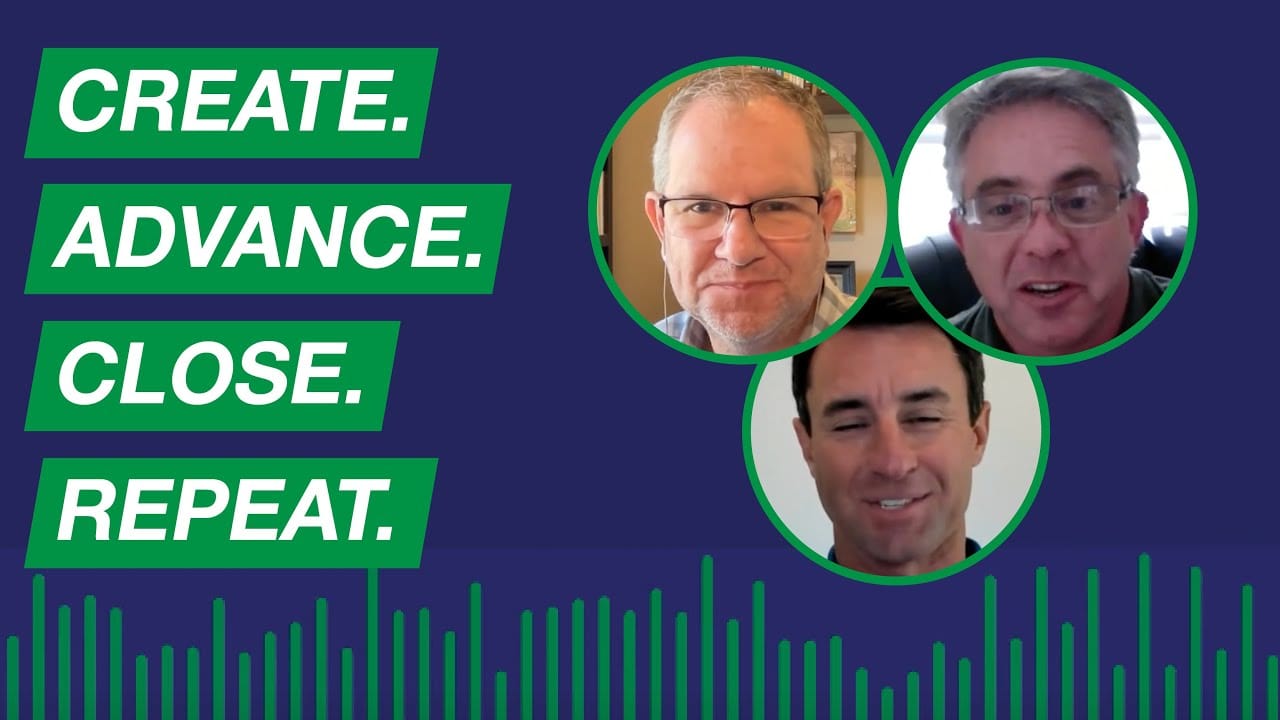
Busyness and likeability are not sales results. Mike Weinberg, whose book "New Sales. Simplified." has been a bestseller for eleven years, argues that every sales activity should be measured against just three verbs: create, advance, and close. His prescription is precise — salespeople should divide their active selling time into equal thirds across these phases, ensuring that the pipeline is constantly being fed at the top, not just harvested at the bottom. Most salespeople, he notes, default to service and then chase whatever deal feels closest to the finish line, which produces feast-or-famine cycles rather than steady revenue.
"No one cares how busy you are or how likable you are at the end of the day. What are we creating? The more you create, the fatter the funnel, the more you sell from an abundance mentality and you own your process and you stick to your price."
Weinberg: Selling on Price Is What Happens When Your Story Isn't Good Enough
The reason companies end up competing on price, according to Mike Weinberg, is almost never their product — it's their pitch. Weinberg argues that most salespeople default to what he calls the "about us" presentation: years in business, equipment, company culture. That approach, he says, collapses the seller into a commodity. The alternative is to lead with the customer's specific problem — for a commercial property manager, that might be tenants threatening to leave over an unkempt site; for a homeowner, it might be street-level curb appeal. When the conversation starts with those stakes, pricing becomes secondary to outcomes.
"If we're going to sell at a premium, we need premium messaging. Are we talking about how great we are and our services and our culture and our equipment and our years in business — or are we leading out with what's on the mind of the customer?"
Not All Salespeople Can Hunt: Weinberg on the Hiring Mistake Hiding in Plain Sight
During the pandemic demand surge, many industries filled sales roles with people who were skilled at responding to inbound inquiries — a very different capability from building new business from scratch. Mike Weinberg describes this as a DNA mismatch: relationship managers and order-takers are valuable, but they tend to be conflict-averse, and hunting for new accounts requires tolerating rejection, pushing past a "no," and showing up without being invited. Companies that staffed up for a boom and are now underperforming may not have a sales problem so much as a hiring problem they haven't yet diagnosed.
"There's a confidence and a self-starter thing and not being afraid of conflict or pushing past resistance. Those are such important characteristics for someone who will succeed when we need them to go out and create business instead of just respond."
Owner-Operators Will Always Choose Operations Over Sales — Unless They Build in Discipline
Mike Weinberg makes a blunt claim backed by years of consulting across companies of all sizes: when a single leader carries both operational and sales responsibilities, that person will default to operations every single time. The reason is urgency — a staffing problem, an unhappy customer, or a supplier issue demands immediate attention, while a sales gap only becomes visible at the end of the month. His remedy is calendar time-blocking and, crucially, a leadership-defined list of target accounts, because without strategic direction from above, salespeople will gravitate toward whatever feels easiest rather than what would actually grow the business.
"One hundred percent of the time that leader will default to the operations and service challenges, because those are urgent and in his face. They don't know they have a sales problem until the end of the month."
Sales Trainer Mike Weinberg Says the Same Five Fundamentals Have Worked for Thirty Years
Frustrated by leading underperforming sales teams, Mike Weinberg left corporate life roughly thirteen years ago and began consulting, eventually writing "New Sales. Simplified.," which has remained a bestseller for eleven years. His core argument is straightforward and deliberately unfashionable: the industry is crowded with people selling secret formulas and new tools, but the basics have not changed. Salespeople need to know who they are targeting, carry compelling messaging, earn a meeting, run that meeting well, and own their calendar and pipeline. Five things — and Weinberg says he repeats them multiple times a day.
"The world is hungry for simple truth that works. The same thing that worked 30 years ago pretty much still works today."
Failing to Follow Up After a Quote Isn't Politeness — It's Indifference, Weinberg Says
Weinberg illustrates a widespread sales failure with a personal story: a landscaper he had used for twenty years came back, surveyed his property, emailed a quote for a significant renovation — and then never called again. Weinberg read the silence as a signal the contractor simply didn't care. His reframe is pointed: persistent follow-up is not harassment, it is evidence of genuine interest in the client's outcome. He goes further, arguing that a salesperson who is convinced they are the best option for a customer carries something close to a fiduciary duty to keep pursuing — because letting the client drift to an inferior competitor is a disservice.
"I'll even tell the client when I'm pursuing them: the reason I keep following up is because I'm convinced you're going to get the most value from us. If you think I'm communicating well with you now, wait till you're a client."
Summarised from McFarlin Stanford · 34:19. All credit belongs to the original creators. Streamed.News summarises publicly available video content.
Streamed.News
This publication is generated automatically from YouTube.
Convert your full video library into a digital newspaper.
Get this for your newsroom →