🌐 This article is also available in Spanish.
Original source: Jeff Shore Real Estate Sales Training
This article is an editorial summary and interpretation of that content. The ideas belong to the original authors; the selection and writing are by Streamed.News.
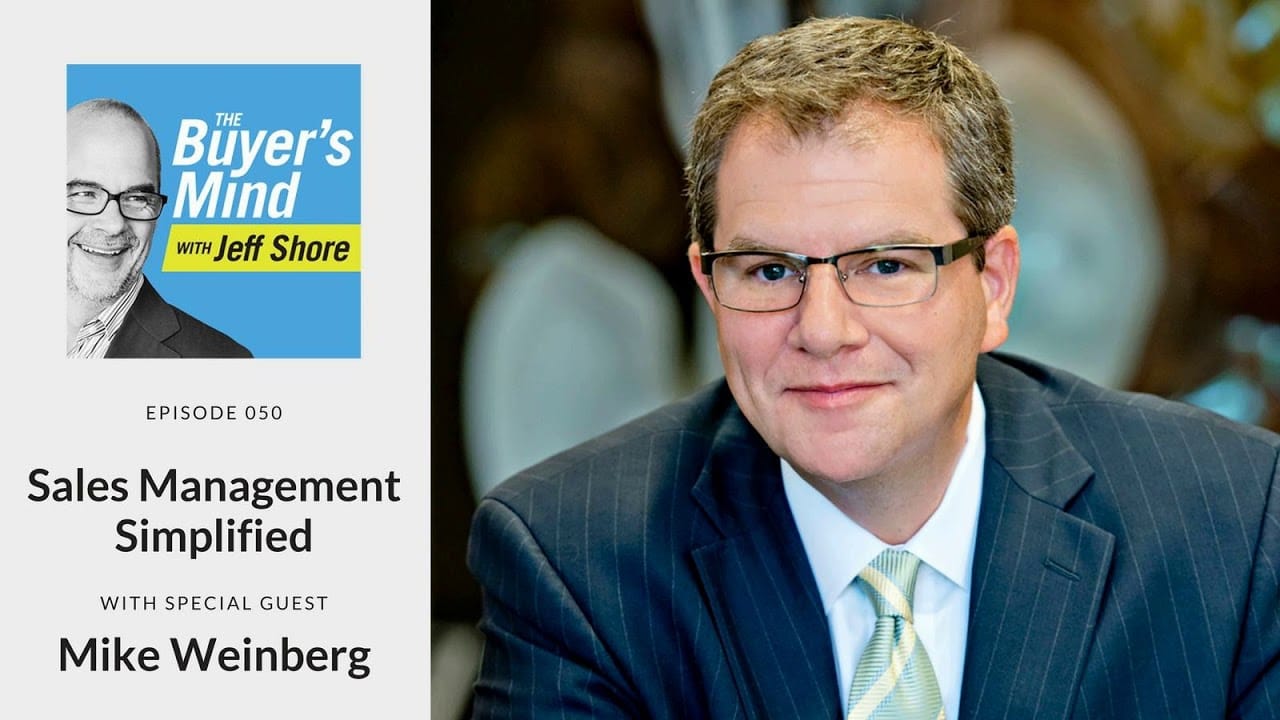
This video from Jeff Shore Real Estate Sales Training covered a lot of ground. 4 segments stood out as worth your time. Everything below links directly to the timestamp in the original video.
If your sales team keeps underperforming, the problem might not be the team. Weinberg's uncomfortable thesis is that executives are often the last to see it.
Sales Consultant Mike Weinberg: Fix Leadership Before Blaming the Sales Team
Mike Weinberg wrote "Sales Management Simplified" out of frustration with a pattern he kept encountering as a consultant: companies would hire him to fix their salespeople when the real problem sat one floor up. Training salespeople, he argues, only goes so far if the surrounding culture, compensation structure, role definitions, and management accountability are broken. He describes the book as holding up a mirror to the very executives who were paying him — a deliberately uncomfortable choice when he could have kept collecting fees for training engagements instead. Sales managers, he contends, may be the single most important people in any organization when it comes to shaping culture and driving results.
The argument cuts against a deeply ingrained corporate reflex: when numbers disappoint, scrutiny falls on the sales floor rather than the leadership suite. Weinberg's book, a consistent bestseller since its 2015 publication, suggests that instinct is often exactly backwards — and that lasting performance improvement requires leaders to examine what they have built before demanding more from the people working within it.
"I felt like someone with a platform needed to say to executives: before you're so quick to point your finger at the salespeople for your sales shortfall, why don't you just spend a few minutes looking in the mirror."
Sales Manager Who Skips Field Coaching Is Like a Baseball Manager Who Never Watches the Game
Mike Weinberg reserves his sharpest criticism for sales managers who believe they can lead through CRM dashboards and late-night emails. When he asks managers how they spend time with their people, he says, some respond with a straight face that they simply don't have time for one-on-one coaching — a reply he likens to a baseball manager making lineup decisions entirely from box scores while never setting foot in the dugout. Coaching, he insists, requires only three things done consistently: prepare the salesperson before a call, observe them in the meeting, and give structured feedback afterward. None of that demands elite sales expertise — just presence and attention.
The practical cost of skipping it is concrete: salespeople develop no craft, pipelines stay thin, and organizations wonder why they are getting outsold. The analogy to Bill Walsh coaching Joe Montana carries a pointed edge — a coach who only reads statistics after the game cannot know whether a receiver dropped the ball or a blocker missed an assignment, and neither can a sales manager who substitutes data analysis for direct observation.
"You can't manage people with your head buried in a screen. Sending emails in the middle of the night doesn't count for accountability or coaching."
Sales Leaders Must Fight for Coaching Time, Not Just Complain About the Lack of It
Jeff Shore acknowledges that organizations routinely bury sales managers in reports and mandatory meetings that crowd out coaching, but he places the responsibility squarely back on the manager. His proposed script is specific: when a senior executive demands a three-hour meeting, the sales leader should explain that the session was supposed to be spent with a rep who hasn't closed a deal in three weeks, and that redirecting that time will cost the company the production it urgently needs. Shore's point is that most sales leaders never frame the trade-off so directly for their bosses — and that until they do, coaching will keep losing to administrative pressure by default.
The underlying tension is one many middle managers across industries will recognize: high-value work gets displaced by urgent-feeling tasks, and the person in the middle rarely pushes back clearly enough to make the cost visible to those above. Shore's argument is that making coaching optional is itself a leadership decision — and that sales managers who accept that drift are complicit in the outcome.
"If you want me in the meeting for three hours, that's your call — but it's gonna cost you sales we otherwise need from Jack. You let me know what you want me to do."
Weinberg's Advice for Sales Plateaus: Stop Blaming Skill Gaps and Check the Calendar
When salespeople or managers hit a wall, Mike Weinberg's prescription is to return to three fundamentals: whether they are targeting the right accounts, whether their pitch actually addresses customer problems rather than cataloguing their own products, and how their time is actually allocated. The biggest diagnosis he offers is counterintuitive — the problem in most stalled sales careers is not that people don't know how to sell, but that they don't spend enough hours actually doing it. For managers, the same logic applies: the question is whether they are filling their days with high-value activity — coaching, accountability conversations, team meetings — or getting absorbed in everything else.
When asked about his professional legacy, Weinberg set aside any claim to brilliance in favor of something more durable: he wants to be remembered as someone who was blunt, told the truth, and gave people simple tools they could actually use. That self-description doubles as a rebuke of an industry he thinks sends too many practitioners chasing complexity when the fundamentals are what move the needle.
"The biggest issue in sales today is not that we don't know how to sell — it's that salespeople don't spend enough time selling."
Also mentioned in this video
- Jeff Shore presenta un episodio especial para gerentes de ventas, describiendo… (0:18)
- Jeff Shore enfatiza la importancia de la gente sobre las cosas en el liderazgo… (2:08)
- Jeff Shore ofrece un consejo a los líderes de ventas para que estudien fuera de… (4:11)
- Jeff Shore reflexiona sobre la conversación con Mike Weinberg, reforzando la… (20:01)
Summarised from Jeff Shore Real Estate Sales Training · 25:33. All credit belongs to the original creators. Streamed.News summarises publicly available video content.
Streamed.News
This publication is generated automatically from YouTube.
Convert your full video library into a digital newspaper.
Get this for your newsroom →