🌐 This article is also available in Spanish.
Original source: Jeff Shore Real Estate Sales Training
This article is an editorial summary and interpretation of that content. The ideas belong to the original authors; the selection and writing are by Streamed.News.
This video from Jeff Shore Real Estate Sales Training covered a lot of ground. 5 segments stood out as worth your time. Everything below links directly to the timestamp in the original video.
If you've ever sat through a sales training that made a simple job feel impossible, Weinberg's diagnosis of why that keeps happening is worth hearing.
Sales Consultant Mike Weinberg Says Complexity in Selling Is Often a Cover for Poor Performance
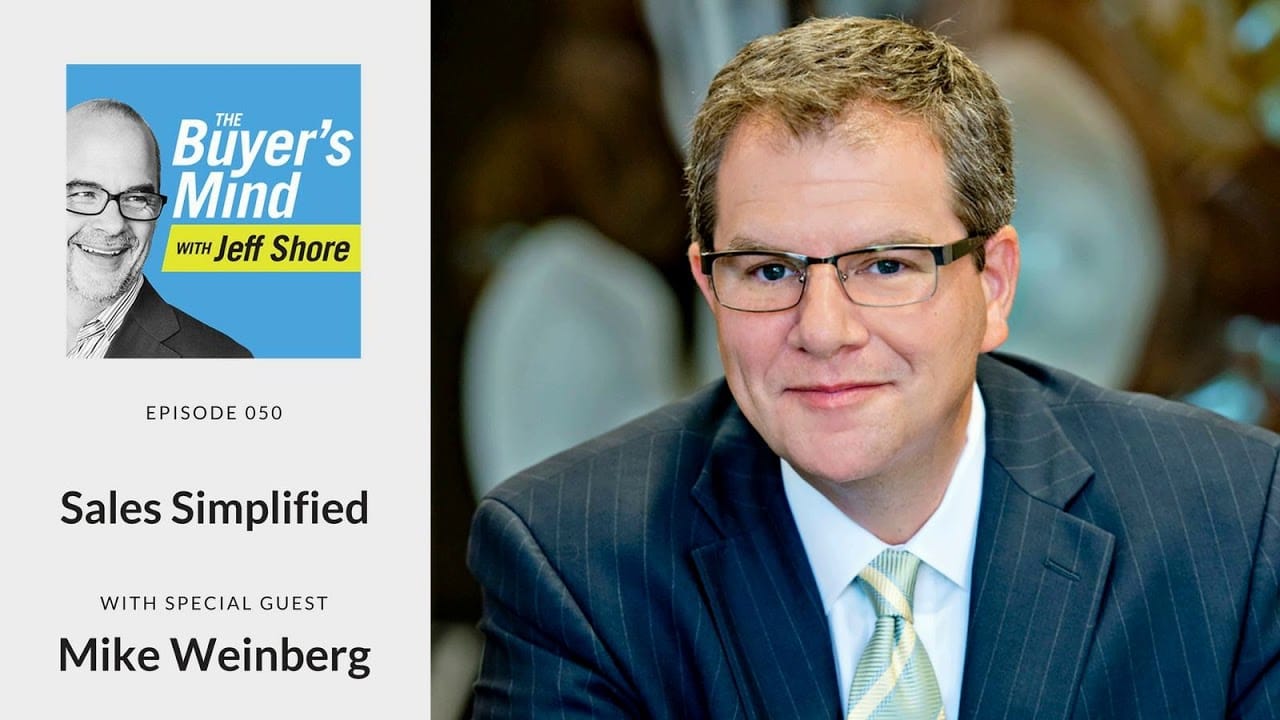
Mike Weinberg, author of "New Sales Simplified," argues that the sales industry has buried itself under unnecessary noise — self-proclaimed gurus, must-have tools, and manufactured complexity — when the fundamentals of winning new business have not meaningfully changed. He describes his mission as calling a timeout on that chaos and returning sellers to basic, implementable principles. In his view, salespeople who insist the craft is complicated are often using that complexity as a smokescreen to hide weak effort and poor results.
The argument cuts against a multibillion-dollar sales-technology industry that profits from convincing teams they need the next platform or methodology to survive. Weinberg's pushback reflects a broader tension in professional services: the more crowded a field becomes with advice, the harder it is to distinguish genuine insight from noise — and the easier it is for underperformers to hide behind the confusion.
"The people who tell us that sales is complicated either really confuse themselves or they use that complexity as a smokescreen so you can't see into their lame effort or decipher their poor results."
Buyers Arrive Hoping for a Good Salesperson — and Usually Leave Disappointed, Weinberg Says
Walking into an Audi dealership looking for a family sedan, Mike Weinberg sat down beside a salesman who then talked uninterrupted for seven minutes about technology Weinberg had no interest in. That experience, he says, is the norm rather than the exception — and it shapes every buying conversation that follows. Customers do not arrive wanting to distrust salespeople; they arrive hoping the person across from them will know more than they do and help them make a sound decision. The disappointment of that hope, repeated over years of purchases, is what salespeople inherit the moment a new prospect walks in. As Weinberg puts it: "It's not your fault, but it is your problem."
The observation reframes a common anxiety in sales culture — the fear that customers are inherently adversarial — and replaces it with something more demanding: the responsibility to undo damage caused by every low-integrity seller who came before you. The practical implication is that genuine helpfulness, not technique, is the fastest way to disarm a cautious buyer.
"It's not your fault, but it is your problem. There are lots of salespeople who waste buyers' time, so when you're in a selling situation you're up against that baggage that the customer brings to the conversation."
Weinberg Redefines 'Story' in Sales: Not Narrative Art, But a Set of Customer-Focused Talking Points
Mike Weinberg draws a sharp distinction between storytelling as a performance skill and what he calls "your story" in sales — the collection of talking points a seller uses to describe what they do and how they help clients. That story, he argues, is the most important weapon in any salesperson's arsenal because fragments of it appear in every customer interaction: voicemails, emails, social media profiles, presentations, proposals, and contracts. The problem, he says, is that most salespeople, when asked to describe their business, produce something self-focused, boring, and complicated. The old sin was exaggeration; today's sin is the opposite — flat, passionless delivery with no effort to make an offering compelling.
The distinction matters because it shifts the standard for a "good story" away from charisma or theatrical skill toward something more structural: does the message centre on customer outcomes rather than product features? Weinberg's framework suggests that mediocre sales results often trace back not to poor technique at the close but to a weak foundational message that fails buyers long before any negotiation begins.
"Your story is the collection of talking points you use when you describe what you do and how you help people — and pieces of it end up in everything else you do."
A Shirt Store's 30-Second Pitch Shows How Customer-Centred Storytelling Eliminates Price Resistance
Jeff Shore walked into Hammer Shirts, a men's clothing shop in downtown Chicago, and within thirty seconds had mentally committed to buying at least one shirt — before ever glancing at a price tag. The salesman's opening line was the key: he told Shore that Hammer shirts are not for everyone, only for people who take care of themselves and don't want excess fabric bunching out of their trousers when they remove a suit jacket. By leading with who the product excludes, and then explicitly placing Shore in the category of people it suits, the salesman made Shore feel seen rather than sold to. The price question, Shore recalls, simply ceased to matter.
The anecdote illustrates a principle Weinberg and Shore both argue is systematically ignored: buyers lower their defences not when they hear about product features but when the conversation is framed around their own identity and outcomes. Leading with the product triggers comparison and price sensitivity; leading with the customer triggers interest and emotional buy-in. The shirt salesman, by articulating clearly who benefits and why, turned a casual browser into an advocate who can still recite the brand's story years later.
"The only story that really matters is the story that the customer is going to tell after they talk to you."
Weinberg's Closing Method: Ask 'What Do You Think?', Then Stop Talking
Mike Weinberg's preferred approach to closing a sale rests on two moves most sellers resist: surfacing objections on purpose, and demanding a mutual commitment before leaving the room. Rather than applying pressure or running through scripted closes, Weinberg summarises the case for moving forward, then asks the buyer simply, "What do you think?" — and says nothing further. The silence is intentional. Deals that go quiet, he argues, almost always conceal an unresolved concern the buyer was too polite or evasive to raise. By naming the awkwardness — for example, pointing out directly that a prospect has always bought Microsoft software and is now being asked to adopt an Oracle-based system — Weinberg pulls the objection into the open where it can be addressed. He then closes with a quid pro quo: if he agrees to prepare a proposal, the buyer commits to a specific follow-up meeting with their full team.
The approach reflects a broader shift in sales thinking away from the closing "technique" as a discrete event and toward the idea that trust — built through every prior commitment — does most of the work. The final ask becomes less a gamble and more a logical confirmation of a decision already forming.
"I feel like based on what we've shared with each other this is a good fit, you're going to get a lot of value, this makes sense — and then I just stop and look at them and say, 'What do you think?' And then I don't say another word."
Summarised from Jeff Shore Real Estate Sales Training · 29:45. All credit belongs to the original creators. Streamed.News summarises publicly available video content.
Streamed.News
This publication is generated automatically from YouTube.
Convert your full video library into a digital newspaper.
Get this for your newsroom →