Original source: Exocet
This video from Exocet covered a lot of ground. Streamed.News selected 3 key moments and summarises them here. Everything below links directly to the timestamp in the original video.
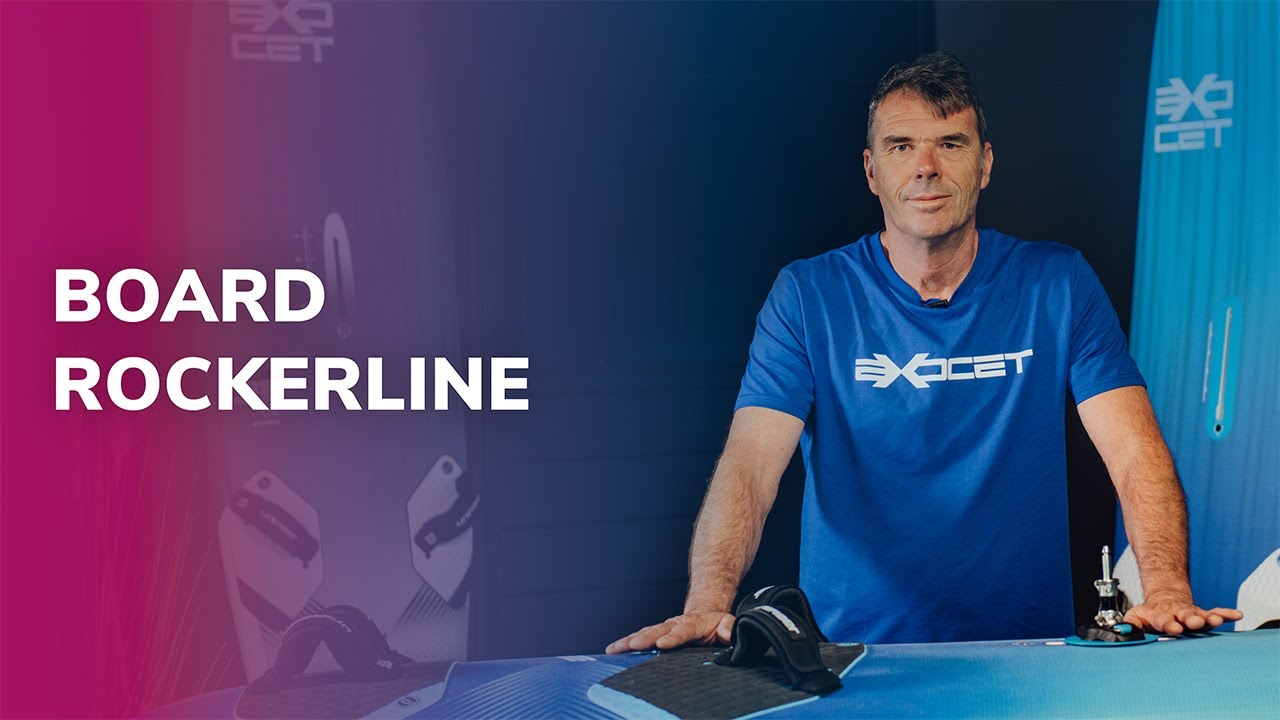
The subtle curves on the bottom of a windsurf board are not accidental. A small change at the tail can dramatically alter its speed and feel, revealing a constant balance between power and control.
Board Design Trade-off: 'Tail Kick' Offers Speed But Sacrifices Stability
Adding an upward curve at the back of a board, known as a “tail kick,” helps it get on plane faster, a critical performance metric. However, this design comes at a cost, making the board feel looser and less powerful by disrupting the clean flow of water that a flat surface provides.
To compensate for this instability, designers must introduce more complex bottom shapes, such as concaves. This illustrates how a single design choice in high-performance equipment necessitates a cascade of other adjustments to maintain control.
"When you have a flat, the water exit is very clean, while when you put tail kick you will have to make some a little bit more fancy on the bottom... to tame the effect."
Upward Curve in Board's Nose Is Key to a Faster Takeoff
An upward curve at the front of a board, or a “kick in the nose,” is a crucial feature for helping it get up to speed quickly. This shape creates resistance against the water that helps lift the board onto plane more easily. In contrast, boards with a very flat profile, or rocker, are more difficult to get started.
This highlights a fundamental compromise in board shaping: a flat rocker provides a smooth ride once at speed, but the initial takeoff is trickier and requires more rider skill.
"If it's a very flat rocker, the board once you're on the plane is nice, but the takeoff is a little bit more tricky."
Foilboards Feature the Most Extreme Curvature in Modern Board Design
Contrary to what might be expected, the modern foilboard features the most extreme overall curve, or “rockerline,” of any board type. Designers still use a straight edge as a baseline for measurement, but the amount of curve from nose to tail is significant, with a key reference point often set at 150 centimeters from the tail.
This radical shape demonstrates how equipment design must fundamentally adapt to new technologies. The physics of riding on a hydrofoil demand a completely different board profile than one designed to skim the water's surface.
"What board for example would have the most rocker line? Which is strange enough, it's a Foilboard."
Summarised from Exocet · 6:15. All credit belongs to the original creators. Exocet Windsurfing summarises publicly available video content.