🌐 Also available in: 🇫🇷 Français
Original source: The WindsurfingTV Podcast
This video from The WindsurfingTV Podcast covered a lot of ground. Streamed.News selected 6 key moments and summarises them here. Everything below links directly to the timestamp in the original video.
The pandemic forced a sudden career stop on millions. A world champion windsurfer shares how he navigated the abrupt shift from elite training to lockdown fatherhood and financial uncertainty.
Pierre Mortefon Recounts Sudden Shift From World Tour Prep to Full-Time Fatherhood During Lockdown
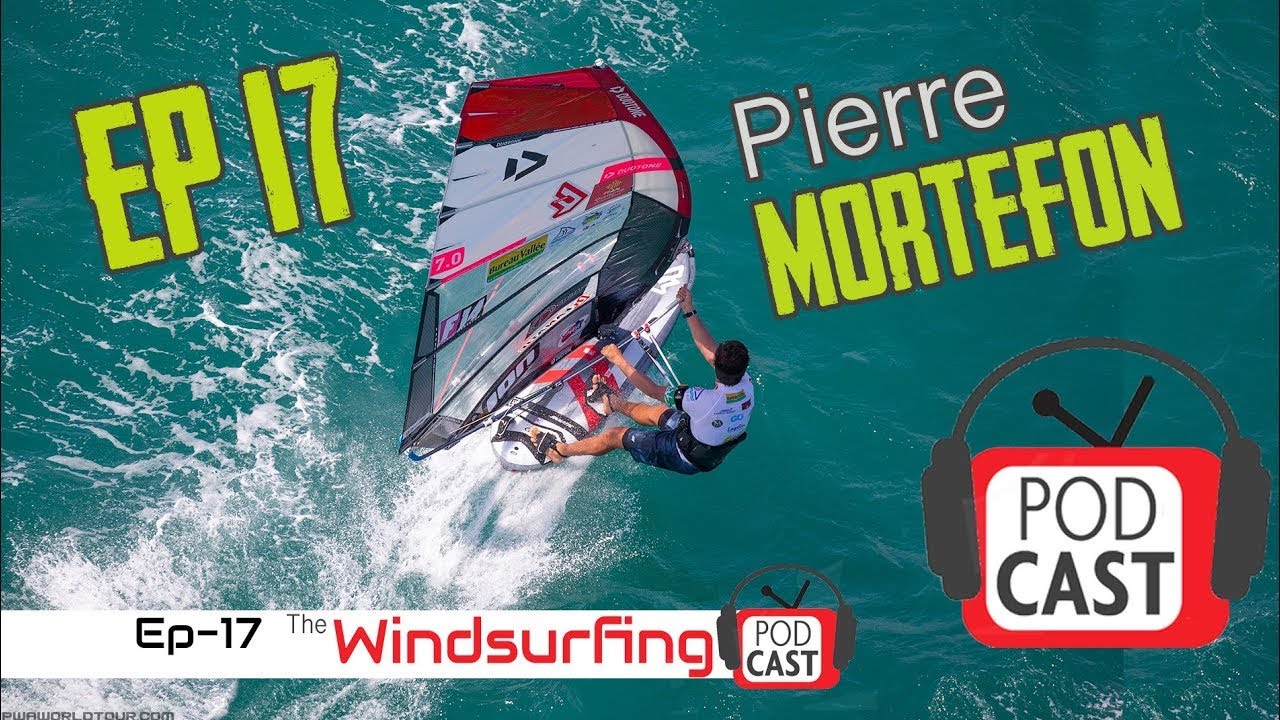
Professional windsurfer Pierre Mortefon detailed the abrupt halt to his 2020 season preparations when France entered its first COVID-19 lockdown. After intensive training blocks in Tenerife and Japan, he was in peak condition when the French president announced what he termed a "war" on the virus. Overnight, Mortefon’s focus was forced to pivot completely from his athletic career to his family life. With his girlfriend still working, he became a full-time father, a role reversal he described as going from "100% sport to zero" and "zero papa to full-time."
The experience provides a window into the challenges faced by elite athletes during the global pandemic. Beyond the disruption to training, Mortefon faced financial uncertainty as sponsors reduced budgets and salaries. His story illustrates the struggle to maintain physical conditioning under severe restrictions while simultaneously navigating new family dynamics. It’s about the notion that for professional athletes, the pandemic wasn't just a pause in competition but a fundamental reordering of personal and professional life.
"My sport came from 100% to zero, and the papa side went the opposite, from zero to full-time."
▶ Watch this segment — 1:24:50
Pierre Mortefon Recalls High-Speed Crash, Criticizes 'No Rules' Racing When Control Is Lost
Windsurfing champion Pierre Mortefon recounted a high-speed collision with fellow competitor Tati Frans, describing it as one of the most frightening moments of his career. He recalled holding the injured and unresponsive Frans in the water before help arrived, an experience that left a deep impact. While Mortefon was physically unharmed, he said he was truly shocked only after watching a replay of the incident days later, calling the impact "hardcore." He also criticised race officials for allowing him to complete the race without a medical check, highlighting a potential safety lapse in the aftermath of a serious accident.
The incident fuels a broader debate about safety and governance in high-speed sports that operate under a "no rules" philosophy. It's about the notion that self-preservation, the core principle of this system, fails when a competitor is no longer in command of their equipment. Mortefon’s reflection draws a distinction between aggressive racing and a dangerous loss of control, suggesting that even without formal rules, there must be an implicit expectation that athletes remain in control of their craft to ensure the safety of the entire field.
"You need to respect more and you need to keep the control on your machine. I think this time he was not in control. There is a difference between no rules and crazy action."
Mortefon Defends 'No Rules' Racing as a 'Clever' System of Self-Preservation
Windsurfer Pierre Mortefon defended the controversial "no rules" system in professional slalom, describing it as a "very clever" framework that relies on the athletes' instinct for self-preservation. He argues that because no competitor wants to crash, the absence of formal regulations naturally encourages safer and more aware racing. However, he also acknowledged that this principle breaks down in the rare instances when an athlete loses control, citing his collision with Tati Frans as an example of the system's inherent risks when pushed beyond its limits.
The implications of this philosophy extend to the governance of many high-speed sports that must constantly balance risk with spectacle. We're seeing a dynamic where the practicality of officiating is a major factor. Mortefon questioned how officials could possibly make accurate judgments at speeds of 30 knots, suggesting that the only truly enforceable standard is the unwritten one of maintaining control. This places the ultimate responsibility for safety squarely on the individual athlete's skill and real-time decision-making.
"We understand that no rules is something actually very clever because in the end nobody wants to crash."
Fatherhood Had Greater Mental Than Physical Impact on Performance, Says Windsurfing Champion
Professional windsurfer Pierre Mortefon opened up about the profound effect fatherhood had on his competitive career, stating that the mental shift far outweighed the physical challenges. His son, Leo, was born just two weeks before the start of the 2018 season, and while he initially anticipated the main difficulty would be sleep deprivation, he soon realized the impact was deeper. Mortefon described a fundamental change in his priorities that left him feeling "lost" and affected his performance in the early stages of that season.
This personal account offers insight into the work-life balance struggles of elite athletes, who are often perceived as being singularly focused on their sport. Mortefon’s experience underscores that major life events influence performance in ways that transcend physical readiness. It’s about the notion that an athlete's mental state is inextricably linked to their ability to compete at the highest level. This highlights a crucial, often invisible, dimension of professional sports, where personal growth and life changes must be integrated into a demanding career.
"At the beginning, I was thinking the physical aspect was the worst, like you don't sleep. And after a few months, I realized that it's more the mental aspect which gets shocked."
Pierre Mortefon Lost 2015 World Title on Unclear Tiebreaker Rule, Learned of Defeat From Journalist
Pierre Mortefon recounted the confusing and painful conclusion to his 2015 world title campaign, where he lost to Antoine Albeau after they finished the season with an equal number of points. At the final event in New Caledonia, the championship hung in the balance for over an hour as organizers struggled to interpret an obscure tiebreaker rule. The rule, which ultimately awarded the title to the racer with more head-to-head event wins, was not clearly understood by the athletes. In a moment of high drama and poor communication, Mortefon learned of his second-place finish not from an official, but from a journalist asking for his reaction.
The incident serves as a powerful case study on the importance of clear governance and communication in professional sports. The ambiguity of the rulebook transformed a potential moment of supreme triumph into one of confusion, frustration, and anticlimax for an athlete at the peak of his career. It’s about the notion that administrative failures can overshadow athletic achievement, leaving a lasting impact on a competitor’s motivation and trust in the system that governs their livelihood.
"Nobody knew at the end of the last final who was the world champion, so it was pretty strange."
Windsurfer Pierre Mortefon on Embracing Foils: How a Slalom Purist Came to See the Technology's Benefits
Professional windsurfer Pierre Mortefon detailed his evolution from a staunch opponent to a proponent of integrating hydrofoils into traditional slalom racing. As a self-described purist devoted to classic slalom, he was initially concerned that the new technology would corrupt the sport's essence. His perspective shifted after experiencing competitions where light winds made traditional slalom impossible. He came to see that foiling dramatically expands the range of raceable conditions, ensuring that events can run far more consistently.
We're seeing a dynamic here that is common across many sports, where technological innovation challenges tradition. Mortefon's journey from skeptic to advocate highlights the pragmatic compromises needed to increase a sport's viability and spectator appeal. While he notes that foiling reintroduces an "equipment race" where gear can play a bigger role than rider skill, he ultimately concluded that the ability to host more races is a net positive. It’s about the notion that evolving a sport requires balancing its core identity with the practical opportunities that new technology provides.
"I'm still in love with slalom in every single condition, and on the other way I'm getting in love with the foil now."
▶ Watch this segment — 1:16:54
Summarised from The WindsurfingTV Podcast · 1:56:50. All credit belongs to the original creators. Windsurfing TV Podcast summarises publicly available video content.