🌐 Also available in: 🇫🇷 Français
Original source: The WindsurfingTV Podcast
This video from The WindsurfingTV Podcast covered a lot of ground. Streamed.News selected 8 key moments and summarises them here. Everything below links directly to the timestamp in the original video.
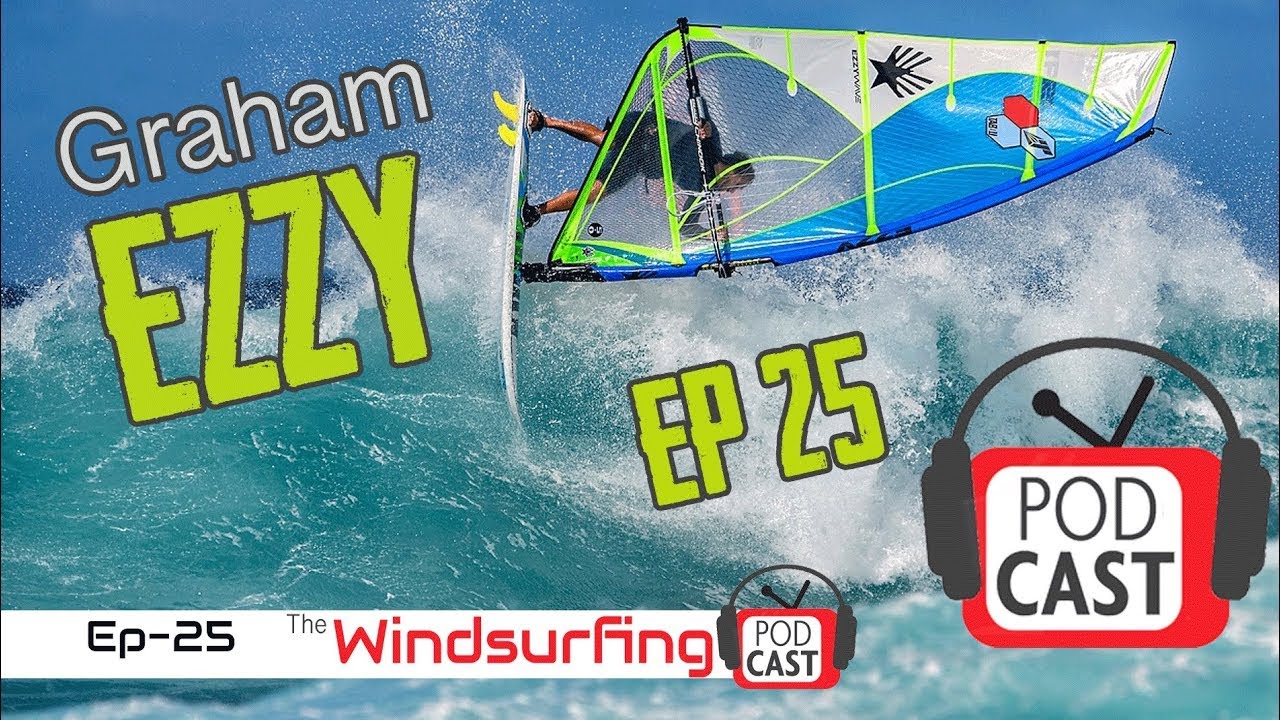
A job interview for a high-paying finance role can be a dream for many. For professional athlete Graham Ezzy, it was the moment he knew he had to dedicate his life to the water.
Pro Windsurfer Graham Ezzy Recalls Pivotal Finance Interview That Affirmed His Athletic Career Path
Professional windsurfer Graham Ezzy detailed his decision to attend Princeton University, making a pact with himself to only pursue a full-time athletic career if he failed to gain admission to a top-tier school. After graduating with a degree in literature, he was briefly tempted by the lucrative finance and consulting jobs that attracted the majority of his Ivy League peers, even applying for positions in the financial sector in New York City.
The decisive moment came during an interview in a Midtown Manhattan office, where the interviewer described a 20-year career path that would lead to making millions annually. This vision prompted a "cold sweat" in Ezzy, crystallising his realisation that an office-bound life was not for him, regardless of the financial reward. It's a dynamic where the rigid structure of an elite, conventional career path served, by stark contrast, to clarify his authentic passion for windsurfing and push him definitively back towards the sport.
"I just remember thinking, '20 years I'm going to be in my 40s and I'll have been in this office for 20 years.' And I had like a cold sweat... I was like, 'I don't care if I'm making no money, this is not what I want.'"
Maui's '11 O'Clock Rule' and '10-Man Rule' Reveal Decades of Tension Between Surfers and Windsurfers
Professional windsurfer Graham Ezzy detailed the long-standing friction between surfers and windsurfers at Maui's iconic Ho'okipa beach, a conflict that has historically led to physical altercations and even organised efforts to ban windsurfing from the island. This tension resulted in compromises like the "11 o'clock rule," which restricts windsurfing in the morning based on the rationale that it was scaring away fish. At Ho'okipa specifically, an unwritten "10-man rule," a form of gentlemen's agreement, dictates that windsurfers must yield the water if more than ten surfers are present.
The implications of this dynamic point to the creation of informal governance systems where official regulation is absent. The situation has evolved significantly since the introduction of lifeguards around 2006. We're seeing a dynamic where an external authority, initially viewed with suspicion by some windsurfers, has become a key factor in de-escalating tensions and helping to enforce these community norms, ultimately calming a historically volatile situation at a shared, high-demand natural resource.
"There have been multiple efforts to ban windsurfing in Maui... The 11 o'clock rule, which means you can't windsurf before 11 o'clock in the morning... came from an effort to ban windsurfing and that was the compromise."
Windsurfer Graham Ezzy Details Shift From PWA Critic to Board Member, Citing Need for Transparency
Graham Ezzy explained that his motivation for joining the Professional Windsurfers Association (PWA) management board stemmed from a desire to shift from being a vocal critic to an active agent of reform. Tired of complaining about a range of issues from judging to a lack of communication, he stood for election to the seven-person board. A primary goal was to dismantle what he perceived as a culture of secrecy by increasing transparency and involving sailors more directly in the tour's decision-making processes.
His first year on the board, however, was an "eye-opening" lesson in institutional reality. The implications of his experience are that many of the tour's perceived failings were not products of poor decisions but of severe and intractable constraints related to budget, personnel, and a structural reliance on local event organizers. We're seeing a dynamic where an outsider's reformist agenda confronts the deep-seated limitations of an organization, revealing that meaningful change is far more complex than simply identifying problems and possessing the will to fix them.
"That first year was really eye-opening because I learned that a lot of the things are the way they are because that's the best way that they can be, because we're so limited by budget, by personnel."
Historical Trauma of Monarchy's Overthrow Lingers in Hawaii's Modern Cultural Dynamics, Says Graham Ezzy
Windsurfer Graham Ezzy provides crucial context for the social tensions in Hawaii, linking them to the islands' complex and often painful history. He points specifically to the forceful overthrow of the Hawaiian monarchy and subsequent annexation by the United States in the 19th century. According to Ezzy, this history was largely suppressed for a long period, leading to a painful "Hawaiian Renaissance" where many—including military veterans who had fought for the U.S.—rediscovered the truth of what happened to their people.
The implications of this historical reckoning are profound, creating what Ezzy calls an "identity fissure" and a deep sense of betrayal among Native Hawaiians. We're seeing a dynamic where this unresolved historical trauma subtly informs present-day interactions, including the famously strict etiquette in the surfing lineup. The emphasis on respecting local rules, he suggests, is not merely about managing crowds but is deeply connected to a broader assertion of cultural priority and historical respect in a place that has experienced profound loss.
"You had a lot of Hawaiian veterans... they were veterans, they'd fought for the United States, but then they learned what had happened to their people... you had this like identity fissure which is even more painful."
Graham Ezzy Questions if World Title Defines the 'Best Wave Sailor' Amidst Sport's Diverse Conditions
Professional windsurfer Graham Ezzy outlined his complicated relationship with competition, highlighting the fundamental disconnect between his home conditions in Maui—known for big waves and light, starboard-tack winds—and the typical World Tour stop, which often features the exact opposite. His own competitive results have been volatile, from defeating the world's number two ranked sailor in his debut event at age 14 to enduring years of struggle with the mental pressures of competition.
The implications of this ongoing challenge question the very definition of a "world champion" in a multifaceted sport. Ezzy argues that while winning a world title is an incredible achievement requiring immense dedication, it does not necessarily mean the victor is the best all-around wave sailor. We're seeing a dynamic where the specific, often narrow, parameters of formal competition may fail to capture the full spectrum of skill within the sport. It's about the notion that true excellence can exist outside the framework of official rankings, a common tension in both athletic and creative disciplines.
"Are they the best wave sailor in the world? I would maybe argue with that question because there's so many different kinds of wave sailing, from Ho'okipa to Pozo to Sylt."
Windsurfer Graham Ezzy Redefines Competitive Goals, Focusing on Style and Personal Limits Over World Titles
Graham Ezzy articulated a competitive philosophy that consciously deviates from the singular goal of winning a world championship. He acknowledges that to be a title contender on the current professional tour, he would need to dedicate himself to mastering port-tack jumping in the Canary Islands—a pursuit he is not passionate about. Instead, his focus lies in testing his own personal limits across diverse conditions and, more importantly, refining a unique approach to wave riding that prioritizes flow, speed, and what he terms "rail work."
The implications of this mindset reveal an effort to preserve personal artistry within a results-driven professional sport. We're seeing a dynamic where an elite athlete chooses to prioritize stylistic progression over maneuvers that simply generate high scores. It's about the notion of treating the wave not as a "skate park" for executing a series of tricks, but as a medium for a continuous, flowing "dance." This represents a subtle form of resistance to the homogenization of style that can often result from standardized judging criteria.
"I'm really looking at it not as like a skate park where I'm doing a trick there, a thing there... but really as a kind of a dance where I'm trying to really flow with the wave."
▶ Watch this segment — 1:05:44
Graham Ezzy Defends Localism in Surfing as a Necessary Social Structure, Not Elitism
Addressing his reputation for being aggressive in the water, professional windsurfer Graham Ezzy offered a robust defense of localism, framing it as a fair and necessary social hierarchy. He argues that the common critique of localism is misguided, stating, "to be anti-localism is to be elitist." His rationale is that it's unfair to expect residents, who may only have an hour after work to get on the water, to compete equally with a constant stream of hundreds of tourists on vacation. In his view, locals should have a degree of priority at their home break.
The implications of this philosophy extend to a code of conduct for all participants. The corollary to his argument is that when he travels, he is intentionally deferential and respectful to the locals of that spot. We're seeing a dynamic where an unwritten social contract, specific to each location, governs behavior more effectively than a universal rule. Different spots have varied systems—some use a rotation, others prioritize who is on the peak first—and it's about the notion that respecting these nuanced local hierarchies is essential to maintaining order.
"To be anti-localism is to be elitist... I think that it's really important to give respect to the locals."
PWA Implements Star System to Foster More Wave Events and Lower Organizer Barriers
As a member of the Professional Windsurfers Association (PWA) management board, Graham Ezzy helped develop a tiered "star system" for its wave-sailing competitions. This structural change was a strategic move to address the high barrier to entry for event organizers. By allowing for lower-level events with smaller prize purses to coexist with major tour stops, the system is designed to encourage more local organizers to host competitions, especially in locations that offer sought-after "down-the-line" wave-sailing conditions.
The strategic implication is the creation of a more sustainable and diverse global tour, with a pipeline for smaller events to potentially grow over time. We're also seeing a dynamic of attempted consolidation within the sport, as Ezzy reports on challenging, ongoing talks with the rival IWT tour to integrate some of its events into the PWA's ranking system. This illustrates the classic difficulty of aligning standards and visions between two separate governing bodies, even when such a partnership could benefit the sport as a whole.
"The reason for this whole thing is it's a way to to get more events. So it's a way that then we can have more down the line events."
▶ Watch this segment — 1:03:03
Summarised from The WindsurfingTV Podcast · 1:37:06. All credit belongs to the original creators. Windsurfing TV Podcast summarises publicly available video content.