🌐 Also available in: 🇫🇷 Français
Original source: The WindsurfingTV Podcast
This video from The WindsurfingTV Podcast covered a lot of ground. Streamed.News selected 6 key moments and summarises them here. Everything below links directly to the timestamp in the original video.
The push for extreme athletic achievement often comes with hidden costs. This is a look inside the long-term mental and physical price one athlete paid for pushing the limits of his sport.
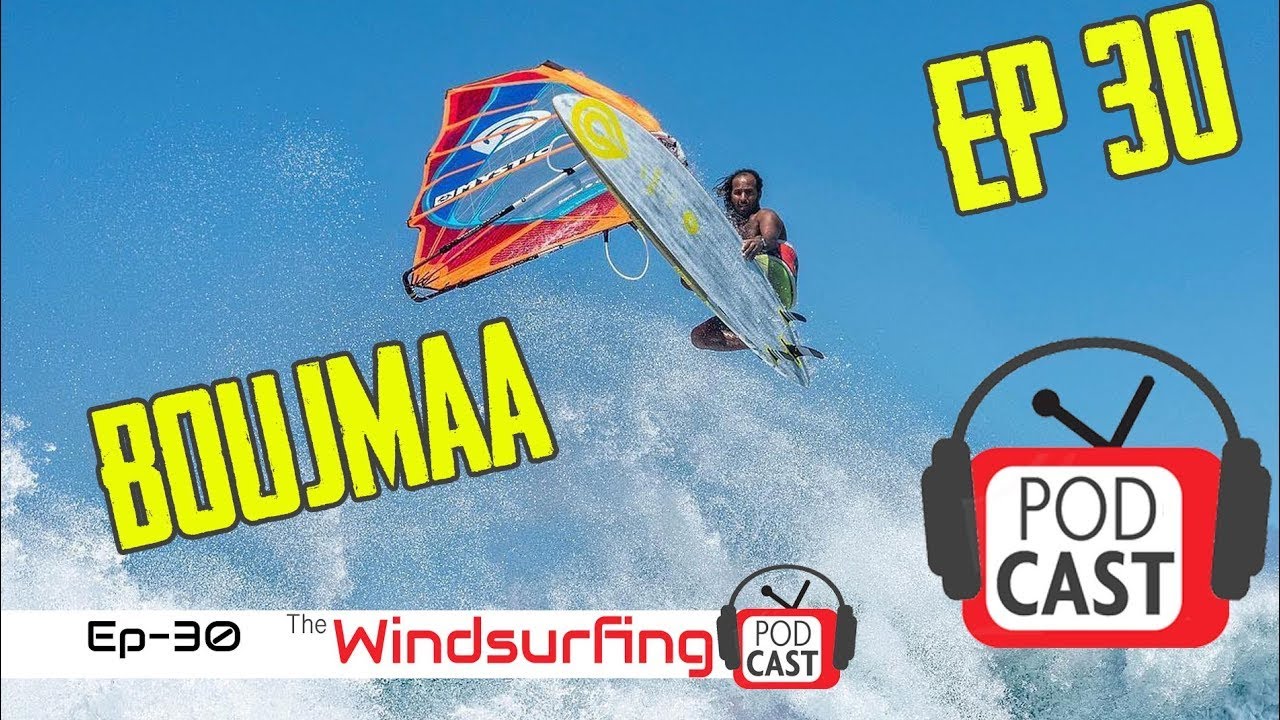
Windsurfer Boujmaa Guilloul Links 2011 Near-Fatal Crash to Long-Term Anxiety and Depression
Professional windsurfer Boujmaa Guilloul has spoken about the lasting psychological impact of his near-fatal crash in April 2011, an event he describes as a “black hole” in his memory. While attempting a triple forward loop, Guilloul lost consciousness in the water and sustained a broken wrist and brain swelling. He recalls nothing of the incident itself, but notes that the aftermath marked a significant transition in his career and personal life.
The implications of the accident, he explains, were more mental than physical. Guilloul connects the concussion he suffered to subsequent struggles with anxiety and depression, conditions he had never experienced before. It's about the notion that the invisible injuries of extreme sports can be the most persistent. Citing the scientifically proven link between brain trauma and mental health issues seen in athletes from American football and ice hockey, he frames his experience as part of a wider dynamic concerning the long-term well-being of professional athletes.
"Scientifically it is proven that a concussion causes mental weaknesses. By that I mean you get depression, you get anxiety, which I've never met before I had this accident."
To Grow Windsurfing, Focus on Youth Camps and Used Gear, Says Boujmaa Guilloul
According to professional windsurfer Boujmaa Guilloul, expanding the sport's reach in countries like his native Morocco requires a strategic focus on youth engagement. He argues that windsurfing's growth is challenged by its demanding nature, as it requires significant effort and perseverance in often cold and windy conditions. This, he suggests, is a difficult proposition in a modern society that increasingly values convenience.
It's about the notion that a grassroots strategy is more effective than top-down marketing. Guilloul proposes a model centered on making the sport accessible to young people through structured camps, ideally in cooperation with government organizations. By introducing large groups of children to windsurfing, he believes even a 10% conversion rate would significantly expand the community. This approach, combined with leveraging the secondhand market to lower the high cost of entry for equipment, presents a sustainable path to building the sport from the ground up.
"I feel like people are getting lazier and windsurfing takes a lot of effort and time and perseverance. The best way is to try and make it accessible for a mass of youth."
▶ Watch this segment — 1:00:14
Windsurfing Pro Boujmaa Guilloul Calls for Unity Between Rival PWA and IWT Tours
Boujmaa Guilloul has pushed back against the rivalry between windsurfing’s two premier competitive circuits, the Professional Windsurfers Association (PWA) and the International Windsurfing Tour (IWT). He contends that both tours are essential for the sport's health, likening their roles to that of a mother and a father. From his perspective, the narrative of competition between the organizations is counterproductive to their shared objective of promoting windsurfing to a wider, non-specialist audience.
The implications of this internal conflict are significant for a niche sport. Guilloul argues that the future of professional windsurfing depends on solidarity and cooperation, not division. He advocates for a model where the PWA and IWT co-organize events, presenting a unified front to fans and potential sponsors. It's about the notion that for a sport seeking growth, separatism creates weakness, whereas a consolidated effort would amplify its global presence and appeal.
"The sport doesn't need rivalry. We don't need to separate, because separatism just creates war."
Boujmaa Guilloul Details Why He Abandoned the Triple Loop After His Accident
Following his near-fatal accident in 2011, windsurfer Boujmaa Guilloul says his decision to stop attempting the triple forward loop was the result of a gradual, rational reassessment of risk. While he initially intended to continue pursuing the groundbreaking maneuver, his mindset shifted over the subsequent years as he weighed the complex factors involved in such a high-stakes attempt.
We're seeing a dynamic where an athlete’s risk calculation matures over time. Guilloul’s choice was influenced by several converging realities: a new awareness of the need for perfect conditions and immediate, high-level medical support; the physiological effects of aging; and the observation that other top-tier professionals were not attempting the move. It's about the notion that this was not a simple failure of nerve, but a calculated decision that the potential reward no longer justified the extreme risk, especially since he felt he had nothing left to prove.
"The older I got, the less I've seen it happening until I gave up on it. I was like, 'What's the point? I don't need to prove anything to nobody.'"
IWT Tour Reignited Passion for Competition After Crash, Says Boujmaa Guilloul
For Boujmaa Guilloul, winning the International Windsurfing Tour (then the AWT) was the central force behind his comeback after a life-threatening crash. He credits the tour with fundamentally reigniting his passion for the sport by providing a new framework for success. The tour's focus on prime locations and a positive atmosphere allowed him to rediscover his motivation away from the pressure of performing singular high-risk stunts.
The IWT did more than just provide venues; it reshaped his entire professional mindset. It’s about the notion that an athlete can reinvent their approach to a sport. Guilloul explains that the tour taught him the craft of competition—how to strategically tune his equipment, understand conditions, and accumulate points over a season. This shift from a trick-focused mentality to a holistic competitive strategy provided a sustainable path forward and was instrumental in his psychological and professional recovery.
"The AWT helped me to get back my windsurfing drive and my windsurfing passion and my competition mindset."
Boujmaa Guilloul Confirms He Has Not Retired, Shifts Focus to 'Competing Against Myself'
Veteran windsurfer Boujmaa Guilloul has made it clear that he has not retired from professional competition and plans to participate in the upcoming International Windsurfing Tour (IWT). While affirming his commitment to the sport, he outlined a significant evolution in his competitive philosophy and personal goals for the next phase of his career.
It's about the notion that for a mature athlete, the nature of competition itself changes. Guilloul explained that his focus is shifting from proving himself against other riders to challenging his own limits. Having achieved his primary goals in the sport, his future projects will be centered on an internal contest: competing against himself in diverse and difficult conditions. This marks a transition toward a more introspective and personal definition of what it means to push the boundaries of his sport.
"I believe I have nothing to prove... I will be working on challenging myself in different conditions and see how I can compete against myself more than against other people."
▶ Watch this segment — 1:05:28
Summarised from The WindsurfingTV Podcast · 1:24:41. All credit belongs to the original creators. Windsurfing TV Podcast summarises publicly available video content.