Original source: Graham Ezzy
This video from Graham Ezzy covered a lot of ground. Streamed.News selected 3 key moments and summarises them here. Everything below links directly to the timestamp in the original video.
Understanding how severe weather uniquely impacts different regions like Maui provides crucial insights into the localized effects of climate patterns and their broader consequences beyond immediate disaster.
Maui Faces Extreme Rainfall and Flooding, Disrupting Trade Winds
Maui has experienced an exceptionally stormy week, with over 50 inches (130 cm) of rain in approximately seven days. This severe weather deviates from typical European storm patterns that generate wind for surfing; instead, it disrupts Maui's essential trade winds, leading to calm conditions and heavy rainfall.
The deluge has caused significant flooding and damage, with rivers in West Maui overflowing and destroying buildings and park structures. Oahu is reportedly facing an even more severe disaster. The extreme runoff has also raised concerns about water quality for windsurfing due due to agricultural chemicals, pesticides, and animal matter washing into coastal waters.
"We've had a crazy, crazy amount of rain the last week. Something like over 50 inches of rain in a very short amount of time, like about a week."
Maui Windsurfing Forecast Improves for Upcoming Competition
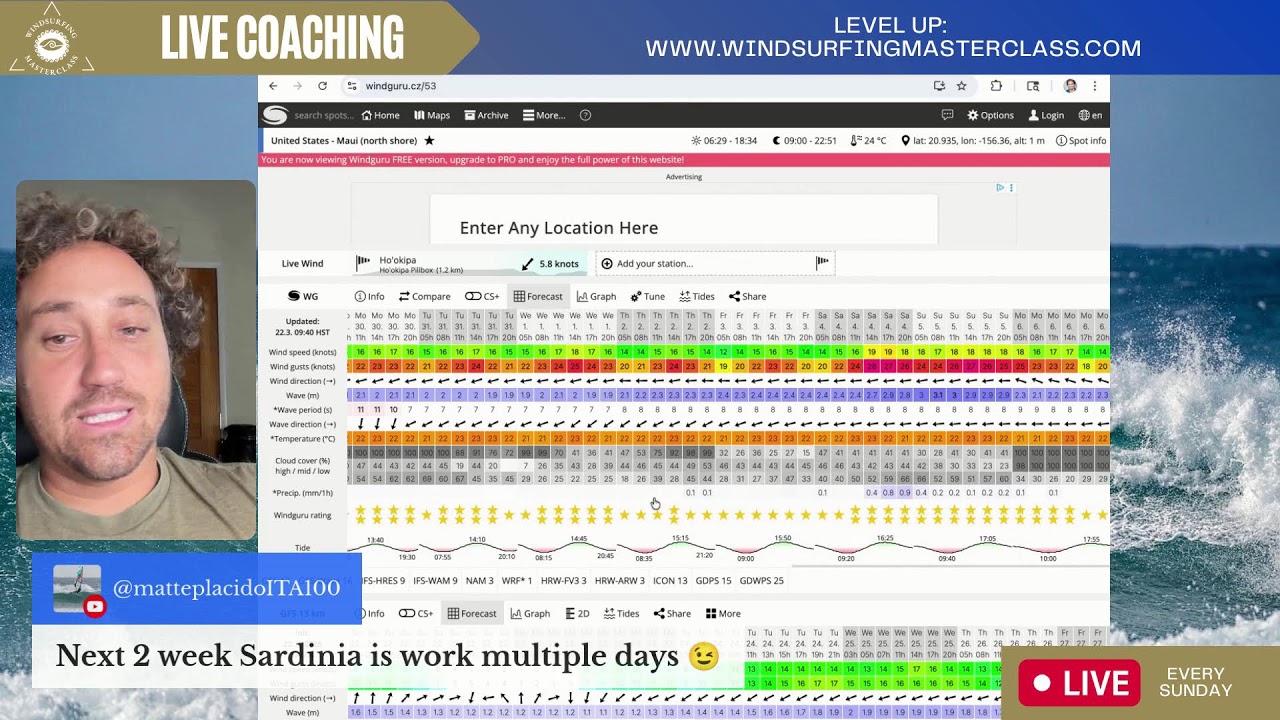
After a period of atypical southerly winds and heavy rain, Maui's windsurfing conditions are expected to improve significantly by Tuesday, with a return to normal northeast trade winds. This shift is crucial for an upcoming competition, which will likely benefit from the more favorable weather.
While the forecast indicates potential for some rain squalls, overall conditions are trending positively compared to earlier predictions of light, unusual Kona winds, which would have been disastrous for the event.
"It looks like by Tuesday, we're back in the water, which would be amazing. Also, it's not so wet and cloudy. It's been so dark."
Expert Windsurfer Shares Key Techniques for Upwind Performance
To improve upwind performance in windsurfing, several critical adjustments to body and board position are essential, particularly in sub-planing conditions.
- Body Posture: Maintain an upright stance with the chest pushed back, arms relatively straight, and pressure driven through the feet into the board.
- Upper Body Twist: Actively twist the head and torso in the upwind direction; a looser harness can facilitate this movement.
- Fin Position: Consider moving the fin slightly further back.
- Aiming: Target a point higher upwind than the desired destination.
- Board Leveling: Keep the board level, applying pressure to the nose if necessary (e.g., by moving the front foot near the mast track) to prevent it from pushing water inefficiently.
These techniques help riders maximize their angle against the wind and maintain efficiency, especially when not actively planing.
"Standing upright so you're not like really over and fighting it, and then also getting that upper body twist."
Summarised from Graham Ezzy · 53:11. All credit belongs to the original creators. Windsurfing Class summarises publicly available video content.