🌐 Also available in: 🇩🇪 Deutsch
Original source: World Medical Innovation Forum
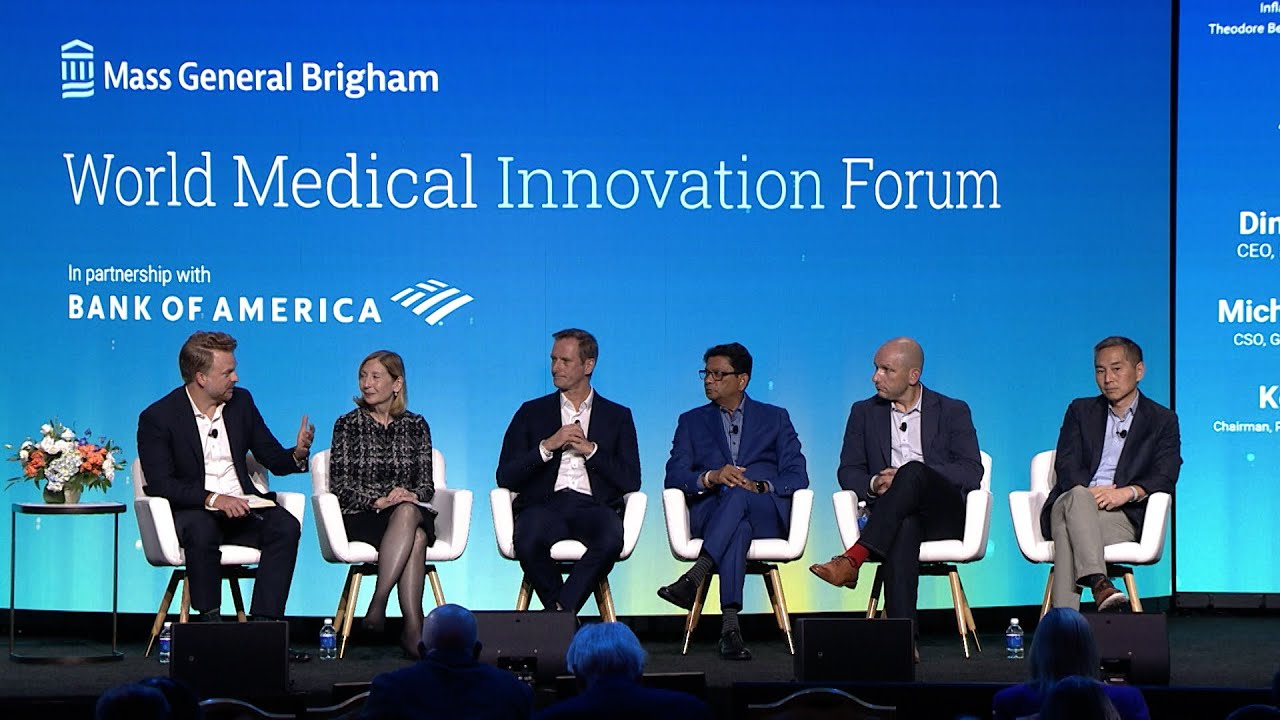
This video from World Medical Innovation Forum covered a lot of ground. Streamed.News selected 7 key moments and summarises them here. Everything below links directly to the timestamp in the original video.
Understanding these contrasting views on partnerships is crucial for anyone following the biotech sector, as it highlights the fundamental strategic decisions shaping drug development and market access.
Biotech Leaders Clash on Partnership Strategy for Drug Development
A debate among biotech leaders revealed sharply contrasting views on the role of partnerships in drug development. Desh, CEO of Protagonist Therapeutics, strongly advocates for collaborations, citing their importance for external validation, financial resources, and leveraging the extensive experience and scale of larger pharmaceutical companies, which can significantly expand a drug's market potential.
Conversely, Ken takes a polar opposite stance, preferring to avoid partnerships to maintain full control, accelerate decision-making, and maximize financial upside. He believes that if capital is accessible, entrepreneurs should retain ownership to steer their assets' destiny, arguing that partnerships often slow down development and limit potential returns.
"In very simple terms, in my own hands, let's say an asset that is fully owned by me, it's a $1 billion pie. There is nothing wrong if by partnering that becomes a $5 billion pie, and even if protagonist gets one-third of that pie, we still come out ahead."
Deep B-Cell Depletion Shows Surprising Efficacy in Autoimmune Diseases
Deep B-cell depletion has demonstrated surprising efficacy in autoimmune diseases, with bispecific T-cell engagers achieving similar profound B-cell elimination and durable, drug-free remission as CAR-T cells when appropriately dosed. This approach represents a significant advancement over previous B-cell depleting antibodies like rituximab, by more potently clearing B and plasma cells from tissues.
The emerging clinical data, though still confusing due to diverse approaches, suggests that T-cell engagers can lead to long-term remission in patients who have failed other therapies. Identifying diseases where B cells are the primary driver will be critical for maximizing the effectiveness of these therapies, offering hope for targeted treatments in conditions like IgA nephropathy.
"I would say that what we've seen, and the data is emerging, but it's confusing because everyone's generating data… is that you are getting the same level of deep B-cell depletion in tissues with the T-cell engager as CAR-T, and I don't think that's actually widely appreciated by the field."
Biotech Executive Advocates for Rapid, Unconventional Clinical Data Acquisition
A biotech executive emphasizes the critical importance of rapidly obtaining clinical data, even through unconventional means such as compassionate use programs or investigator-initiated trials outside the US. This approach aims to achieve early clinical proof of concept efficiently, preventing costly and inefficient later-stage development based solely on theoretical hypotheses.
He argues that the industry often spends excessive time on theorizing, leading to inefficient and expensive drug development cycles. Embracing unconventional methods to generate early clinical insights can significantly reduce costs and accelerate progress, propelling molecules forward faster and at a fraction of the traditional expense.
"There really is just no replacement for just getting the clinical data and getting the data in any fashion that you can... Our industry as a whole probably spends way too much time hypothesizing and pontificating without just pushing the molecules into the clinic."
Jade Biosciences Targets April for IgA Nephropathy with Enhanced Antibody Technology
Jade Biosciences has strategically chosen April as a specific target for treating IgA nephropathy, emphasizing its role in plasma cell-driven disease over broader B-cell compartments like BAFF. This targeted approach is based on historical data showing limited efficacy from broader B-cell inhibitors in IgA nephropathy, indicating that April is the primary pathogenic driver.
To enhance treatment, Jade Biosciences employs YTE mutation technology in their antibodies, which extends the antibody half-life. This innovation aims to achieve deeper and more convenient April suppression, potentially allowing for infrequent dosing, possibly every eight weeks or longer, and delivering a best-in-disease profile for patients requiring decades of therapy.
"We have high conviction that the selective anti-Aprils are going to become the dominant class within IgA nephropathy."
Sanofi Outlines Strategy for Immunology and Inflammatory Disease Innovation
Sanofi is pursuing a multi-faceted strategy to disrupt the immunology and inflammatory disease landscape, focusing on three key areas: breaking current efficacy ceilings through combination and multi-specific approaches, enhancing patient convenience with oral and durable long-term therapies, and achieving true disease modification leading to treatment-free remission. The company leverages both internal R&D and external partnerships, including its corporate venture capital arm, Sanofi Ventures, to sample innovation.
This strategy involves advancing therapies that offer greater activity, developing oral agents for validated and novel targets, and exploring durable solutions like B-cell and emerging T-cell depletion to potentially "reset" the immune system. Sanofi aims to move beyond incremental improvements to fundamentally transform patient outcomes, recognizing that innovation comes from both within and outside its walls.
"Ultimately what we're looking to move towards is true disease modification and sort of ideally treatment-free remission for these patients."
Candid Therapeutics Repurposes Oncology Antibodies for Autoimmune Diseases
Physician-scientist Ken, an experienced operator, has founded Candid Therapeutics to repurpose bispecific antibodies originally developed for oncology to treat autoimmune diseases, with a focus on scalable B-cell depletion. This innovative approach follows compelling data from investigators who applied oncology cell therapies to autoimmune patients, observing unprecedented efficacy and drug-free remission.
After a career spanning diagnostics, metabolic diseases, and radiopharmaceuticals, Ken identified an opportunity to achieve similar profound results using more scalable bispecific antibodies, acquired from China. Candid Therapeutics aims to precisely identify which autoimmune diseases are primarily driven by B cells to maximize the impact of this clinically validated mechanism in a patient-friendly format.
"We started Candid Therapeutics really with two different clinical-stage assets that have been originally developed for oncology and then repurposing that for various different autoimmune diseases."
Protagonist Therapeutics Pioneers Oral Peptides Combining Small Molecule and Biologic Strengths
Desh, CEO of Protagonist Therapeutics, has driven the development of innovative oral peptides that combine the advantageous characteristics of small molecules, such as oral administration, with the high specificity and potency of biologics. This approach led to the successful development of Icotra, an oral IL-23 receptor blocker, now partnered with Johnson & Johnson.
Icotra has shown positive Phase 3 data in psoriasis and Phase 2 data in ulcerative colitis, with an NDA filed in July. Protagonist Therapeutics aims for Icotra to address four major indications traditionally treated by injectable biologic antibodies, potentially offering a more convenient oral alternative for patients suffering from psoriasis, psoriatic arthritis, Crohn's disease, and ulcerative colitis.
"What if in a peptide we could combine the oral characteristics of small molecules as well as the amazing specificity and potency of big biologics in a single peptidic entity?"
Summarised from World Medical Innovation Forum · 40:14. All credit belongs to the original creators. World Medical Innovatio Forum summarises publicly available video content.