Original source: Will Nicholls
This video from Will Nicholls covered a lot of ground. Streamed.News selected 3 key moments and summarises them here. Everything below links directly to the timestamp in the original video.
In learning any complex physical skill, sometimes mastering the hardest part first makes subsequent steps feel effortless. For one wing foiler, the second half of a difficult maneuver turned out to be a surprisingly natural release.
Foiler Discovers Heelside Gybe '10 Times Easier' After Mastering Toeside Turn
After successfully executing a toeside gybe, a wing foiler discovered the subsequent heelside gybe was surprisingly simple, landing it on the first attempt while still on the foil. He described the heelside maneuver as feeling “10 times easier” than the toeside version. The key to this ease, he noted, was that the preceding turn left him in a pre-twisted, switch-stance position. The heelside gybe then became a natural motion of untwisting his body into a more comfortable, forward-facing stance as he transitioned to the new direction.
Achieving this second type of turn was the final component needed to unlock what he termed “unlimited flight”—the ability to link maneuvers in both directions and ride continuously without stopping. With the mechanics of both gybes understood, the focus shifted from singular achievements to consistent repetition. He began practicing the turns over and over on both sides to build the muscle memory required for fluid, uninterrupted foiling sessions.
"It was 10 times easier to do this gybe compared to the toeside gybe. It felt very natural because I was already in this kind of pre-twisted switch stance position, so I was just untwisting myself into a more comfortable, natural position."
'S-Turn' Drill Provides Breakthrough for First Successful Foiling Gybe
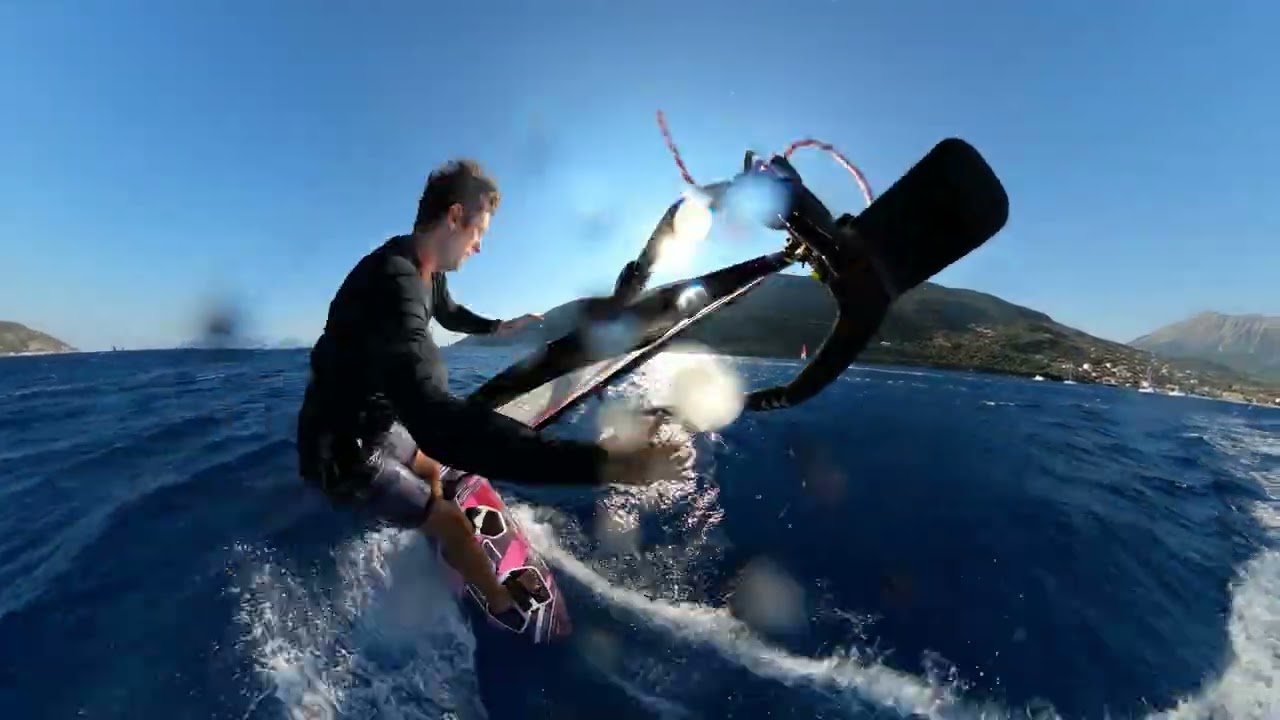
A wing foiler found that practicing large “S-turns” was the key to gaining the control necessary to land his first foiling toeside gybe. He struggled with managing both the board and the wing while changing direction, so he developed an exercise of carving at extreme angles downwind and then upwind, without fully turning. This drill allowed him to understand the changing power dynamics in the wing and get a feel for steering the board while maintaining flight on the foil. The increased confidence and control gained from this practice directly led to his first successful gybe.
The success, however, presented an immediate new challenge: he found himself foiling in a “switch stance” for the first time, an unfamiliar and unnatural position. Unsure of how to proceed, his board began turning into the wind, resulting in an involuntary tack. Although he dropped off the foil, he managed to stay on the board, a moment he attributed to complete luck. This marked a critical step toward his ultimate goal of linking turns for “unlimited flight.”
"This really helped me understand the feeling for the power changing in the wing as I move through the turn. It also helped me get the feeling of steering the board while staying in control and remaining foiling."
Underhand Grip Before Turn Proves to be Breakthrough for Non-Foiling Gybe
A simple change in hand placement proved to be a significant breakthrough for a wing foiler learning the foundational non-foiling gybe. The rider was consistently struggling with the hand change at the midpoint of the turn. The solution was to switch the front hand to an underhand grip before even beginning the maneuver. This adjustment made it much easier and more natural to rotate the wing into the correct position as he moved through the turn, solving a major point of failure.
By adopting this technique, the rider was finally able to complete the turn and sail off in the new direction without falling in. While seemingly a minor detail, mastering this basic gybe on the water was a crucial step of progress. It built the necessary foundation and confidence to tackle the next challenge: executing the turn while actively riding on the hydrofoil.
"A huge breakthrough came when I started to switch to an underhand grip with the front hand before entering the gybe. This made it much easier to turn the wing into the right position and felt much more natural."
Summarised from Will Nicholls · 6:09. All credit belongs to the original creators. Will Nichols Windsurfing Press summarises publicly available video content.