Original source: Will Nicholls
This video from Will Nicholls covered a lot of ground. Streamed.News selected 3 key moments and summarises them here. Everything below links directly to the timestamp in the original video.
In high-power sports, control often comes from a surprising place. For windsurfers, mastering a complex turn means shifting your body forward to become a more effective counterweight to the force of the wind.
Forward Body Position Is Key to Windsurfing 'Sail Duck,' Instructor Advises
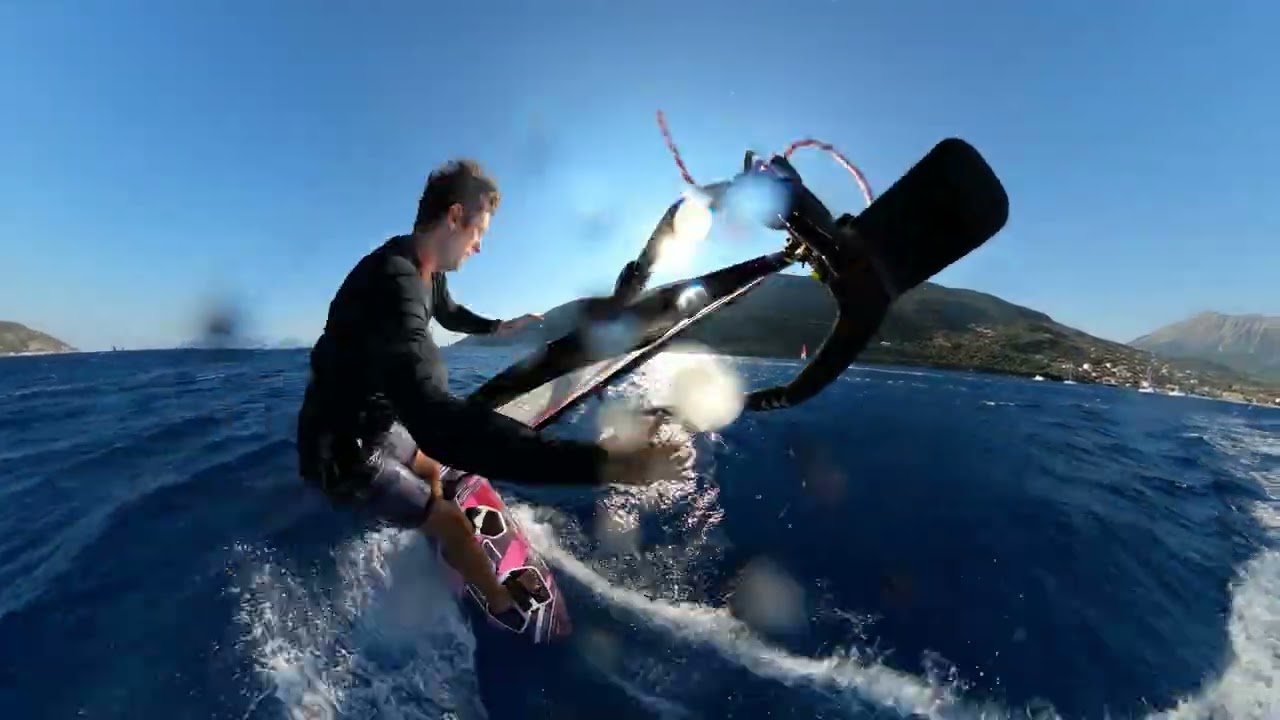
To consistently execute a “sail duck,” a maneuver where the sail is passed around the front of the board, windsurfers must actively shift their body weight forward, according to instructor Will Nicholls. This forward posture keeps the surfboard level and maintains the high speed necessary for the move. Nicholls advises transferring weight from the back foot to the front foot during the duck to prevent the board’s tail from digging into the water and slowing down. The focus, he explains, should be on moving one's body around the sail, rather than simply trying to push the sail itself.
This technique is not just about maintaining speed, but also about managing the sail's power. By positioning the body forward and closer to the mast, the rider can align their own center of gravity with the sail’s “center of effort”—the point where aerodynamic forces are concentrated. This alignment allows the rider to use their full body weight to control the sail, a critical factor for maintaining stability, especially in strong winds when the forces are greater.
"It's common for most people to be lazy and try to move the sail only. But to get better at ducking, you have to be active with your body, too."
High Speed Makes Complex Windsurfing Maneuvers Easier, Not Harder, Expert Explains
Maintaining high speed is crucial for successfully performing advanced maneuvers in windsurfing, advises instructor Will Nicholls. He notes that many riders lose critical momentum when transitioning into a “switch stance,” an intermediate step for moves like the sail duck. To combat this, he recommends keeping the sail powered up, or “sheeted in,” and pulling down on the boom to press the board into the water. This action prevents the board from bouncing and losing speed, making the subsequent maneuver smoother and more controllable.
The underlying principle is a matter of physics. At higher speeds, the apparent wind generated by the board's motion creates pressure on both sides of the sail. This balanced pressure makes the sail feel significantly lighter and more stable. In contrast, at low speeds, the wind pressure is concentrated on one side, making the sail feel heavy and unruly, often causing it to overpower the rider. Therefore, speed provides the stability needed for control.
"The faster you're going, the lighter the sail will feel, which makes it much easier to control."
Windsurfing Expert Breaks Down Common Failures in 'Ducking the Sail' Maneuver
Instructor Will Nicholls addresses a frequent point of failure for windsurfers attempting to “duck the sail,” a complex maneuver where the sail is passed around the front of the board. Many riders struggle with consistency, often finding their sail flipping uncontrollably over the nose of the board or crashing into the water. Nicholls identifies these common outcomes as technical problems that can be solved with specific adjustments to body position and speed.
This analysis highlights the technical precision required for advanced windsurfing, where success depends on a deep understanding of body mechanics and physics. The problem is often not a lack of strength but a subtle misunderstanding of how to manage the sail's power while the board is in motion at speed. By breaking down the maneuver, Nicholls aims to provide a clear path to greater consistency for riders.
"Do you ever have this problem when you're trying to duck the sail and the sail flips around the front when you don't want it to or it just crashes into the water?"
Summarised from Will Nicholls · 11:27. All credit belongs to the original creators. Will Nichols Windsurfing Press summarises publicly available video content.