🌐 Also available in: 🇪🇸 Español
Original source: The Tennis Congress
This video from The Tennis Congress covered a lot of ground. Streamed.News selected 2 key moments and summarises them here. Everything below links directly to the timestamp in the original video.
It’s easy to blame bad luck or a partner's mistake for a loss. This simple formula shows why your reaction is the only thing that truly matters and how to manage it for a better result.
A Tennis Coach's Formula for Mental Toughness: 'Event + Reaction = Outcome'
A tennis coach introduced a simple formula, 'Event + Reaction = Outcome' (E+R=O), to explain how players can control results by managing their mindset under pressure. The framework posits that while the 'event'—such as a critical point, a partner's error, or a lucky shot by an opponent—is often uncontrollable, a player's 'reaction' is a choice that directly determines the outcome. A negative reaction, like Reilly Opelka's frustration after an unlucky net cord shot against Daniil Medvedev, can trigger a collapse and lead to a loss. Conversely, a positive reaction, such as encouraging a teammate after a mistake, can create a more favourable result by maintaining morale and focus.
The framework shifts the locus of control from external circumstances to a player's internal response, turning mental toughness into an actionable skill. By focusing on the 'R'—the only variable a person can fully manage—players can break cycles of frustration and maintain high performance during inevitable setbacks. This concept extends beyond the tennis court, offering a model for emotional regulation and resilience in any high-stakes environment where one's response to adversity is the key to success.
"In the long run, against a player that is equal or better than me, [I'm] probably going to lose that because I chose a bad reaction to an event."
Coach Outlines Five-Step 'R-Factor' Method for On-Court Mental Control
To manage the crucial 'Reaction' in high-pressure situations, a tennis coach outlined a five-step framework called the 'R-Factor.' The process begins with 'press pause,' a technique where players use an anchor, like adjusting their racquet strings, to control their breathing and calm down. The next steps are to 'get your mind right' by focusing on what you can control and to 'step up' by embracing the challenge rather than cowering. Fourth is to 'adjust and adapt,' meaning a player must be willing to change tactics—like hitting a drop shot when they prefer hitting deep—if the situation demands it.
The final and most powerful step is to 'make a difference' by positively impacting others. The coach pointed to a club champion who wins year after year with different partners, not just because of superior skill but because he consistently brings out the best in his teammates. This reframes mental toughness not merely as an individual tool for resilience but as a form of leadership that can elevate an entire team's performance, ultimately becoming the decisive factor in winning more matches.
"If you can put that as a goal... 'I want to bring the best out of everyone'... that's how you're going to win more matches."
Also mentioned in this video
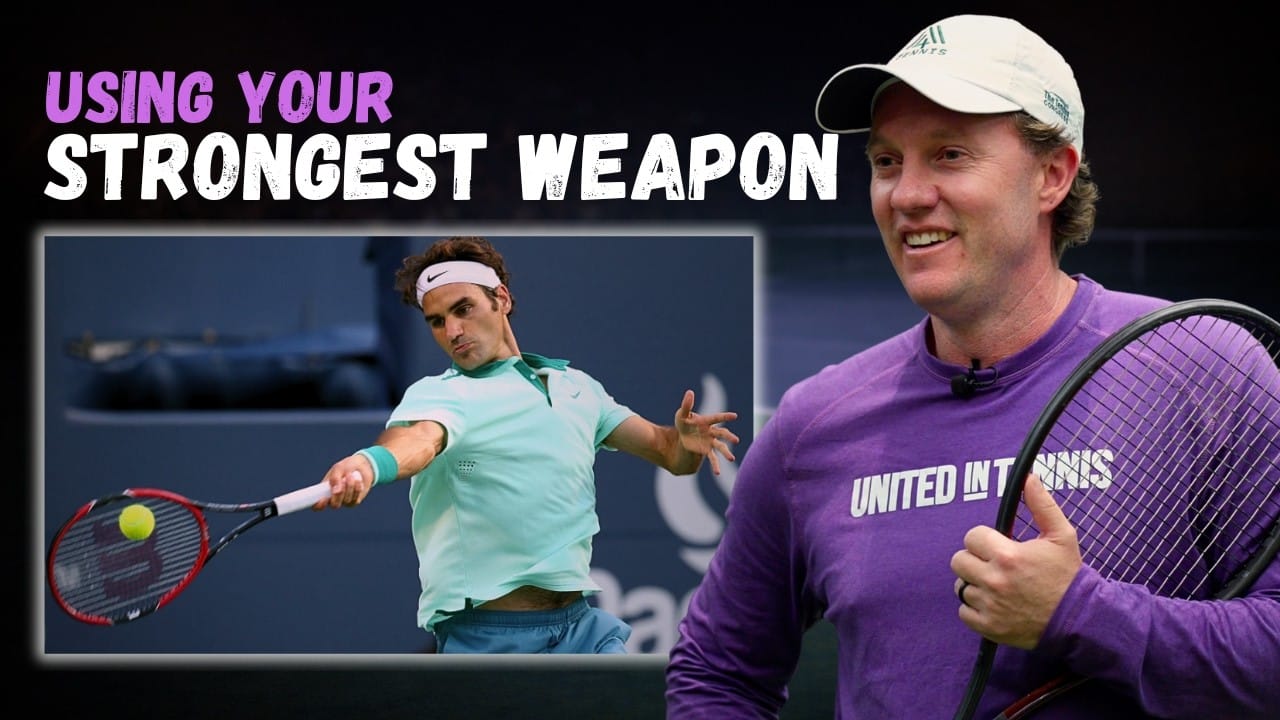
- The concept of using reaction as your strongest weapon in tennis and life,… (0:09)
- The discussion focuses on 'above the net behavior' with the first example being… (2:15)
- The second 'above the net behavior' discussed is being purposeful, highlighted… (3:44)
- The third 'above the net behavior' is being skillful, which involves using… (5:21)
- 'accountable' as an above the net behavior, emphasizing the importance of… (7:29)
- 'below the net behaviors,' starting with 'impulsive' actions like rushing a… (11:16)
- 'emotional' as a below-the-net behavior, focusing on negative emotions, body… (13:24)
- 'reactive' behavior in tennis, where players mirror an opponent's aggressive… (15:45)
- The first 'poisonous behavior' discussed is 'blame,' where players attribute… (18:05)
- Blaming a partner or bad calls is a 'below the net' behavior, emphasizing that… (21:02)
- The second 'poisonous behavior' is 'complaining' about various conditions like… (23:31)
- The third 'poisonous behavior' is 'defending' and arguing when given feedback,… (26:01)
- The overall goal as always responding with above-the-net behavior, especially… (30:10)
- The presenter concludes by encouraging players to use their tennis racket… (43:18)
Summarised from The Tennis Congress · 46:07. All credit belongs to the original creators. Streamed.News summarises publicly available video content.