Original source: TWS Tenerife Windsurf Solution
This video from TWS Tenerife Windsurf Solution covered a lot of ground. Streamed.News selected 4 key moments and summarises them here. Everything below links directly to the timestamp in the original video.
Are you riding a windsurf board that could fail under pressure? This comparison reveals why some boards are built to last, and others might leave you stranded.
Custom Windsurf Boards Outperform Mass-Produced in Durability, Material Tests Show
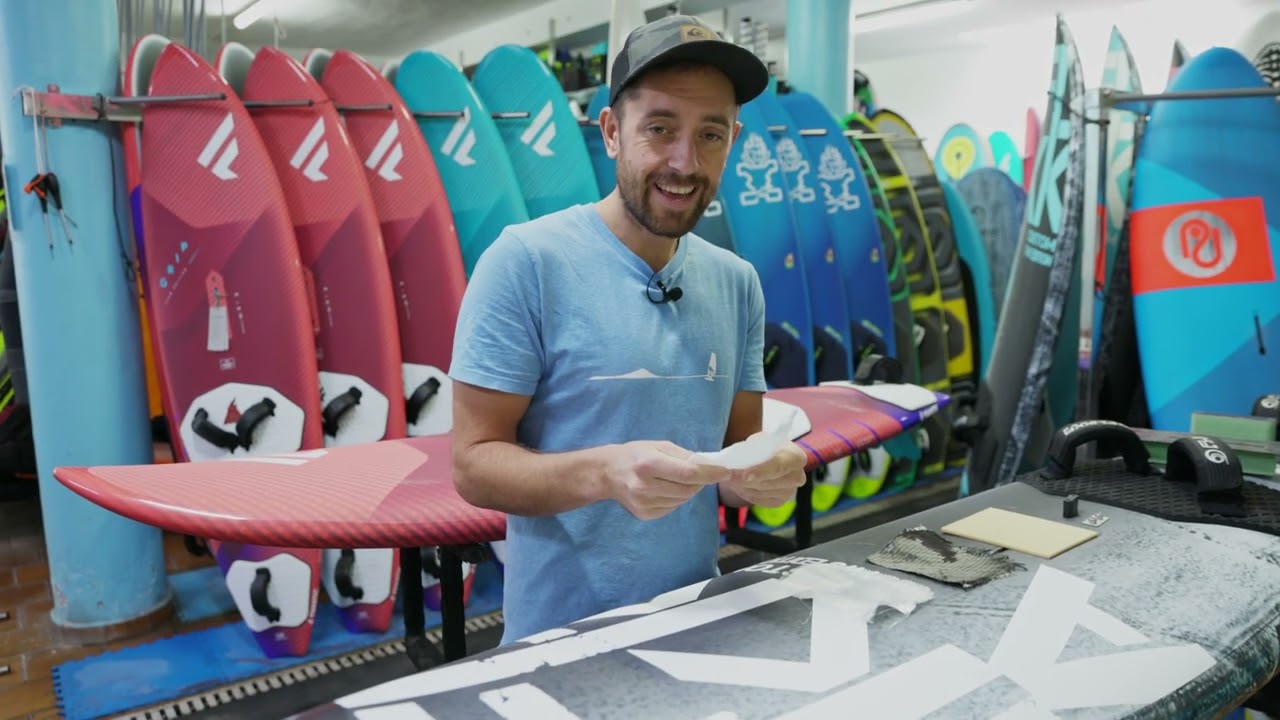
Independent testing reveals significant durability differences between materials used in custom-made windsurfing boards and their mass-produced counterparts. While S-glass and BX carbon fabrics were easily torn by hand, Dyneema, a material favored by custom brands like Flicka, proved nearly impossible to rip, highlighting its superior strength.
This material disparity extends to critical components, with footstrap inserts in serial boards, typically made from plastic-based composites, being prone to ripping out. In contrast, custom brands employ much stronger, proprietary insert designs, with one even offering a 100% warranty against breakages, suggesting a notable reliability gap in the sport's equipment.
"This [Dyneema] you can really push how much you want but it will not tear apart that easy; it's impossible."
Windsurfing Board Materials: Carbon for Speed, S-Glass for Versatility, Dyneema for Durability and Cost
Windsurfing boards utilize three primary materials: carbon for lightweight slalom boards, S-glass for its workability and strength in various constructions, and Dyneema for extreme durability. While S-glass is a widely adopted and cost-effective option, offering robust performance, Dyneema stands out for its superior strength and resilience.
However, Dyneema's high cost and extreme difficulty in repair limit its widespread adoption, primarily appearing in specialized custom boards. This material choice reflects a trade-off between performance, longevity, and economic considerations in board manufacturing, with S-glass offering a balanced and popular option for many riders.
"Dyneema will be the most expensive one. Looking price-wise and characteristics, glass is a super nice option."
PVC Foam Core Underpins All Windsurfing Board Construction
Every windsurfing board starts with a PVC foam core, which provides the base structure before layers of materials like glass, carbon, or Inegra are applied. These materials are strategically layered with varying thicknesses; the bottom of the board typically features 5mm thickness to withstand high pressure, while the deck uses 3mm with additional reinforcements in high-stress areas.
This multi-layered approach, often incorporating newer materials like Inegra known for its lightweight properties, is crucial for achieving the necessary durability and performance in different parts of the board. The strategic use of materials ensures the board can handle the dynamic forces encountered during windsurfing.
"Every windsurfing board is made from PVC foam—that's the core of the board."
Sandwich Construction Key to Windsurfing Board Durability
Windsurfing boards employ a 'sandwich construction' technique where a core material, such as Deviant Cell, is laminated between layers of materials like carbon using epoxy resin. Initially soft before resin application, this structure transforms into an incredibly strong and durable composite once cured.
This robust construction method is fundamental to giving windsurfing boards their inherent strength, allowing them to withstand the rigorous demands and stresses of the sport. The synergy between the core, outer layers, and resin is what enables the board to perform under extreme conditions.
"When you mix this with resin, when you leave it to dry, then this is super strong, and that's why they call it the sandwich construction."
Summarised from TWS Tenerife Windsurf Solution · 10:04. All credit belongs to the original creators. TWS summarises publicly available video content.