🌐 Also available in: 🇫🇷 Français
Original source: TomBrendtCoach
This video from TomBrendtCoach covered a lot of ground. Streamed.News selected 6 key moments and summarises them here. Everything below links directly to the timestamp in the original video.
The mast-grab jibe is a fundamental move, but the difference between good and great lies in how you harness the rig's momentum.
Executing the Mast-Grab Sail Flip for Maximum Acceleration
To properly execute the mast-grab sail flip, Tom Brendt explains that the front hand must slide as close to the mast as possible before the back hand releases the boom. This action allows the sail to swing open completely into a neutral position. The back hand then drops in front of the stomach to intercept the mast as it swings around.
A key point of this technique is to harness the rig's momentum. By using the mast's natural rotation, the rider can more effectively move the mast forward toward the board's nose, which is essential if one aims to accelerate powerfully out of the maneuver rather than just completing it.
"Use this mast momentum, this mast rotation to move the mast forward and accelerate out of your maneuver."
Elbow-Up Technique Key to Stable and Fast Boom-to-Boom Transitions
For a boom-to-boom hand change during a sail flip, Tom Brendt advises against reaching over the top of the master arm, as this action raises the shoulders and body weight, which can decrease board speed and compromise stability. The correct procedure involves a specific, counter-intuitive movement to maintain a low center of gravity.
As the back hand releases the boom, the elbow of the master arm should be driven upwards. This motion creates space to bring the free hand underneath the master arm to grab the boom on the new side. This method is essential for keeping the body weight low, thereby maintaining stability and ensuring the board continues accelerating through the turn.
"As soon as I take my back hand off the boom, the elbow of my master arm goes up. So I can go under and grab the boom on the other side of the sail."
Why Race-Oriented Sails Favour the Boom-to-Boom Jibe
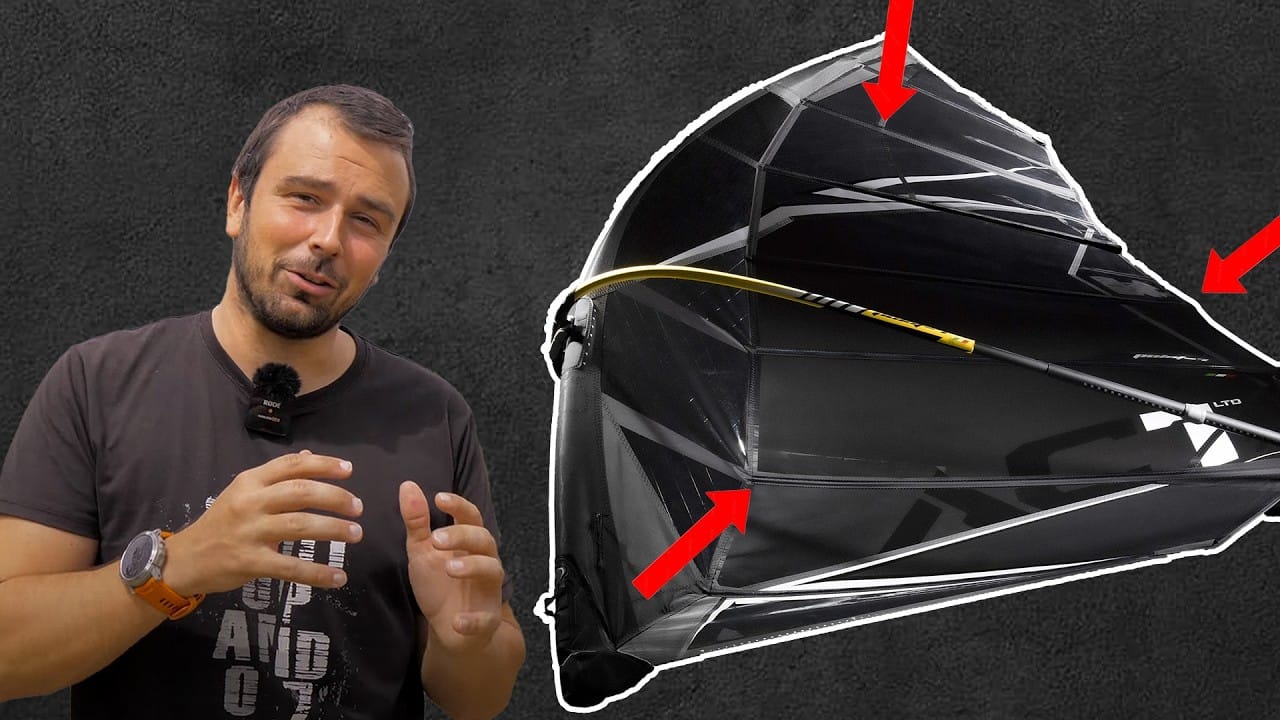
A significant drawback of the mast-grab technique is the potential for an insecure grip, as explained by Tom Brendt. In many cases, the hand ends up gripping the mast sleeve rather than the mast itself. This fabric provides a less solid connection to the rig, which can compromise control during a critical phase of the maneuver.
This lack of a firm purchase is a primary reason why the boom-to-boom technique is almost universally preferred for race-oriented sails. The solid, direct grip on the boom allows for more precise and powerful sail handling, a non-negotiable for competitive environments.
"When you grab the mast, the grip could be a little bit harder as in many occasions you will be grabbing the mast sleeve, which is not really a solid grip."
📊 Technical data
Equipment: race orientated sails
Low Body Weight: The Unifying Principle for All Sail Flip Techniques
According to Tom Brendt, there is one fundamental principle that underpins both the mast-grab and the boom-to-boom sail flip techniques. During the brief moment of the flip, there is no sail pressure acting as a stabilizing force on the board. To counteract this inherent instability, it is critical to keep one's body weight low.
This low stance is essential if one aims to maintain control. By lowering the center of gravity, a rider keeps the board balanced and continues to apply pressure, ensuring a smooth and stable transition through the maneuver regardless of the specific hand-change method being used.
"You want to keep your body weight low as there will be no sail pressure stabilizing your board at this time."
Mast-Grab Technique Delivers a Lighter, Less Effortful Sail Flip
Tom Brendt highlights a distinct advantage of holding the mast during a sail flip. When the rider grabs the mast with one hand, the sail is able to open completely, becoming neutral and behaving like a flag in the wind. This neutralization of forces makes the entire rig feel significantly lighter during the transition.
The practical benefit of this effect is a reduction in the physical effort required. With a lighter-feeling sail, it is much easier to move the rig forward towards the nose of the board, making the maneuver less demanding.
"The sail is completely open, like a flag in the wind, and the sail feels a lot lighter and it's a lot less effort to move the sail forward towards the nose of the board."
Superior Grip and Power: The Case for the Boom-to-Boom Sail Flip
The primary advantage of the boom-to-boom technique, Tom Brendt explains, is the quality of the grip it affords. Grabbing the boom provides a much tighter and more secure connection to the rig compared to grabbing the mast or mast sleeve. This solid grip is the foundation for a more aggressive style of sailing.
This superior grip translates directly into more dynamic and powerful sail handling. It allows the rider to forcefully pull the sail towards the nose of the board, which is why Brendt recommends this technique for those looking to maximize performance and control.
"Whenever you're grabbing the boom, your grip is a lot better, tighter, so you can pull and handle the sail more dynamic, more powerful towards the nose of the board."
Also mentioned in this video
- The video's topic (0:08)
- Holding the boom requires more power because even with one hand, the sail is… (4:04)
- In light winds or on a simulator, windsurfers should practice both the… (4:31)
- There is always something to practice in maneuvers by splitting them into… (5:03)
Summarised from TomBrendtCoach · 6:02. All credit belongs to the original creators. Streamed.News summarises publicly available video content.