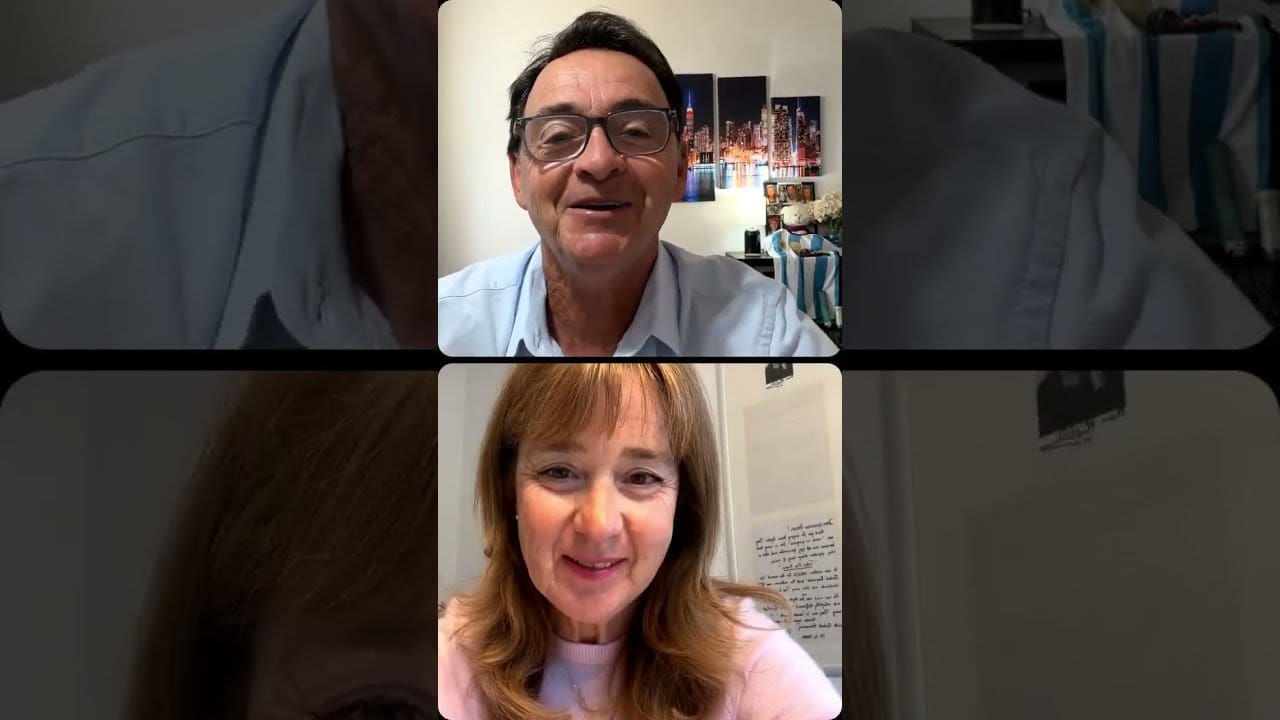
Original source: Daniel Spatz Interviews
This video from Daniel Spatz Interviews covered a lot of ground. Streamed.News selected 8 key moments and summarises them here. Everything below links directly to the timestamp in the original video.
A freak accident and an opponent's father shouting from the stands. A look inside a Grand Slam quarterfinal that went off the rails.
Maleeva Recounts Pivotal French Open Loss to Seles Marked by Injury and Hostility
Manuela Maleeva recalls a French Open quarterfinal against Monica Seles that she believes she could have won, holding a 4-1 lead in the third set. The match turned after a freak accident where she hit herself in the head with her own racket, briefly losing consciousness. During the chaotic moment, Seles’s father was reportedly shouting from the stands, “Kill her to love now,” a phrase Maleeva interpreted as an aggressive demand to win the set 6-0.
This incident provides a stark look at the intense, high-stakes atmosphere of Grand Slam tennis, where a single moment of misfortune or psychological pressure can derail a potential championship run. It is very important to understand that for Maleeva, this wasn't just a loss but a missed opportunity in a year she felt she was playing her best tennis. The story also offers a glimpse into the fiercely competitive environment surrounding a young Seles before her own career was tragically altered.
"Her father was behind me saying, 'Kill her to love now.' And I was just trying to to get myself back into a normal state because I didn't understand."
Manuela Maleeva Qualified for Roland Garros at 15 While Traveling Alone, Barred from Bringing Her Mother
At age 15, after a successful string of junior and early professional tournaments in Italy, Manuela Maleeva earned a spot in the qualifying rounds for the French Open. However, the Bulgarian communist government denied her mother a visa to travel with her. Consequently, she navigated Paris alone, taking two buses to get to Roland Garros without speaking English or French, and managed to not only compete but successfully qualify for the main draw.
This experience highlights the stark contrast between the lives of athletes from the Eastern Bloc and their Western counterparts during the Cold War. It is a powerful illustration of how political realities imposed extraordinary personal and logistical hurdles on top of the already immense pressure of elite competition. In my opinion, such a trial by fire undoubtedly forged a unique resilience.
"I had to go to Roland Garros by two buses, by myself, not speaking English, not speaking French. I have no idea how I was booking practices... but I qualified."
Maleeva Reflects on Hardship-Forged Resilience, Says She Wouldn't Want Her Children to Endure Same Path
Reflecting on her early career, Manuela Maleeva acknowledges that the extreme difficulty of traveling alone at 15 without money or language skills made her “very strong” mentally. She recalls the constant pressure of navigating basic needs, from finding food and practice courts to washing her few tennis outfits in a hotel sink. This self-reliance was foundational to her professional fortitude.
Despite being proud of what she accomplished, Maleeva is clear that she would not want her own children to endure a similar experience. This reveals a profound and relatable tension between appreciating the strength gained from adversity and the parental instinct to protect loved ones from the very pain that forges it.
"This probably made me very strong, but I still don't think I would want to relive it."
Maleeva: My Mother’s Coaching Made Every Match ‘A Matter of Life or Death’
Manuela Maleeva describes her mother as a “very tough” coach who created an environment of unrelenting pressure, making every match feel like “a matter of life or death.” She explains that a victory brought only a few hours of happiness before the anxiety for the next match returned. For her, winning became less an act of triumph and more an act of survival to stave off the pressure that would follow a loss.
While Maleeva is careful to note there was no physical abuse, her account underscores the fine line between motivational rigor and psychologically damaging pressure in a parent-coach dynamic. It is important to highlight that this experience raises questions about the emotional cost of high-stakes athletic development, even when it produces a world-class champion.
"For me, every match was a matter of life or death. When I was winning, I had a few hours of happy moments and then the pressure of the next match was there again."
Maleeva on Tennis’s Greatest Lesson: It Made the Rest of Life Seem Easy
Manuela Maleeva reflects that her demanding tennis career taught her invaluable lessons about strength, self-confidence, and perseverance. The intense pressures of the professional tour provided her with such a profound education in managing adversity that, by comparison, everything in her post-tennis life, including raising three children, has seemed relatively “easy.”
She illustrates the meaning of her early success with a poignant memory from age 15, after winning $500 at a tournament in Italy. Her mother handed her $150 of the winnings and told her to buy the Sony Walkman she desperately wanted. For Maleeva, that purchase was a powerful, tangible symbol of her first earned reward and a moment of pure happiness.
"After the final, my mother came to me and she gave me $150 and she said, 'Go and buy your Walkman that you want so much.' I was the happiest kid in the world."
▶ Watch this segment — 1:22:04
Manuela Maleeva Admits She Didn’t Enjoy Tennis, Retired at 27 Feeling Mentally and Physically Exhausted
Manuela Maleeva reveals that playing professional tennis was a predetermined path for her and her sisters, but one she did not particularly enjoy, suggesting her sisters may have liked it more. She retired at the relatively young age of 27, explaining that by then she felt both mentally and physically exhausted by the demands of the sport.
Her decision was driven by a sense that she had given everything she could to tennis and had reached her absolute limit. This candid admission offers a valuable perspective on athletic burnout, illustrating the important point that top-level success does not always correlate with personal passion or fulfillment.
"I really felt very tired. I felt also that I had given everything I could to tennis. Really, I could not have given more."
Maleeva’s Path to Tennis Was ‘Predestined’ in Communist Bulgaria
Manuela Maleeva recounts that her tennis career felt “predestined” in communist Bulgaria, where her mother was a nine-time national champion and her father played for the national basketball team. Growing up, her family had little exposure to the global tennis scene due to travel restrictions and a lack of media coverage, making the professional tour a distant, unknown world.
This isolation is perfectly captured by how she developed her signature two-handed backhand. With no coaches familiar with the technique, she and her mother copied the stroke from a magazine picture of Jimmy Connors and Chris Evert. In my opinion, this story vividly illustrates the resourcefulness required for athletes to innovate in environments cut off from the sport's global mainstream.
"We saw a picture with my mother in a tennis magazine... this looked like a backhand with two hands, but we had no idea what it was and my mother said, 'Oh, but let's try it.'"
Maleeva Identifies Age 16 as Her Hardest Year on Tour
While her initial foray into professional tennis felt “relatively easy” due to a lack of expectations, Manuela Maleeva pinpoints the year she turned 16 as the most difficult of her career. Having broken into the world rankings, she suddenly found herself in the main draw of major tournaments, unseeded and often traveling alone as her mother began touring with her younger sister.
This transition represented a formidable challenge, as she was no longer a surprising junior but a professional facing experienced, top-ranked opponents week after week. It is important to understand that this period illustrates a crucial phase in a young athlete's development: the difficult navigation of rising expectations and tougher competition immediately following an initial breakthrough.
"The first years were, I would say, relatively easy because I was just going out playing, winning. It became more complicated after that. For me the hardest year was the year when I was 16."
Also mentioned in this video
- Manuela Maleeva expresses gratitude for being invited to the podcast and thanks… (1:02)
- Her current activities, including running a foundation in Bulgaria for disabled… (2:26)
- Manuela Maleeva mentions she occasionally plays tennis, less regularly due to… (4:02)
- Manuela Maleeva reflects on playing against Gabriela Sabatini, detailing their… (6:05)
- Manuela Maleeva identifies top 10 players like Martina Navratilova, Chris… (8:00)
- Manuela Maleeva expresses concern over the excessive hype and on-court… (10:25)
- Manuela Maleeva mentions her three children, two girls and a boy, who play… (24:32)
- Manuela Maleeva confirms she was the best of her three sisters, all of whom… (27:00)
- She had to completely change her game strategy against powerful hitter Amy… (41:48)
- Manuela Maleeva watches good tennis matches on TV and identifies Aryna… (44:09)
- Manuela Maleeva advises a 15-year-old student on handling nervousness before… (49:03)
- Manuela Maleeva advises anxious parents to be a positive part of their child's… (52:33)
- The significant work on technique in her early career, which evolved with world… (55:36)
- Practice matches are entirely different from real matches due to the mental… (58:12)
- Switzerland in June, and expresses her enjoyment watching players like Roger… (1:03:19)
- Manuela Maleeva reflects that despite the hardships of her tennis career, she… (1:06:21)
- Some of her biggest wins, including beating Chris Evert at the Italian Open at… (1:09:03)
- Manuela Maleeva's favorite Grand Slam was the Australian Open, despite her best… (1:11:24)
- Manuela Maleeva reflects on the impact of her and her sisters' success on… (1:17:09)
- Manuela Maleeva showcases a replica of her first tennis racket, noting its… (1:25:27)
Summarised from Daniel Spatz Interviews · 1:32:07. All credit belongs to the original creators. Streamed.News summarises publicly available video content.