Original source: DURALAVITA
This article is an editorial summary and interpretation of that content. The ideas belong to the original authors; the selection and writing are by Streamed.News.
This video from DURALAVITA covered a lot of ground. 6 segments stood out as worth your time. Everything below links directly to the timestamp in the original video.
Understanding the precise mechanics of equipment failure in high-speed racing reveals the delicate balance between design, performance, and rider safety.
Marc Marquez's Rim Damage Linked to Tire Pressure Loss, Expert Says
Technical specialist Ramon Forcada analyzed the rim damage that affected Marc Marquez's race, attributing it to a loss of tire pressure. Forcada explained that excessive wear on the central part of the tire exposed the underlying base rubber, which is not designed for contact with the track and loses its airtight properties. This compromise in the tire's structure removed its crucial support for the metal rim, making the rim vulnerable to bending upon impact with a curb, a common occurrence when a bike lacks stability. This technical breakdown highlights a critical safety and performance issue in MotoGP, as the integrity of tires directly impacts a rider's ability to maintain control and avoid severe accidents. The incident suggests that current tire designs or track conditions can lead to rapid and unexpected pressure loss, challenging riders who only receive a general low-pressure warning rather than specific readings, and potentially impacting race outcomes for multiple competitors.
"When the rubber in the middle wears out, underneath there is a base rubber which is what provides the tire's airtightness. This rubber, if the tread rubber wears away and you reach the base rubber, it lasts very little because it's not designed for rolling."
▶ Watch this segment — 1:01:29
MotoGP Panel Critiques Stewards' Decision in Marquez Penalty
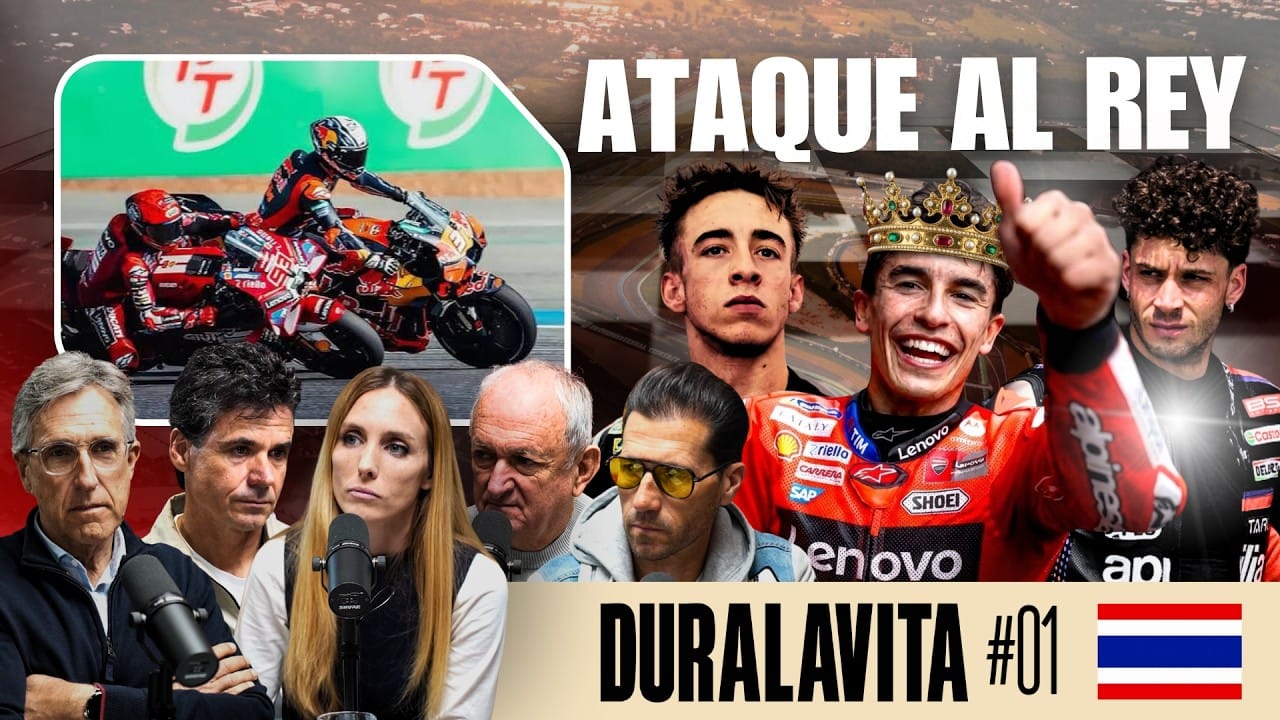
A panel of commentators criticized the race stewards' decision-making process following a penalty issued to Marc Marquez for an aggressive maneuver against Pedro Acosta. While the penalty was issued within roughly a minute of the incident, occurring on the final lap, the panel suggested this rapid review time was still problematic given the high stakes. They posited that the significant profiles of the riders involved and the intensity of the battle for first place may have influenced the decision, overriding a consistent application of rules. This critique raises broader questions about fairness and consistency in sports officiating, particularly how subjective interpretations and the visibility of competitors can impact outcomes. If this new, stricter standard for aggressive riding is consistently applied, commentators warned it could lead to a dramatic increase in penalties across all racing categories, potentially reshaping rider behavior and generating ongoing controversy, a departure from a period of relative stability under previous head steward Simon Crafter.
"If we're going to start penalizing for that, this year there's gonna be a lot to talk about... If who it was, what lap it was, and the fact that it was the end of the race really influenced things, that's really bad because none of that should matter."
Marquez Penalty Sets 'Bad Precedent' for MotoGP, Analyst Warns
Ricard Jové expressed strong disagreement with the penalty imposed on Marc Marquez, despite acknowledging Marquez's primary responsibility for the aggressive maneuver. Jové argued that the stewards’ decision establishes a problematic precedent, potentially impacting future races and rider conduct by introducing inconsistency. He pointed to similar past incidents, such as Marquez’s move on Jorge Lorenzo at Jerez or Valentino Rossi’s on Sete Gibernau, which went unpenalized and, in his view, correctly so, highlighting a lack of clear and consistent regulatory application. The debate over this penalty underscores the ongoing challenge of defining fair play versus aggressive racing in motorsports. Jové's concern is that ambiguous or shifting penalty standards can disrupt the competitive environment, leaving riders uncertain about acceptable limits. This situation contrasts with the structured and successful team approach seen at Aprilia under Massimo Rivola, suggesting that clear operational frameworks are crucial not only for team performance but also for the overall integrity of the sport.
"For me what is truly important is that you clearly understand exactly what will happen if you do something... if the race had finished and they had allowed it to conclude in a normal fashion, Pedro wouldn't have filed a complaint."
MotoGP Panel Debates Fairness and Timing of Marc Marquez Penalty
The panel continued its debate regarding Marc Marquez's penalty, with some panelists arguing the sanction was fair due to the aggressive nature of the maneuver, which forced a competitor off track on the final lap. However, there was broad consensus that the penalty notification, requiring Marquez to relinquish his position, was issued too late. Race direction, led by Simon Crafter, sent the signal at turn 8, but Marquez reportedly didn't perceive it until turn 11, leaving him no practical opportunity to comply before the race concluded. This incident and the ensuing debate highlight the critical balance between enforcing racing rules and the practicalities of real-time communication in high-speed motorsports. The establishment of a stricter penalty standard, as seen in this case, signals a significant shift that could profoundly affect future races and the aggressive riding styles of emerging talents like Pedro Acosta. The perceived inconsistency, particularly when compared to similar unpenalized incidents involving other riders, including Marquez's brother, raises concerns about the uniform application of rules across the sport.
"If this is now the standard and the reference point, they've got work to do... because if you push someone off track, you have to penalize, but it was late."
Japanese MotoGP Manufacturers Lag Behind European Rivals Due to Cultural Aversion to Risk
A panel of experts criticized Yamaha's slow adaptation to new MotoGP regulations, particularly its struggle to develop a competitive V4 engine. Despite moving its V4 development schedule up by a year, the manufacturer's current bike is reportedly two seconds slower per lap, leading to a "disaster" in performance compared to European rivals like Ducati and Aprilia. The panel attributed this lag to a fundamental cultural difference, noting that Japanese manufacturers tend to have a strong aversion to mistakes and slower, more bureaucratic decision-making processes. This analysis highlights a broader trend in motorsports, where the rapid pace of technological change and regulatory updates favors agile, experimental approaches. European teams like Aprilia and Ducati are described as embracing quick iterations and learning from errors, while Japanese counterparts often prioritize extensive internal approval before implementing changes. This cultural divergence is profoundly impacting the competitive balance in MotoGP, with Honda also reportedly undergoing significant management restructuring to address similar challenges, underscoring the necessity for swift innovation in elite racing.
"What's happening now is the ability to evolve that the Italians or the Europeans have... The Japanese take a little longer. They make the decision in their board or internal approval process for a matter of safety, I suppose."
Acosta-Marquez Sprint Battle Ignites Debate Over Aggressive Racing
A controversial mano-a-mano battle between Pedro Acosta and Marc Marquez in the sprint race sparked debate among commentators, particularly concerning an aggressive final-corner maneuver by Marquez. While some panelists felt Marquez entered the turn too forcefully, pushing Acosta wide, others suggested Acosta could have yielded slightly or that a minor contact with Marquez's footpeg contributed to his line deviation. The incident, which led to a penalty for Marquez, occurred during a thrilling contest that saw both riders pushing the limits. This high-stakes incident highlights the fine line between aggressive, legitimate racing and actions warranting penalties, a constant source of tension in motorsports. The discussion also underscored the performance advantages of Pedro Acosta's KTM bike, praised for its exceptional cornering ability and tire preservation, which allowed him to execute numerous overtakes on Marquez. Such mechanical strengths, combined with a rider's skill, can significantly influence race dynamics and outcomes, shaping rivalries and setting the stage for future competitions.
"I love the race of the sprint, even that ending because I stood up from the couch... However, there was some controversy in that final move when Mark came in so aggressively."
Also mentioned in this video
- The speaker praises Pedro Acosta's riding style, highlighting his ability to… (0:00)
- Àlex Crivillé shares fond memories of the Catalunya circuit, including two… (2:19)
- A new segment for image analysis using Dornah footage, discussing the MotoGP… (3:32)
- Pedro Acosta becoming the new MotoGP leader, expressing surprise given… (5:56)
- Ruben Xaus and the panelists analyze Pedro Acosta's performance, attributing… (8:19)
- The diverse and ununified setups of Ducati bikes, creating a "nightmare" for… (17:58)
- The 50/50 split in opinion among experts underscores the inherent uncertainty,… (26:35)
- The host transitions to driver statements from the podium, specifically… (28:18)
- The panel analyzes Bezeky's performance, his overconfidence leading to a costly… (30:48)
- The significant impact of the new tire carcass on race performance, noting… (33:40)
- Aprilia's significant evolution, highlighting how they overcame initial… (36:19)
- The end of Ducati's dominance, anticipating increased competition, and… (39:55)
- The uncertainty of future regulations, particularly how the 2027 850cc bike… (43:03)
- The "Market" section, comparing rider decisions to buying a motorcycle and… (51:55)
- Honda's historical focus on engines, their recent hiring of a European engineer… (55:51)
- The impact of specific tire issues on race outcomes and the difficulty of… (1:00:04)
- Marc Marquez's physical condition and his satisfaction with being able to… (1:05:35)
- The discussion focuses on Marc Marquez's physical struggles, particularly his… (1:09:09)
- Marc Marquez's choice of a less effective but easier-to-handle aerodynamic… (1:13:05)
- The discussion continues to center on Marc Marquez's wheel issue, with the… (1:15:52)
- The panel expresses concern for Yamaha, now the sole brand in Category D with… (1:21:20)
Summarised from DURALAVITA · 1:27:28. All credit belongs to the original creators. Streamed.News summarises publicly available video content.
Streamed.News
This publication is generated automatically from YouTube.
Convert your full video library into a digital newspaper.
Get this for your newsroom →