🌐 Also available in: 🇫🇷 Français
Original source: Squidge Rugby
This video from Squidge Rugby covered a lot of ground. Streamed.News selected 7 key moments and summarises them here. Everything below links directly to the timestamp in the original video.
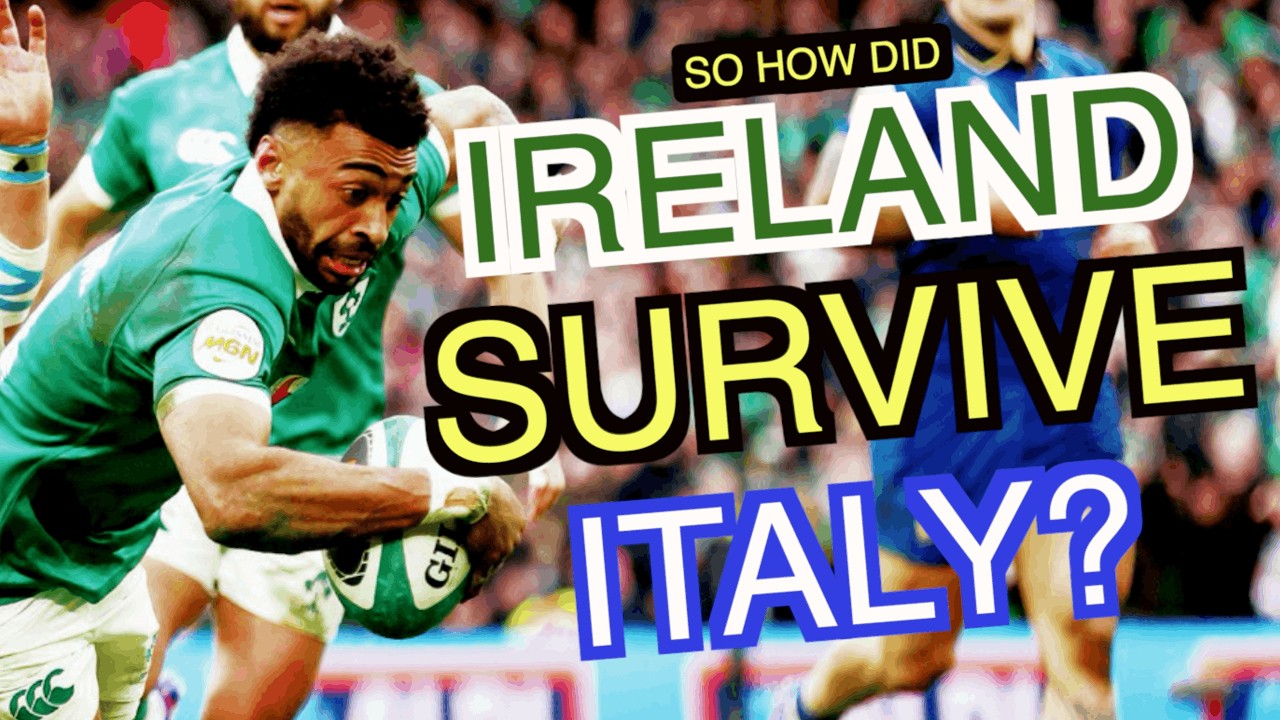
How does a well-drilled defensive system break down against one of rugby's most innovative attacks? This detailed breakdown reveals the fine margins between tactical brilliance and critical error.
Italian Defensive Errors Pave Way for Ireland's Opening Try
Jamie Osborne’s opening try for Ireland against Italy exposed critical flaws in the Italian defensive system, particularly due to premature aggression from players like Danilo Fischetti and Lorenzo Cannone. Their decision to rush out of the defensive line, contrary to their week's tactical brief, created exploitable gaps that Ireland's intelligent attacking lines and double bluffs, notably from Garry Ringrose, expertly capitalised on, enabling Stuart McCloskey to set up Osborne's score.
This breakdown highlights the inherent risk in deviating from a disciplined defensive strategy, especially against an Irish side renowned for manipulating space. The Italian system, designed to absorb pressure and then make impactful tackles, crumbled when individual players misread cues, underscoring the delicate balance between aggression and adherence to tactical plans in elite rugby.
"Ireland's system is so smart and knows their lines so well that literally you pick off one runner, you have one runner shoot out a line and that happens and you make the break."
Crowley's Mid-Game Introduction Unsettles Italy, Fuels Irish Attack
Jack Crowley's tactical introduction significantly altered the game's dynamic, as his distinct playing style and pace disrupted Italy's defensive structure, leading directly to Bob Baloucoune's try. Crowley's ability to change Ireland's attacking proposition, operating with different tweaks and increasing the tempo, caused Italian defenders to panic and break their system, gambling on hero shots that ultimately proved ineffective.
This strategic substitution showcases Crowley's invaluable role as a number 22, capable of assessing the game and implementing changes that force opponents to adapt. His deliberate intent to be an obvious threat drew in Italian defenders, creating isolated opportunities for his teammates and underlining the importance of versatile playmaking options from the bench in international rugby.
"Crowley is an unbelievable number 22 in international rugby. You want your replacement 10 to be able to come on and change the picture."
Zulani's Breakdown Dominance Highlights Italy's Defensive Discipline
Italy’s improved defensive discipline under their new system effectively limited penalties and forced Ireland into errors, a stark contrast to previous eras. Manuel Zulani notably showcased this effectiveness by disrupting Ireland's breakdown, strategically engaging Stu McCloskey to play Craig Casey off the ball, leading to turnovers credited to players like Michael Lamaro.
Zulani's intelligent and aggressive play at the breakdown, particularly his ability to target lighter Irish players, exemplified Italy's commitment to their refined defensive structure. This tactical shift has allowed Italy to maintain a connected line, remaining conservative until opportunistic moments arise, thus frustrating Ireland's attempts to exploit individual defensive lapses.
"Italy choose their moment to get off the line and the outstanding Manuel Zulani gets in the way of Stu McCloskey in the middle of this breakdown and kind of drives him into a scrum-half for Craig Casey."
Italy's Final Line-Out Strategy Fails to Capitalize on Scrum Dominance
Italy's final line-out play, designed to win the game, has drawn criticism for its execution and strategic choice, opting for a backline move over a maul, despite their evident scrum dominance. The play, which aimed to get Paolo Odogwu into a strong carry, failed to effectively draw in defenders, leaving him exposed and leading to a crucial turnover when Giovanni Montemarciano overplayed the final pass.
The decision not to maul, given their earlier success and the consistent forward momentum of their scrum, proved to be a significant missed opportunity. The chosen move lacked the necessary detail to tie in defenders, allowing Ireland to shut down the attack and highlighting a recurring issue with Italy's 22-meter zone execution.
"They're too close together. It's not necessarily a bad move and it's not necessarily badly executed, but once one tackler doesn't make the first tackle, they then can just move forward onto Odogwu, you're not actually drawing anyone in there."
Ringrose's Subtle Defense Nullifies Italy's Match-Winning Chip Kick
A late chip kick by Italy, a potential match-winner, was thwarted by Gary Ringrose’s subtle yet crucial defensive intervention. As Italy's Paolo Garbisi executed a deft left-footed kick, with Paolo Odogwu and Tommaso Menoncello chasing, Ringrose was the only Irish player to anticipate the play, swiftly working back to apply pressure.
Ringrose's quick reaction forced Menoncello to commit early to the ball, disrupting his ability to adjust to the bounce and ultimately causing a knock-on. This demonstrated Ringrose's invaluable work rate and acute game sense, preventing a likely try and underscoring his importance to Ireland's defensive solidity.
"If he spots that a split second later, Menoncello can, and we know how rugby ball bounces, right? Like this ball bounces, it's coming back at him, he can afford to stand back a little bit."
Italy's Adaptive Defense Under Casad Frustrates Irish Attack
Italy's defense under Gonzalo Quesada has significantly evolved, demonstrating an adaptive system that blends aggressive line speed with disciplined containment. Unlike previous approaches, this refined strategy allows them to make impactful tackles while ensuring players never push ahead of the ball, effectively disrupting Ireland's attacking waves by forcing them to come onto Italy rather than being picked off individually.
This tactical shift under Quesada positions Italy's defense between the Scotland and South Africa systems, enabling them to generate emotional, big-hit moments without sacrificing structural integrity. By remaining connected and waiting for opportune moments to shoot up, Italy effectively neutralizes the opposition's ability to exploit isolated defenders through short passes, a common tactic against historically aggressive defenses.
"This is a defense that is so emotional. And what they did on Saturday against Ireland in Dublin was they just sat off a little bit and they just did the first part of that. They went up as a line together."
Italy's Offensive Struggles Persist in the 22-Meter Zone
Italy's primary challenge lies in their execution within the 22-meter zone, where they consistently lack a clear Plan B and struggle to convert scoring opportunities into points. While effective further out the pitch, their offensive strategy becomes predictable close to the try line, relying heavily on the scrum-half and failing to adapt when opposition defenses intensify.
This issue contrasts sharply with their ability to spread the ball effectively in wider areas, highlighting a need for greater tactical versatility and clinical finishing in crucial scoring positions. The absence of diverse options, such as chip kicks or drop goals, means Italy often invites interceptions and becomes lethargic, hindering their ability to capitalize on promising attacks.
"When this happened, either it's England style, you take a drop goal, you just keep the scoreboard ticking over, maybe it's you try a little grubber through, whatever."
Summarised from Squidge Rugby · 31:34. All credit belongs to the original creators. Squidge Rugby Press summarises publicly available video content.