Original source: The Tennis Mentor
This video from The Tennis Mentor covered a lot of ground. Streamed.News selected 5 key moments and summarises them here. Everything below links directly to the timestamp in the original video.
Discover the mix of long-term planning and in-match bravery that led to one of doubles' most creative tactical shifts. It’s a lesson in how courage can turn a theoretical advantage into a winning strategy.
Paolini: Doubles Formation Was a Year in the Making, Took 'Courage' to Deploy in Madrid
Jasmine Paolini revealed that her and Sara Errani's unconventional doubles formation was an idea conceived a year before they finally deployed it. She explained that the Italian pair lacked the "courage" to try the tactic until a pivotal match in Madrid, where it allowed them to control points by keeping her on her forehand.
What's unique about the strategy is how it neutralized opponents. Paolini noted that returners were forced to aim down the line into a smaller target area, which naturally reduced the speed of the return and gave her team the tactical advantage they had been seeking.
"We were already thinking this one year ago to do it sometimes. But we didn't have the courage to do it."
Paolini Explains How Tactical Shift Forced Opponents Into Slower, Safer Returns
The primary goal of the innovative formation was not just to position Jasmine Paolini and Sara Errani comfortably, but to actively disrupt their opponents. Paolini confirmed the tactic forced returners to abandon their aggressive, fast shots and think more about their placement, fundamentally altering the dynamic of the rallies.
The main reason the strategy succeeded was its psychological impact. Opponents shifted to safer, slower returns down the line, which is exactly what Paolini and Errani wanted, allowing them to dictate the point from the very first shot.
"The girl that was pushing every return here fast started to go down the line, but with less speed. So that's what we wanted to do."
Paolini Reveals Unconventional Doubles Tactic Was an Unpracticed, In-Game Improvisation
Jasmine Paolini clarified that the unique doubles formation with Sara Errani was not a practiced maneuver but a spontaneous decision made while they were struggling in a service game. Despite losing the very first point with the new setup, Errani insisted they "do it again," committing to the bold improvisation on the spot.
This highlights a crucial lesson in adaptability, especially when considering the specific court conditions. Paolini noted that in Madrid, where the ball bounces high, their respective positions for the forehand and backhand became even more effective.
"We lost the first one and then Sara told me, 'We do it again.'"
Analysis: Paolini-Errani Formation a 'Genius' Move to Maximize Strengths and Disrupt Opponents
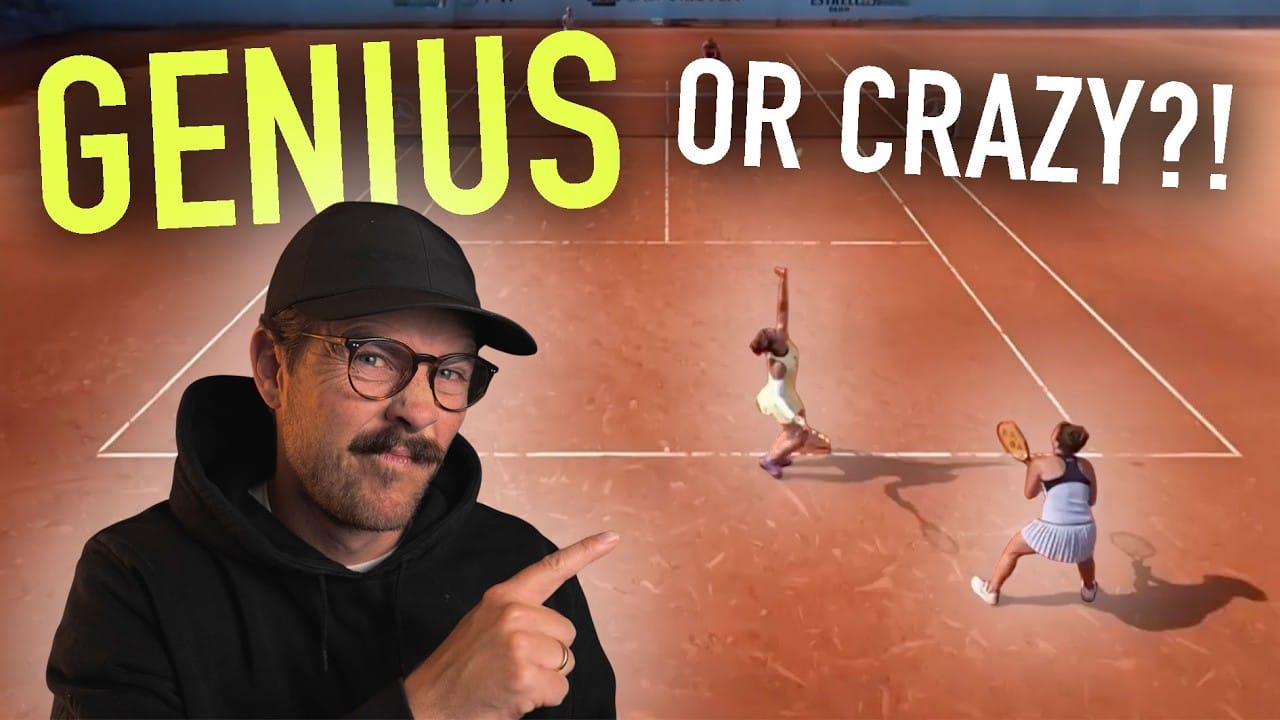
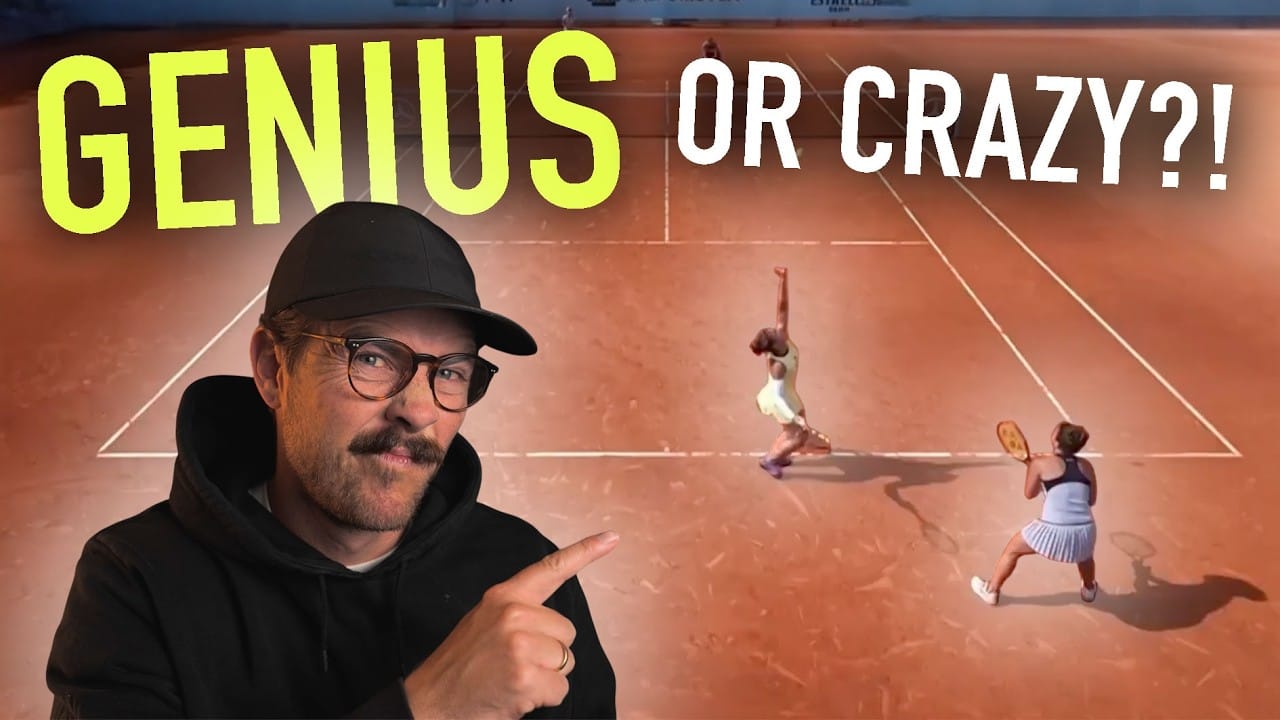
The tactical brilliance of the Paolini-Errani formation lies in its ability to place both players in their ideal positions on every single point, a stark contrast to traditional setups. This immediately puts Jasmine Paolini on her preferred forehand while allowing Sara Errani to move across and cover with her stronger backhand.
What's unique about it is the mental pressure it creates. The returner sees a large open space down the line, but hitting into it plays directly into the serving team's planned movement and shot preference, creating a tactical dilemma.
"The reason this is genius is it's allowing both doubles players to be in their ideal position every single point."
Deconstructing the Paolini-Errani Strategy: A Positional Revolution in Doubles Tennis
The innovative doubles strategy employed by Jasmine Paolini and Sara Errani involved a radical starting position that challenges conventional tactics. When Errani served from the deuce court, Paolini stood directly behind her, occupying the baseline space to immediately prepare for her powerful forehand.
To be clear, this setup is designed to maximize strengths. It allows Errani to serve and then either move to her favored backhand side or execute a serve-and-volley, effectively turning a standard service point into a pre-planned offensive play.
"When Sara was serving on the deuce side, Jasmine was standing behind her... pretty much in a position that she'd be in if she was returning or in a crosscourt forehand battle."
Also mentioned in this video
- An innovative doubles move by Jasmine Paolini and Sara Errani, explaining it… (0:00)
- The presenter provides context on Paolini and Errani's playing styles, noting… (0:27)
- Jasmine Paolini was vulnerable at the net when Sara Errani served, leading to a… (1:37)
Summarised from The Tennis Mentor · 8:15. All credit belongs to the original creators. Streamed.News summarises publicly available video content.