Original source: Helen Yu
This article is an editorial summary and interpretation of that content. The ideas belong to the original authors; the selection and writing are by Streamed.News.
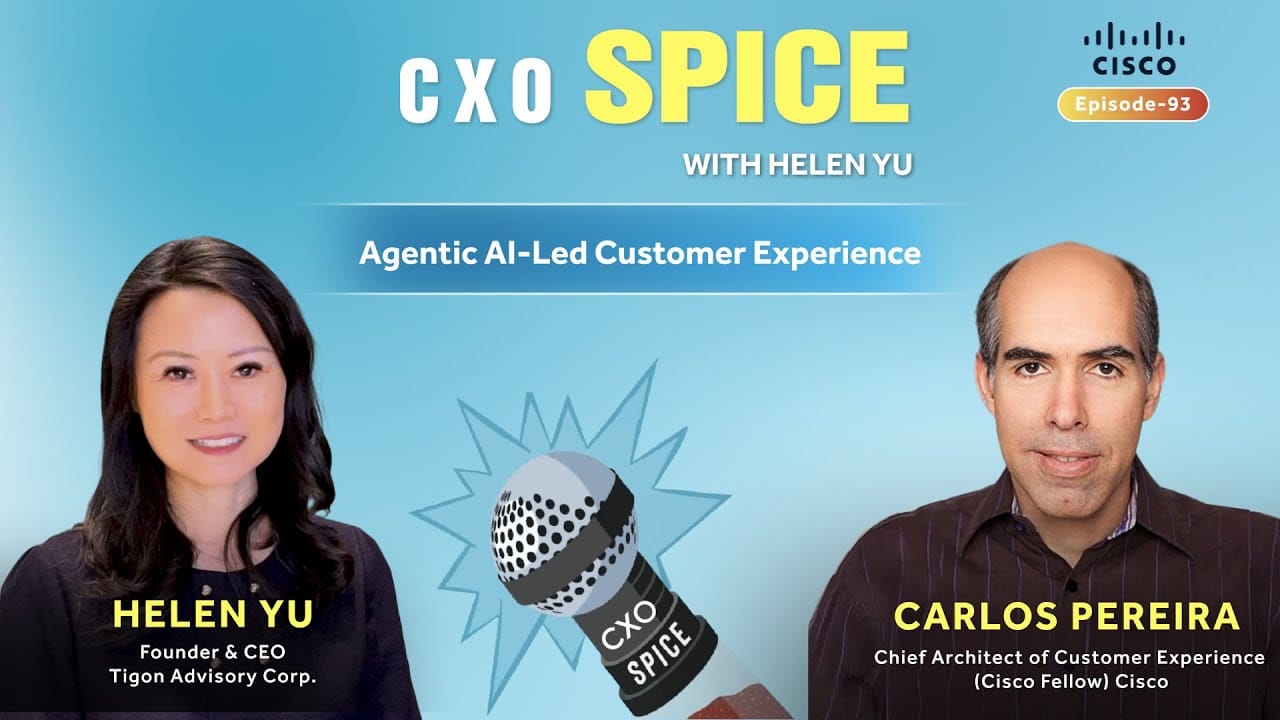
This video from Helen Yu covered a lot of ground. 6 segments stood out as worth your time. Everything below links directly to the timestamp in the original video.
In an era where AI ethics are under intense scrutiny, understanding how major tech companies build trust through clear frameworks is essential. How do these guidelines shape the future of digital interactions?
Cisco Unveils Publicly Available Responsible AI Framework
Cisco has implemented a publicly available "responsible AI framework" anchored on five core pillars, addressing critical customer concerns around data privacy, security, and bias. This framework includes guidance and oversight from a cross-functional committee of senior executives across engineering, sales, security, legal, and HR. A key tenet is embedding security, privacy, and human rights directly into the AI design process from the outset, rather than as an afterthought.
The framework also mandates robust incident management for AI-related issues and promotes industry leadership through external engagements with peers and regulatory bodies to foster trustworthy AI practices. Emphasizing customer control over their data, Cisco's approach reflects a proactive stance in navigating the ethical complexities of Agentic AI, especially given its global customer base in varying regulatory environments.
"Customers are in control of the data that they share with Cisco. It was before, even further with AI, and the Generative AI that makes this undeterministic nature of Generative AI to actually increase the questions and the requirements around that."
Cisco Balances AI Efficiency with Human Empathy in Customer Experience
Cisco prioritizes human connection and empathy in its Agentic AI strategy for customer experience, viewing empathy as a crucial asset that AI currently cannot fully replicate. The company categorizes AI interactions into three levels: AI-assisted, where humans perform 100% of the task with AI guidance; AI-augmented, involving a shared effort between humans and AI; and autonomous, where AI agents handle tasks entirely. This nuanced approach aims to reduce administrative burdens on human agents.
By automating routine tasks, such as sentiment analysis or handling low-priority support cases (P3 and P4), Cisco frees its best engineers to focus on high-criticality issues (P1), ensuring faster resolution times and preserving human expertise for complex problems. This strategy transforms the role of human agents, allowing them to elevate their value by dedicating more time to empathetic, critical interactions that require human judgment and intervention.
"Empathy is an asset. We can't just pretend that you like you have a product, you ship a box, the box is cold, you turn it, it fires up, it does what's supposed to do... When you talk about customer experience, the name says it, it needs to experience something."
Cisco's 20,000-Person CX Organization Embraces AI-Driven Role Transformation
Cisco is fundamentally reshaping its 20,000-person Customer Experience (CX) organization by integrating Agentic AI and automation into its core operations. This transformation aims to unify previously disparate teams, such as renewals and adoption, by providing a single AI assistant interface. This assistant correlates insights across various agents, including those for sentiment analysis and proposal generation, to streamline workflows and enhance efficiency.
The company extends this collaborative approach beyond CX, fostering integration between product, support, and sales teams to inform prioritization and facilitate proactive issue resolution. To prepare its extensive workforce for these changes, Cisco has launched an internal "AI for everyone" training program, with versions tailored for both end-users and leaders. This program focuses on understanding AI's foundations, business impact, and specific use cases, emphasizing a holistic approach to workforce development rather than just technical skill acquisition.
"We are bringing AI and automation core and center to everything you're doing... the technology is helping through the Agentic AI approach bringing the teams together."
People and Process, Not Technology, Pose Biggest Hurdles in Scaling Agentic AI, Cisco Says
Cisco identifies the primary challenges in scaling Agentic AI not as technological limitations, but rather as issues related to people and processes. The company acknowledges an industry trend of chasing AI hype, similar to past technology booms, leading to investments without clear business objectives. To counteract this, Cisco's CX division established strict criteria over a year and a half ago for funding AI use cases, requiring them to maximize customer value, enhance resilience and security, and be proactive and predictive.
This strategic focus ensures that AI deployments deliver tangible business outcomes, preventing resources from being allocated to technologies that lack clear applications. Crucially, Cisco emphasizes augmentation over human replacement, committing to bringing its workforce along on the AI journey through comprehensive training. This approach fosters an environment where employees feel part of the solution, addressing the significant human and operational shifts required for successful AI integration.
"The main opposing factor today is more on the people and the process... It's more about augmentation, not replacement at this point."
Cisco Differentiates Agentic AI Through Customer Trust and Hybrid AI Models
Cisco differentiates its Agentic AI strategy by leveraging its decades-long foundation of customer trust and a unique technological approach. The company focuses on three key areas: increasing customers' digital resilience, supporting future workspace needs, and providing AI-ready infrastructure. A core innovation involves combining deterministic predictive machine learning models, which are trained on specific internal data for high accuracy, with non-deterministic generative AI models.
This hybrid model allows for precise predictions and proactive actions, informed by deterministic AI, while generative AI enhances conversational capabilities and intelligence at scale. This strategy provides contextualized insights that customers and partners can use to enhance their own offerings, creating unique opportunities within the ecosystem. By breaking down large tasks into smaller, manageable pieces via Agentic AI, Cisco enables flexibility for partners to integrate their own agents and solutions, fostering a collaborative and evolving AI landscape.
"We made a very conscious decision to leverage the combination of predictive machine learning models that are deterministic by nature together with Generative AI models that are non-deterministic by nature."
Cisco's Agentic AI Automates Over 60% of Annual Support Cases
Cisco is seeing significant benefits from its Agentic AI deployments, which deliver efficiency, simplicity, and rapid time to value for customers and partners. The company has a long history of utilizing traditional AI and machine learning models for over five years, building tools like a virtual engineer and risk analysis predictions before the recent generative AI boom. This foundational AI is now combined with generative AI in Agentic workflows to enhance proactive support and predictive capabilities.
Currently, over 60% of Cisco's approximately 1.6 to 1.7 million annual support cases are handled automatically by AI and automation. This automation primarily addresses lower-priority issues, allowing human engineers to focus on critical, high-impact cases, thereby minimizing incident resolution times and working towards proactively preventing issues. The integration of generative AI further simplifies customer interactions and maximizes product adoption, contributing to a greater perceived value of Cisco's technology investments.
"Over 60% of them [1.6-1.7 million cases a year] is already handled automatically by AI automation together, which actually we are bringing Generative AI and some of the assistance to simplify the interaction from the customers and maximize the adoption."
Also mentioned in this video
- Cisco CX leverages Agentic AI across the full customer lifecycle, from… (1:34)
- Carlos Herrera shares his vision for the future of customer experience (42:48)
Summarised from Helen Yu · 48:44. All credit belongs to the original creators. Streamed.News summarises publicly available video content.
Streamed.News
This publication is generated automatically from YouTube.
Convert your full video library into a digital newspaper.
Get this for your newsroom →