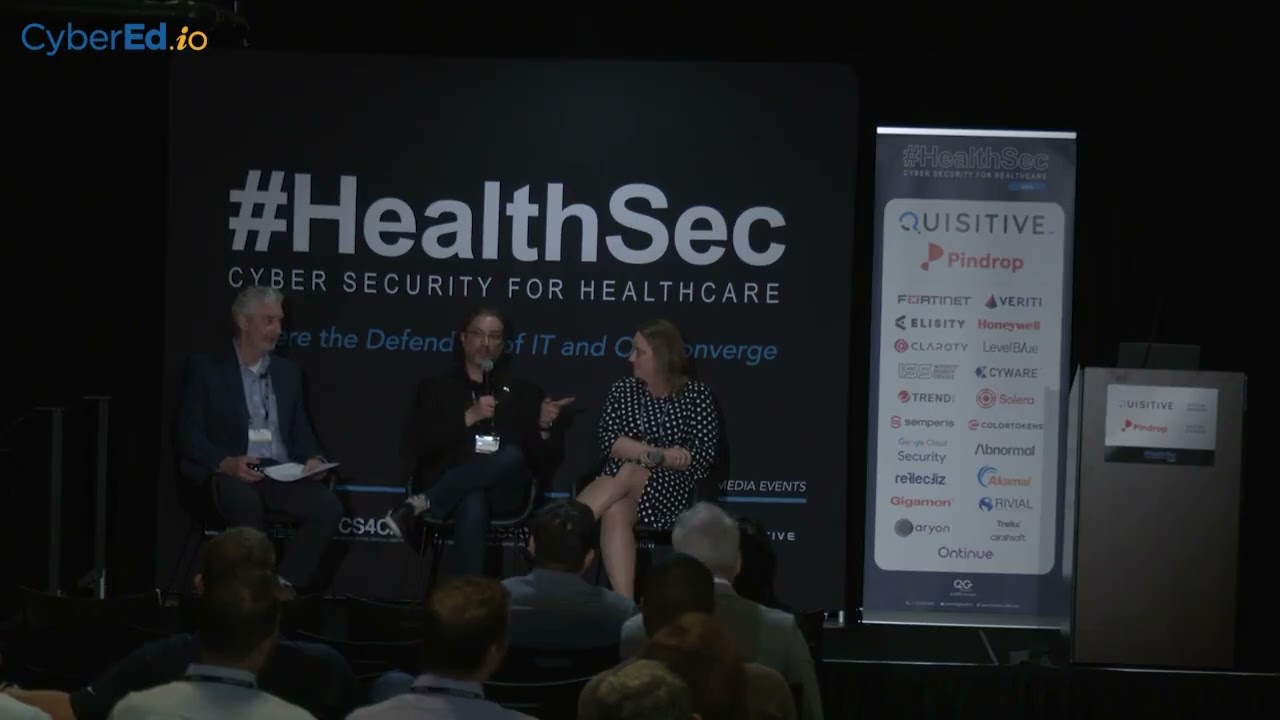
Original source: GigamonTV
This video from GigamonTV covered a lot of ground. 11 segments stood out as worth your time. Everything below links directly to the timestamp in the original video.
Beyond financial penalties, cybersecurity failures in healthcare have a direct, measurable impact on patient well-being and community health infrastructure. Understanding these far-reaching consequences is crucial for healthcare leaders and policymakers.
Cyber Incidents in Healthcare Lead to Long-Term Patient Decline, Up to $10 Million in Breach Costs
Healthcare organizations face substantial financial and patient care repercussions from cyber incidents, including potential regulatory fines, breach costs reaching $10 million per incident, and significant long-term declines in patient outcomes. Studies from institutions like Vanderbilt University and UC San Diego indicate that breached hospitals experience an 18-month dip in patient care quality, while also burdening other hospitals in the community with increased patient loads, affecting entire communities over extended periods.
"A cyber incident has been shown to have negative measurable effects on patient healthcare… not just the entity that gets breached, the entire community is affected by this and not affected just shortly, it's affected long term."
Outdated Operating Systems Plague Medical Devices, Creating Insecure Healthcare Environments
The proposed HIPAA security rule remains in review, highlighting systemic vulnerabilities in the medical device ecosystem where devices often run on unsupported, outdated Windows platforms. This critical issue stems from lengthy development cycles, which can span four to eight years before a device reaches the market, preventing manufacturers from incorporating current, secure technology.
"I can't buy medical devices on a current Windows platform, period… How on earth are we going to create secure devices, secure networks when I can't even buy something that fundamentally is supported?"
Proposed HIPAA Changes Expand Technical Controls by 60%, Mandate Device Inventory and Data Flow Mapping
The proposed HIPAA 2025 changes are poised to significantly expand technical controls by 60%, introducing approximately 65 new areas for compliance. Key requirements include comprehensive inventory of all medical devices, detailed mapping of all Protected Health Information (PHI) data flows, and mandatory encryption for all internal network traffic.
"Even if a device doesn't have PHI data on it, it could still be in HIPAA scope if it's patient care affecting."
Complete Medical Equipment Inventory Essential for HIPAA Compliance
As healthcare organizations prepare for proposed HIPAA changes, the paramount priority is to establish a complete inventory of all medical equipment and network-connected devices, not just traditional IT assets. Older, often unidentified devices, including temperature sensors and even personal game consoles connected to the network, represent the most significant security risks.
"If your organizations haven't even started with what your inventory looks like, to me, that's the number one place that you need to start."
Nation-State Actors Exploit Tech Stack Vulnerabilities in Medical IoT, Raising Supply Chain Concerns
The inherent design of the tech industry's layered stack, where upper layers operate independently of lower ones without built-in security, creates significant vulnerabilities exploited by nation-state actors. This structural flaw leads to untrustworthy medical IoT devices from certain geographical regions, some found with hidden kill switches, posing a critical threat to healthcare infrastructure.
"We can't trust medical IoT manufactured in certain geographical locations. We found power inverters and batteries with cellular phone home and kill switches."
Network Telemetry Offers Tactical Solution for Identifying Medical IoT and Mapping PHI Data Flows
Identifying medical Internet of Things (IoT) devices for HIPAA compliance is a more extensive task than often perceived, extending beyond traditional medical equipment to include devices like Kronos time clocks and door badge readers. Tactical approaches leveraging network telemetry can help pinpoint these numerous devices and their communication patterns, enabling the mapping of PHI data flows.
"Once we have that inventory, figuring out where your PHI data maps flow, they should be fairly static… if there's a delta, then you know something is amiss."
Proposed HIPAA Attestation Requirements Burden Hospitals with Third-Party Risk Assessments
The 400-page proposed HIPAA document introduces onerous additional attestation requirements, placing significant responsibility on hospitals for third-party risk assessments. These new recommendations mean hospitals must now verify and attest to the cybersecurity posture of every third-party vendor they engage with, a task many lack the resources to adequately perform.
"If you have a breach for that third party and you've done that risk assessment and they've attested that they are up to snuff, and you didn't check it, it's your fault as a hospital according to new HIPAA."
Securing Networks Requires Eliminating Outdated Systems and Advanced IoT Mapping
The initial and critical step in securing healthcare networks involves discontinuing the use of outdated systems, such as devices running Windows 95. Concurrently, organizations must implement sophisticated methods like network telemetry, DHCP options, and micro-segmentation to accurately identify and map all IoT devices and their Protected Health Information (PHI) data flows.
"You can't do micro-segmentation if you don't fully understand your PHI data flow map because you're going to break it. So just running reconnaissance and knowing what you have is step one."
HIPAA Security Rule Aims to Map Diverse Healthcare Technology for Patient Care Protection
The healthcare environment contains an immense diversity of technology, spanning over 560 FDA product codes for software-enabled medical devices, alongside extensive IoT, operational technology (OT), and traditional IT systems. The thematic objective of the proposed HIPAA security rule changes is to compel healthcare organizations to comprehensively understand their technological landscape, identify critical data flows, and prioritize their protection to ensure uninterrupted patient care.
"Thematic changes to the HIPAA security rule is really about ensuring that a healthcare organization understands what it has in its environment, what are the data flows that are critical to delivering patient care, and then identifying and protecting those that are most critical."
Enterprise-Wide Governance Crucial for Navigating Complex HIPAA Security Rule Requirements
Addressing the extensive requirements of the proposed HIPAA security rule necessitates a robust, enterprise-wide governance group, as no single department can manage the comprehensive risk assessment alone. Given limited resources, this governance body is essential for identifying, stratifying, and prioritizing the multitude of actions required for compliance across an organization.
"You need a governance team to start answering those questions for you."
New HIPAA Requirements Mandate Annual Reporting for Segmented IoT Devices, Challenge Healthcare's Security Expertise
Proposed HIPAA changes introduce new ongoing compliance reporting requirements, including annual reports for segmented IoT devices that cannot support modern encryption. This presents a significant challenge for the healthcare sector, which often lacks specialized security domain expertise, making the iterative adoption of these complex changes particularly difficult.
"If you've got IoT that can't run modern encryption, you'll have to segment it and then you'll have to run a report every 12 months showing that those guard rails are still in place."
Also mentioned in this video
- The discussion will focus on healthcare cybersecurity and compliance,… (0:01)
- A brief history of HIPAA is provided, detailing its initial purpose to ensure… (0:32)
- Dr. Sam Jacques, Vice President for Clinical Engineering at McLaren, a… (2:46)
- Himself, highlighting his nearly 30 years in IT, including experience as a… (3:10)
- The diverse perspectives on the panel, including IT, compliance, and med… (4:01)
- Massive leap towards greater security, the timelines and oversimplification of… (9:41)
- Steven Goodro mentions a paper he wrote detailing each new control and mapping… (11:02)
- Samantha Jacques advises that once an inventory is complete and high-risk… (25:41)
Summarised from GigamonTV · 26:36. All credit belongs to the original creators. Streamed.News summarises publicly available video content.