Original source: Helen Yu
This article is an editorial summary and interpretation of that content. The ideas belong to the original authors; the selection and writing are by Streamed.News.
This video from Helen Yu covered a lot of ground. 6 segments stood out as worth your time. Everything below links directly to the timestamp in the original video.
Discover how AI is moving beyond buzzwords to deliver tangible value in manufacturing, transforming daily operations and saving companies millions.
Solumina AI Leverages Contextual Data to Automate Manufacturing Processes
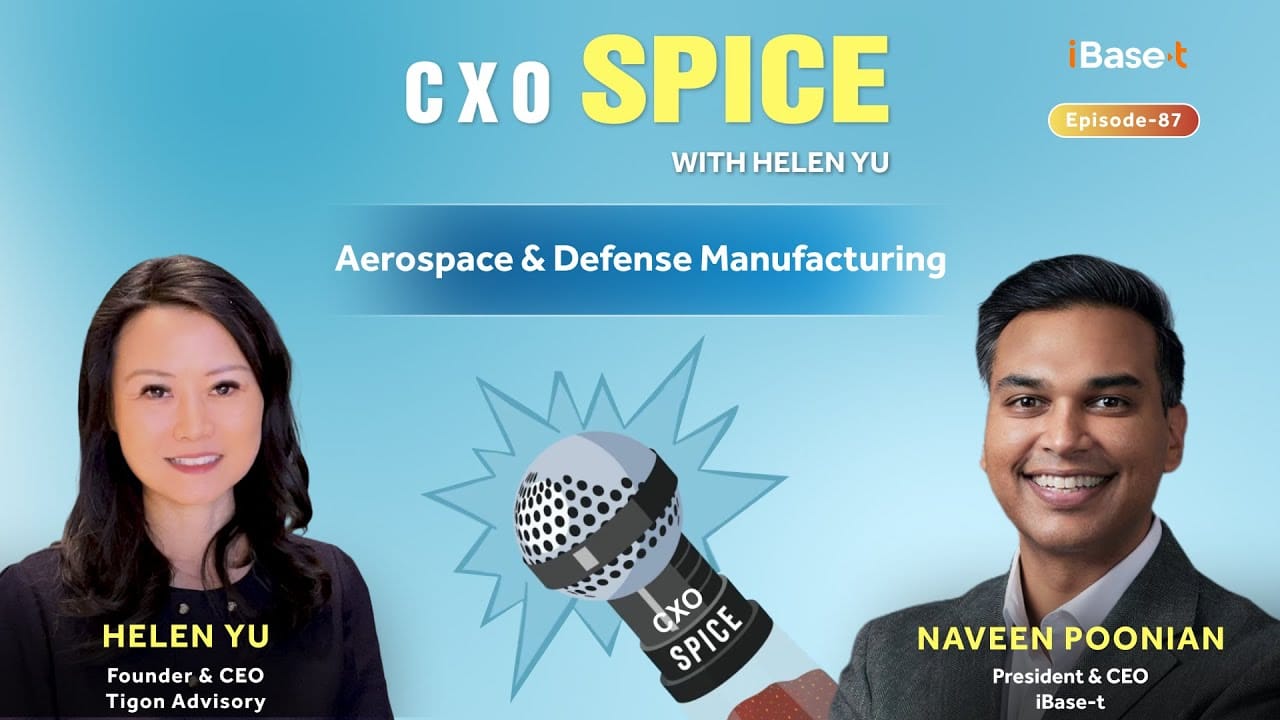
Navin Punin, President and CEO of Ibase T, explains that Solumina AI focuses on solving specific customer problems by leveraging robust, contextual data within Ibase T's platform. The system functions as a digital subject matter expert, assisting users in learning the application and answering questions, while also providing real-time intelligence for tracking Key Performance Indicators (KPIs) and overall performance on the manufacturing floor. Crucially, it automates data loading from physical paper documents, a capability that has delivered millions of dollars in value to customers.
This strategic application of AI moves beyond mere buzzwords, targeting practical challenges in manufacturing. Looking ahead, Ibase T plans to integrate Agentic AI, which will enable the system to proactively complete tasks on behalf of users. This continuous evolution aims to enhance automation and efficiency in complex industrial environments, demonstrating AI's potential to transform everyday operations and generate significant cost savings.
"AI is definitely a shiny object, but really this is again goes back to what problem are we trying to solve? Let's understand what problems are and then how AI can solve it."
Ibase T Integrates Emerging Technologies Through Interoperability and AI-Driven Automation
Ibase T prioritizes the pragmatic integration of emerging technologies by focusing on interoperability with existing enterprise applications such as ERP and PLM. This approach ensures that sophisticated capabilities like digital twins accurately reflect real-time manufacturing processes, while additive manufacturing is leveraged to automate production. The company actively collaborates with industry consortiums to refine and practically define advanced concepts like model-based enterprise, ensuring solutions meet real-world needs.
Central to this strategy is the extensive use of artificial intelligence, which collects vast amounts of operational data to create sophisticated learning models. This enables the automation of complex tasks, from generating detailed build plans to optimizing the entire supply chain. By reducing manual input and streamlining workflows, Ibase T aims to significantly increase agility and efficiency within the manufacturing sector, particularly in the demanding aerospace and defense industry.
"AI is going to continue to evolve. So we have our initial flavors of AI, but again the more data that we're going to start collecting as part of your process, the more understanding we're going to have and create those learning models where we can now start to automate a lot of things that you want to do."
Leaders Advised to Prioritize Industry-Specific Digital Solutions to Avoid 'Frankenstein Systems'
Navin Punin advises business leaders to prioritize digital solutions with a fundamental design, or "DNA," built specifically for their industry. He stresses the importance of choosing "best-of-breed" products that offer substantial out-of-the-box functionality, ideally around 90%. While some minor customizations are inevitable for highly complex environments like aerospace and defense, the goal is to minimize extensive modifications.
Excessive customization, often required when a software solution is only a 20% fit, typically leads to the creation of costly and un-upgradable "Frankenstein systems." These bespoke solutions become isolated, lack clear upgrade paths, and struggle to integrate new technologies, trapping companies in outdated and inefficient operational frameworks. By focusing on industry-specific solutions with high native functionality, businesses can achieve more sustainable and impactful digital transformations.
"If you can get a solution that's 90% out of the box perfect, that's what you want... too much customization is never ever good because you're going to have a one-off solution that won't have an upgrade path."
Modular Software Architecture Drives Faster Value for Northrop Grumman
Accelerated time to value in software migration, exemplified by Northrop Grumman's adoption, is achieved through software modularization using microservices. This architectural shift allows for updates and the addition of new capabilities to specific components without necessitating a full system shutdown or disrupting production. This modern approach contrasts sharply with traditional monolithic software deployments, which typically require extensive downtime for upgrades in critical industrial settings.
Beyond technical benefits, successfully navigating change in traditionally slow-to-adopt industries like aerospace and defense requires actively engaging and exciting customers. By showcasing advanced capabilities such as Solumina AI and model-based enterprise, software providers can create a compelling incentive for clients to embrace new technologies. This strategy transforms customers into active participants in the change management process, fostering a desire for the upgrade rather than resistance.
"Any software company who wants to move their customers forward, I mean they have to build a better product, right? because again that's the carrot that's going to pull you forward."
Electrification, Automation, and Complexity Reshape Aerospace and Defense Manufacturing
Future innovations in aerospace and defense (A&D) manufacturing will increasingly focus on electrifying and automating products, such as electric vertical take-off and landing (EVTOL) vehicles and electric aircraft, while also prioritizing sustainability. This shift introduces significant complexity, particularly with the integration of nanotechnologies and embedded software, demanding a robust digital foundation that ensures traceability and quality throughout the production lifecycle.
Managing this escalating complexity requires highly flexible systems capable of accommodating dynamic design changes and rapid re-engineering efforts to accelerate product time-to-market. Ibase T is positioning itself to lead these changes by investing heavily in AI and maintaining close collaboration with customers to anticipate and address evolving challenges. The company foresees every organization becoming a "software company" with a sophisticated digital strategy to thrive in this era of rapid innovation and increasing product complexity.
"The complexity is only going to increase... our products aren't getting more simple... how do I manage software within a product and in as part of a a bigger build?"
Navin Punin Continues Family Legacy at Ibase T After Mother's 27-Year Leadership
Navin Punin, President and CEO of Ibase T, shares the personal history of his family business, which his father founded in 1986 as a telecommunications consulting company. In 1995, the company pivoted to software, inspired by his father's pioneering work on the C-17 program at McDonnell Douglas, where he developed an early concept for managing complex manufacturing processes through software control.
Tragically, his father passed away in 1998, leading his mother, Ladira, a former nurse, to take the helm as CEO. She remarkably grew the company over 27 years before Navin joined the business after college. This story highlights not only the company's evolution from consulting to software but also a resilient family's journey, overcoming adversity to build a lasting entrepreneurial legacy in the tech world.
"My mother Ladira took over and very interesting story because she was a nurse a turn tech CEO and managed to grow the company over... 27 years I believe that she was at the helm."
Also mentioned in this video
- Ibase T's growth has been fueled by understanding customer problems and… (2:53)
- Navin Punin defines the golden triangle in aerospace and defense manufacturing… (5:29)
- The aging workforce in aerospace and defense creates a brain drain,… (7:53)
- Software like Ibase T's aids in efficiency by streamlining work and changing… (13:20)
- The significance of Solumina AI and its impact on the industry and customers. (16:46)
- Agility is crucial for leveraging technologies and adjusting to economic… (33:38)
Summarised from Helen Yu · 41:07. All credit belongs to the original creators. Streamed.News summarises publicly available video content.
Streamed.News
This publication is generated automatically from YouTube.
Convert your full video library into a digital newspaper.
Get this for your newsroom →