🌐 Also available in: 🇪🇸 Español
Original source: The Prof G Pod – Scott Galloway
This video from The Prof G Pod – Scott Galloway covered a lot of ground. Streamed.News selected 8 key moments and summarises them here. Everything below links directly to the timestamp in the original video.
When money dictates policy, whose interests are truly being served in a democracy? This segment reveals how vast sums of wealth may be undermining the foundational principles of American governance.
Booker Criticizes Money's Corrupting Influence on Washington Decisions
Senator Cory Booker argues that an unprecedented influx of money into politics fundamentally distorts decision-making in Washington, rendering the system more responsive to wealth than to democratic principles. He cites instances such as Elon Musk's purported threats of primary challenges and the crypto industry's deployment of a nearly $200 million PAC during legislative negotiations as evidence of this structural corruption. This dynamic, he contends, allows wealthy individuals and industries to exert undue influence, undermining the democratic process.
This phenomenon, characterized by the ease with which substantial capital can be mobilized to influence political outcomes, represents a systemic challenge transcending individual political figures. The Senator asserts that this concentration of wealth and its political leverage erode public trust in government and market democracy, pushing citizens towards political extremes. Addressing this requires significant campaign finance reform to restore the government's accountability to its populace.
"The deeper problem that's bigger than him right now is we have a system that doesn't respond to the democracy that we created. The system is responding to the power and the wealth that comes with large concentrations of capital and enormous wealth among certain a small group of individuals."
Booker Advocates for Food Subsidy Reform to Improve Public Health
Senator Cory Booker champions pilot programs, such as Gusnip, which effectively double the value of food stamps when used for healthy food purchases. He argues that redirecting agricultural subsidies away from products contributing to chronic illnesses, like sugary beverages, towards nutritious options could significantly improve public health outcomes and reduce healthcare demand. This approach, he notes, faces resistance from powerful food corporations that profit from the current subsidy structure.
The Senator highlights an entrenched system where incentives favor foods that lead to sickness, contrasting it with the potential for systemic change. He points to anecdotal evidence from programs where individuals have reversed serious health conditions, including diabetes, by shifting their diets. This suggests that a strategic reallocation of subsidies could mitigate the nation's substantial healthcare expenditures and enhance overall societal well-being, challenging the current model that he suggests incentivizes illness.
"We have a system that all the incentives are for sickness and death and suffering. We need a radical reimagining of where we put our subsidies."
Booker Proposes Military Audits and Enhanced IRS Enforcement to Combat Deficit and Restore Public Trust
Senator Cory Booker outlined a multi-pronged approach to address the national deficit and restore faith in the economic system, emphasizing the need for military audits, economic growth, and aggressive measures against wealth-driven corruption. He highlighted the potential for increased efficiency within the military, citing John McCain's previous assertions that greater strength could be achieved with less spending through improved efficiency. Additionally, Booker advocated for robust economic growth strategies, drawing parallels to periods of significant expansion between 1940 and 1980.
A critical component of his strategy involves combating tax evasion among high-income individuals and corporations. Citing the Congressional Budget Office, Booker asserted that tens of billions of dollars could be recovered through stricter IRS enforcement on complex tax returns. This measure, he argued, is essential not only for fiscal health but also for restoring public belief in the fairness of the American economic system, which he suggests is currently failing half the country and pushing them towards political extremes.
"The Congressional Budget Office said it simply, there are lots of tax cheating going on at the higher echelons, and if we just enforced our tax laws, we would be collecting tens of billions of dollars more."
Booker Criticizes DHS Shutdown as Political Hostage-Taking
Senator Cory Booker characterizes the ongoing government shutdown affecting the Department of Homeland Security (DHS) as a "weird Washington way" of addressing policy disagreements. He states that the President is deliberately holding the entire DHS, including vital agencies like the TSA, hostage to exert pressure on Democrats regarding Immigration and Customs Enforcement (ICE) operations. This tactic, Booker asserts, is causing widespread chaos, significant economic losses estimated at billions of dollars per week, and increasing public dissatisfaction.
Booker frames this as a calculated maneuver designed to force Democrats into funding ICE with minimal operational restraints, rather than engaging in direct negotiation over ICE's conduct. He notes the disruption to airport operations and the public's reluctance to travel, highlighting the tangible impact on ordinary citizens and the economy. Despite the President's actions, Booker expresses optimism that Republican congressional members, facing mounting public pressure and negative polling, may soon move to resolve the shutdown.
"The president has chosen to do is take the whole DHS, Department of Homeland Security, and hold them hostage."
Booker Connects Agricultural Subsidies to Soaring Healthcare Costs
Senator Cory Booker highlights a critical link between national agricultural subsidy policies and the escalating costs of healthcare in the United States. He recounts an anecdote from a casino CEO who dramatically reduced employee healthcare expenditures by improving the nutritional quality of workplace food, demonstrating how dietary changes can directly impact health outcomes and financial burdens. Booker extrapolates this insight to the national level, pointing out that 93% of U.S. agricultural subsidies support the production of unhealthy foods, making them cheaper than nutritious alternatives.
This structural imbalance, he argues, incentivizes poor dietary choices among the populace, driving up rates of chronic illnesses and, consequently, demand for costly healthcare services. The Senator contends that the current system is economically perverse, effectively subsidizing sickness and generating record profits for corporations at the expense of public health and taxpayer dollars. He advocates for a fundamental shift in agricultural policy to make healthy food more accessible and affordable, thereby addressing a root cause of the nation's healthcare crisis.
"93% of our agricultural subsidies... go to the foods that make us sick. Only 7% go to the healthy foods."
Booker Criticizes President's Middle East War Strategy and Economic Impact
Senator Cory Booker asserts that the President has unwisely repeated past errors by engaging the U.S. in another Middle East war without a clear strategy or defined endgame. He contends that this military intervention, lacking explicit objectives such as dismantling nuclear threats or achieving regime change, has not only degraded the U.S. military's near-term combat capabilities but has also created significant economic vulnerabilities. The Senator specifically points to the choking of a key strait by Iranian forces, which could trigger oil shocks and cause severe harm to both the American and global economies.
Booker's analysis underscores the structural risks associated with prolonged, undefined military engagements and their broader geopolitical and economic ramifications. He suggests that the continued attacks by Iranian-backed forces, despite the strength of the U.S. military, highlight the evolving nature of warfare, particularly the proliferation of inexpensive drone technology. This situation, he argues, has set a dangerous precedent, demonstrating how regional conflicts can swiftly translate into global economic instability even in the absence of traditional military victory.
"He's gotten us into yet another Middle East war with no off-ramp... there is no endgame in this."
Booker Explains Progressive Impact of 'Keep Your Pay Act'
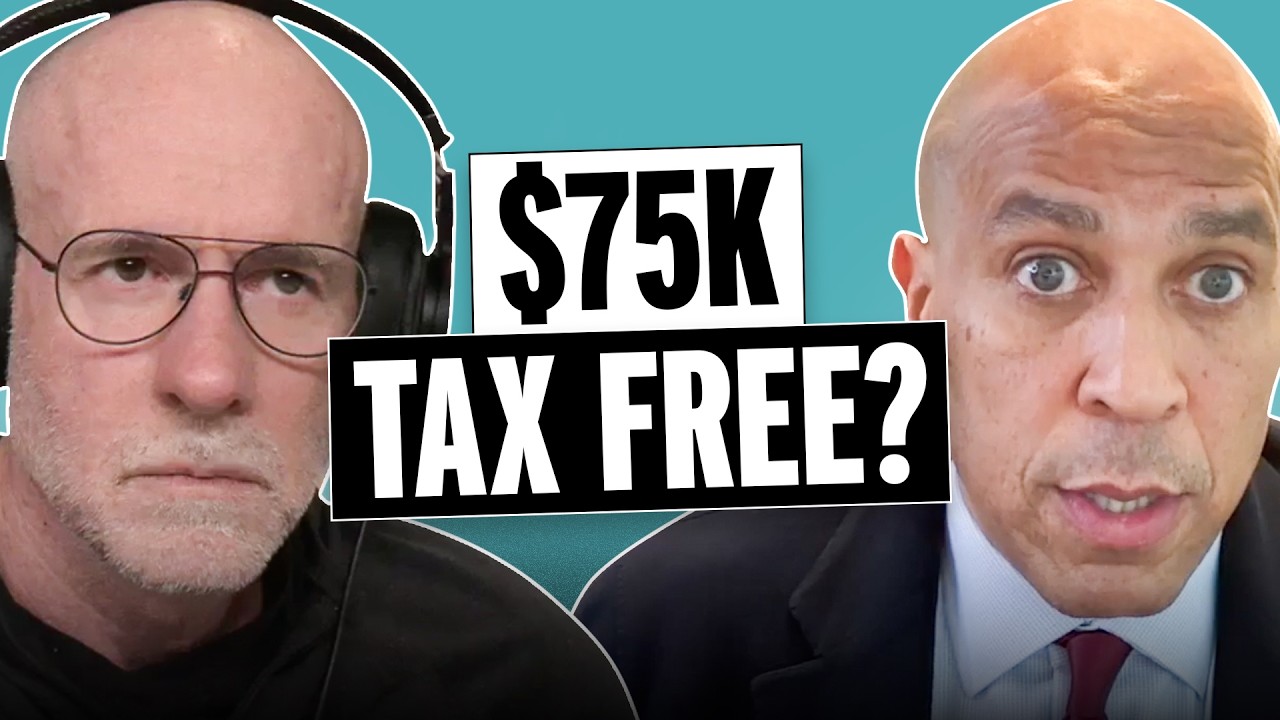
Senator Cory Booker elucidated that the 'Keep Your Pay Act' achieves its progressive aims primarily through a substantial expansion of the child tax credit and the earned income tax credit. These fully refundable tax credits are specifically designed to benefit lower-income tax brackets and working-class families, providing tangible financial relief. He noted that a temporary expansion of the child tax credit under the Biden administration nearly halved child poverty in the U.S., demonstrating the direct impact of such policies.
The Senator emphasized that the proposed expansion of the earned income tax credit would broaden eligibility, including seniors over 65 and young college students who currently do not qualify. This targeted approach is intended to make a substantive difference in the financial lives of those struggling to make ends meet, fostering a sense that the economic system is working for them. Booker cited positive feedback from working-class New Jersey residents who, upon calculating their potential tax returns, expressed relief and renewed faith in the prospect of a fairer economic system.
"We virtually cut child poverty in half in this country."
Booker Advocates Robust Immigration and Government Efficiency for Economic Growth
Senator Cory Booker argues that sustained economic growth, essential for increasing national revenues and addressing budget deficits, can be achieved through a combination of common-sense measures, particularly robust immigration policies and enhanced government efficiency. He specifically advocates for increased legal immigration across various sectors, including agricultural workers and highly skilled graduates, noting that current policies often expel talented individuals after their education. Booker draws on his tenure as mayor, where he implemented reforms that significantly improved municipal services and attracted investment.
The Senator emphasizes that streamlining government operations, introducing technology, and reducing bureaucratic friction are critical for efficiency. He points to the current system's inefficiency, which he attributes partly to corruption that benefits entities profiting from complex tax structures. By mirroring the strategies employed in Newark—reducing government size, improving efficiency, and fostering economic development—Booker suggests the nation can overcome deficits and achieve substantial economic expansion.
"The only way out of this problem is not just cutting, but it's also in growing our economy."
Summarised from The Prof G Pod – Scott Galloway · 52:10. All credit belongs to the original creators. TheProfGPod summarises publicly available video content.