🌐 Also available in: 🇪🇸 Español
Original source: GELATINA
This video from GELATINA covered a lot of ground. Streamed.News selected 8 key moments and summarises them here. Everything below links directly to the timestamp in the original video.
Political polarization isn't just ideological debate; it carries a direct economic cost, deterring long-term investment crucial for national growth. Can Argentina offer the minimum stability global capital demands?
Álvarez Agis: Political Instability, Capital Controls Deter Long-Term Investment in Argentina
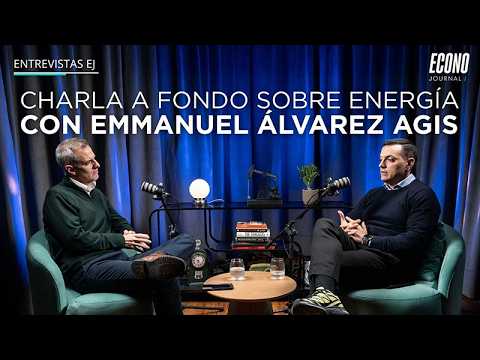
Economist Emmanuel Álvarez Agis blames two factors for deterring international investors from Argentina: recurring capital controls, even under right-wing governments, and the global rise of 'outsider' leaders. He recalls a 2022 investor warning about Javier Milei's potential win, citing Trump and Bolsonaro, noting local consultants often miss such trends. This extreme polarization and structural uncertainty block basic agreements, limiting investment to quick-return projects. It deters patient capital for strategic sectors like mining or oil, which require up to 80-year horizons. Without consensus, Argentina attracts only speculative funds, not the quality investment needed for development.
"If we don't move past this madness—that with Milei, businessmen are heroes, and the other side blames them for everything—the only investors you'll find will have an eye patch and a parrot. You won't get quality investment in a country caught between such extreme poles."
Álvarez Agis: US Sees Milei as Regional Stabilizer Amid BRICS Advance
Emmanuel Álvarez Agis explains US geopolitical support for Javier Milei: the Argentine president acts as a stability anchor for Washington in a left-leaning Latin America increasingly aligned with BRICS. Amid leaders like Brazil's Lula da Silva, Chile's Gabriel Boric, Colombia's Gustavo Petro, and Mexico's Claudia Sheinbaum, Milei's alignment with the US and Israel offers a strategic counterweight. This matters more amid rising US-China trade disputes. Álvarez Agis notes a unique global 'capital flight' from the US, with investors shifting from Treasury bonds to gold. This weakening 'dollar standard' highlights US urgency to consolidate alliances and curb Chinese influence, making Argentina a key geopolitical asset.
"Milei clearly acts as a stabilizing factor for the United States in the region, particularly in distancing from China, Russia, and so on."
Álvarez Agis Warns Milei's Main Error Will Be Not Accumulating Central Bank Reserves
Emmanuel Álvarez Agis identifies Javier Milei's defining error: failing to prioritize central bank reserve accumulation. He draws parallels to past administrations' major mistakes: Cristina Kirchner's 2011 capital controls, Mauricio Macri's excessive debt and flawed capital control exit, and Alberto Fernández's disunity and over-expansive monetary policy. Ignoring reserve importance, Álvarez Agis explains, overlooks a fundamental Argentine economic lesson: without a robust central bank 'piled' with dollars, peso confidence remains fragile, and public dollar demand becomes unsustainable. He calls equating an empty central bank with a full one a conceptual trap, warning it will inevitably spark future crises, repeating errors seen across political lines.
"When we look back and ask what Milei's error was—I hope I'm wrong—we'll say: not accumulating dollars in the Central Bank, thinking it didn't matter."
State Essential to Double Exports in Vaca Muerta, Lithium, Copper, Says Álvarez Agis
Doubling Argentine exports by simply 'removing the state' is a mistake, economist Emmanuel Álvarez Agis states. He argues active state policy is vital to develop strategic sectors like Vaca Muerta, lithium, and copper. Large projects, such as a copper mine needing $500 million upfront with 7-8 year returns, demand long-term capital and political stability beyond one administration.
Álvarez Agis emphasized that private investment alone cannot address infrastructure and social cohesion gaps. Twenty companies in Vaca Muerta, for instance, won't build necessary roads, schools, or hotels. In a nation with a 'sensitive democracy' and strong social movements, an extractive model ignoring wealth distribution and local community development is unviable. The state is thus crucial for both physical infrastructure and 'social license' to operate.
"You need the state because 20 companies can operate in Vaca Muerta, but none build a road. (...) 'Chip in and build a city'? It doesn't work like that."
Argentina's 'Rift' More Harmful to Economy Than Elsewhere, Says Álvarez Agis
Argentina's political polarization uniquely damages its economy, unlike other nations, economist Emmanuel Álvarez Agis contends. In Brazil, for example, the Lula-Bolsonaro dispute focused on social or religious issues without altering economic fundamentals. Argentina's 'rift,' however, pits two entirely antagonistic economic models against each other: one advocating spending and printing pesos, the other pushing for dollarization.
This creates radical uncertainty for investors. A capitalist observing Brazilian debates can predict interest rates or exchange rates regardless of the winner. In Argentina, choosing between models means a complete shift in rules. Álvarez Agis warns that an outsider leader combined with such a deep economic divide 'kills' predictability and long-term investment.
"'Outsider' plus 'rift' equals death. (...) We had one side saying, 'I'll wallpaper the economy with pesos,' and the other, 'I'll dollarize.' So the investor thinks... I don't know if Lula made a deal with the devil, or if Bolsonaro is an evangelical. But I pretty much know the interest rate."
Álvarez Agis: Popular Governments 'Give Away Pesos' with Immediate Problems, Right-Wing 'Give Away Dollars' with Future Crises
Economist Emmanuel Álvarez Agis identifies a historical pattern in Argentine economic policy: popular governments 'give away pesos,' while right-wing or conservative ones 'give away dollars.' The former, like Kirchnerism, expand public spending and issue currency through programs such as Progresar or Procrear. This creates immediate inflation and devaluation when reserves deplete, generating short-term well-being that quickly becomes unsustainable.
Conversely, right-wing governments, such as those of Carlos Menem or Mauricio Macri, often 'give away dollars.' They maintain an artificially low exchange rate, financed by privatizations or external debt. This fuels a boom in imported goods consumption and foreign travel, seen during the Convertibility era or enabling thousands to attend the 2018 Russia World Cup. Álvarez Agis warns this strategy's risk is its delayed impact: the crisis erupts not immediately, but when debt becomes unpayable, leading to deeper, lasting consequences.
"Left-wing or populist governments create an immediate problem: 'I put out many pesos, have no dollars, devalue, inflation, mess.' Right-wing governments usually create delayed problems."
Álvarez Agis: Argentina Needs a Statesman Willing to Lose Midterm Elections
Economist Emmanuel Álvarez Agis advises future economy ministers to recognize Argentina's complex problems demand time. He warns presidential pressure for quick midterm election wins forces shortcuts and disastrous errors. Both Mauricio Macri and Alberto Fernández prioritized short-term electoral gains, with negative long-term consequences. Macri's 2017 win fueled debt that exploded in 2018; Fernández's post-pandemic spending doubled inflation. Agis argues a true statesman accepts short-term political costs, even losing a midterm election, to implement structural reforms for sustained growth and eventual re-election on solid ground.
"For me, the statesman in this country is the one determined to lose the midterm so they can get re-elected. Everyone who rushes the economy to win midterms loses."
Milei Failed to Dollarize Due to Lack of Reserves, Would Have Needed 4,000 Peso Exchange Rate, Says Álvarez Agis
Javier Milei's government didn't dollarize, despite it being his main campaign promise, because the Central Bank lacked sufficient dollar reserves, explains Emmanuel Álvarez Agis. Without enough external funding—like the $30 billion Milei claimed to have secured—the only way to dollarize would have been at a hyperinflationary exchange rate. Agis estimates this would have been around 4,000 pesos per dollar at today's prices. Dollarizing under those conditions would have brutally eroded wages and peso savings, as all prices would immediately adjust to the 4,000-peso rate. While inflation would stop instantly, the prior social cost would be catastrophic. Ironically, the peso—which Milei called "excrement"—became the world's strongest currency during his first year, though Agis cautions this stems from artificial devaluation, not genuine improvement.
"If you wanted to dollarize, you had to dollarize at a hyperinflationary exchange rate. (...) It would have meant an exchange rate, in today's money, of 4,000 pesos."
Also mentioned in this video
- Agis discusses Milei government's pendulum perception (2:28)
- Agis explains Milei gov. isn't implementing policies (4:03)
- Agis compares Argentina's consumption to rich countries (9:19)
- Agis discusses Argentina's exchange rate stability sustainability (16:18)
- Agis uses kiosk with losses metaphor to explain economy (18:08)
- Agis clarifies Central Bank gold situation (33:18)
Summarised from GELATINA · 53:18. All credit belongs to the original creators. Streamed.News summarises publicly available video content.