🌐 Also available in: 🇫🇷 Français
Original source: The WindsurfingTV Podcast
This video from The WindsurfingTV Podcast covered a lot of ground. Streamed.News selected 8 key moments and summarises them here. Everything below links directly to the timestamp in the original video.
A corporate takeover can reshape an entire industry. This is the inside story of how a shift in ownership at one company forced a successful sub-brand to completely redefine its identity.
JP Australia's Shift From Niche to Mainstream Driven by F2 Corporate Takeover
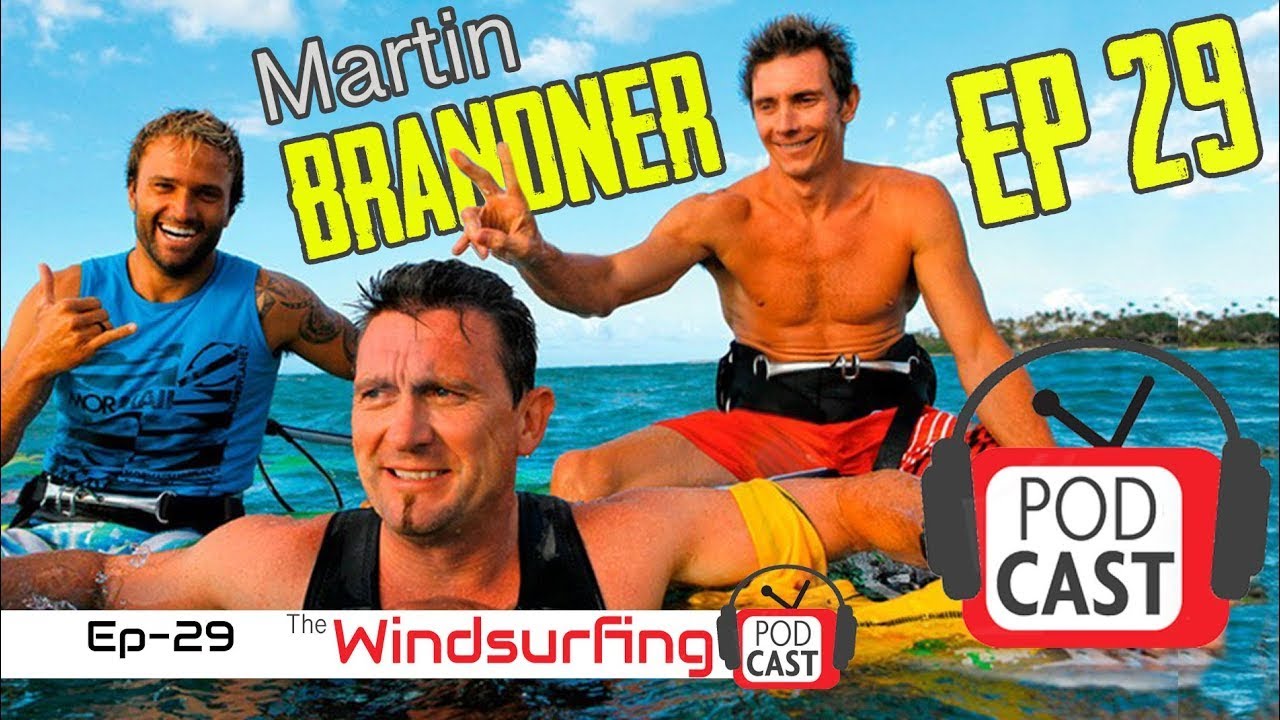
The transition of JP Australia from a niche, “hardcore” brand to a mainstream equipment provider was a forced decision driven by the corporate takeover of its parent company, F2, according to former brand manager Martin Brandner. The original plan was for JP to be a small wave and freestyle brand. However, F2 was sold by its owners to a group of UK investors who, lacking experience in the sports industry, sought to consolidate it with other recently acquired brands like Mistral and Fanatic. Brandner viewed this approach, which treated specialised sports brands like interchangeable commodities such as chocolate, as fundamentally unworkable.
The implications of this clash between corporate finance and niche sports culture were profound. Brandner argued that a single sales force could not passionately represent competing brands, as each has its own unique image and culture. This strategic disagreement led him to resign from F2 and eventually partner with Neil Pryde, who acquired the JP Australia brand. The move necessitated an expansion of the product line to serve Neil Pryde’s global distribution network, fundamentally altering the brand's original identity to meet the demands of a larger market.
"This is not going to work with windsurfing because windsurfing is about image, it's every brand has its culture. You cannot have one person selling Mistral, Fanatic and F2. It's not going to work."
Martin Brandner Reveals Failed 'Rebel' Brand, Cites Neil Pryde's Trust as Key to JP Australia's Success
Before taking the helm of JP Australia, Martin Brandner attempted to launch an entirely new brand called Rebel with Neil Pryde, a venture that failed when its manufacturing partner unexpectedly pulled out. This setback occurred after Brandner had already resigned from F2 following its chaotic sale. He briefly returned to his old role before the opportunity arose for Neil Pryde to purchase the JP Australia brand. At that point, Brandner was offered the leadership position, with a crucial promise of autonomy from Neil Pryde himself.
The dynamic illustrates a sharp contrast in leadership philosophies. While the new owners of F2 demonstrated a lack of industry understanding, Neil Pryde showed trust in Brandner’s expertise, telling him, “You will be running the show. I will not interfere.” This hands-off approach gave Brandner the freedom to build his team and execute his vision for the brand, including his core strategy of involving the sales force in product and design decisions. It's about the notion that empowering knowledgeable managers is a more effective strategy than top-down control from detached owners.
"Martin, you will be running the show. I will not interfere. We do the accounting and bookkeeping for you out of Hong Kong, but you will run the brand because you know what you're doing. You proved it before and I will leave you alone."
▶ Watch this segment — 1:06:10
Windsurfing Industry Alienates Consumers with 'Too Radical' Gear, Argues Former Brand Manager
The windsurfing industry has repeatedly made the strategic error of promoting overly radical, high-performance equipment that alienates the average consumer, according to Martin Brandner. He expresses skepticism that the sport can regain its 1980s popularity, in part because the industry's focus on extreme products chases people away. He cited the F2 Sputnik 270, a high-speed slalom board from the past that proved too difficult for most recreational sailors to handle, as a key example of this misstep.
The implications of this trend highlight a central tension within niche sports: the push for elite innovation versus the need for mainstream accessibility. Brandner sees the same mistake being repeated with the latest developments in hydrofoiling, where the equipment promoted for racing is intimidating and impractical for the average windsurfer. We're seeing a dynamic where marketing and product development are driven by the needs of a small cadre of professional athletes, which may not align with the experience of the broader customer base. For the sport to sustain itself, he argues, it must maintain the connection between its high-performance edge and its recreational foundation.
"What the industry and the writers always need to keep in the back of their mind is, does what we do attract the normal windsurfer? And do we not go too extreme and maybe even chase people off?"
▶ Watch this segment — 1:23:46
JP Australia Prioritized Premium Image and Resale Value Over Market Share, Says Former Manager
Brand success should be defined not by short-term sales figures but by building a long-term, high-quality brand image that justifies premium pricing and commands strong resale value, according to Martin Brandner. He explained that his strategy for JP Australia was never to be the cheapest brand or the volume leader. Instead, the focus was on long-term value creation through a “cool” identity. This approach was validated by German surf magazine surveys, which showed that customers were willing to spend substantially more for a new JP board and that the brand fetched a higher price on the used market, often around €100 more than competitors.
The implications of this are significant for any premium brand strategy. It's about the notion that investing in image—through credible team riders, marketing, and product quality—creates tangible financial value that extends beyond the initial point of sale. This model builds a durable advantage against price-based competition and fosters customer loyalty. The strategy demonstrates that strong brand equity translates directly into higher margins and a more stable, long-term business model.
"That you can only achieve if you have a high image. If you have a cheap image... people develop a feel if team riders really associate themselves with a brand or if they just say, 'Okay, I couldn't get anything else so I ride for them.'"
▶ Watch this segment — 1:13:50
Nike's Playbook on Athlete Personalities Shaped JP Australia's Brand Strategy
The aggressive and professional brand management style of F2 and JP Australia was directly influenced by the marketing philosophy of Nike, according to former brand manager Martin Brandner. He credits his time studying marketing in the 1980s in Portland, Oregon—home to Nike's global headquarters—as the foundation for his professional approach. A professor who also worked at Nike introduced him to the company's strategy of building a brand image through the personalities of its sponsored athletes, rather than focusing purely on technical product features.
The implications of this reveal how marketing strategies from mainstream giants can be successfully adapted to niche sports. We're seeing a dynamic where the principles of hero-based marketing, perfected by companies like Nike with athletes such as Michael Jordan, are applied to create a powerful brand identity in a much smaller market. It's about the notion that consumers connect with stories and personalities, a universal principle that transcends the scale of the sport and was central to Brandner's vision.
"That was basically always my vision: to have a brand very much rider-based and very much image-based, not so technically... build a whole image on team writers and on personalities so that people have personalities to associate with."
Team Riders Must Be Personalities, Not Just Performers, to Create 'a Show,' Argues Brandner
Martin Brandner frames professional sports as a form of entertainment—a "circus" where athletic competition is only one part of the product. Drawing from his experience in the United States, he argues this American approach to sport as a "show" requires team riders to be selected not just for their performance but for their strong personalities, even if they are sometimes difficult to manage. He contrasts this with what he sees as a traditionally more modest and less show-oriented European culture.
We're seeing a dynamic where the business of sport increasingly merges with the entertainment industry. The success of brands like Red Bull, which Brandner cites as another key example, validates the strategy of building a brand through engaging individuals rather than pure competition results. This perspective reframes the role of a sponsored athlete from that of a mere competitor to that of a media personality and brand ambassador, whose story and character are as important as their scores in creating value for the sponsor.
"In the end, it's a circus. People want to watch athletes performing, and they want to get a little bit more than just what they can do in their special sport."
Rider Value Is More Than Results; Personality and Potential Are Key, Says Brandner
There is no simple algorithm for determining a sponsored athlete’s salary, according to former brand manager Martin Brandner. He explains that evaluating a rider's worth is a complex, case-by-case process that goes far beyond competition results. Factors such as a rider’s personality, their ability to generate media attention, their professionalism, and their long-term potential are all weighed heavily when negotiating a contract. To illustrate, he points to tennis, where a charismatic player like Andre Agassi could command earnings comparable to the more dominant Pete Sampras due to his immense personality factor.
The implications of this approach challenge a purely data-driven view of talent valuation in sports marketing. It's about the notion that an athlete's contribution to a brand's image and narrative can be as valuable as their podium finishes. This qualitative assessment recognizes that engaging individuals who connect with the public are essential for building a brand's identity and, ultimately, driving sales in a personality-driven sport.
"Personality has a certain value... you tend to pay people with personalities maybe slightly more because they just get more attention."
Brandner Reflects on Managing 'Super Talented' but Undisciplined Ricardo Campello
Martin Brandner discussed the challenges of managing Ricardo Campello, whom he described as an exceptionally talented and mentally strong competitor, but one who often lacked professional discipline. He attributed some of these difficulties to Campello's upbringing and his very early entry onto the professional tour at age 15. Brandner noted that Campello's raw talent was so great that he often felt he did not need to practice diligently, a mindset that became a liability as the sport grew more competitive.
This account offers a glimpse into the human side of talent management in professional sports. It's about the notion that innate ability is only one part of the equation for sustained success; discipline, maturity, and a professional work ethic are equally critical. We're seeing a dynamic where a manager's role extends beyond contracts and logistics into mentorship, as they attempt to guide a young star navigating the pressures of a professional career without a complete support system.
"Ricardo was one of the few guys who sailed better in competition than in free sailing. And that's very rare."
Summarised from The WindsurfingTV Podcast · 2:21:38. All credit belongs to the original creators. Windsurfing TV Podcast summarises publicly available video content.