🌐 Also available in: 🇫🇷 Français
Original source: The WindsurfingTV Podcast
This video from The WindsurfingTV Podcast covered a lot of ground. Streamed.News selected 5 key moments and summarises them here. Everything below links directly to the timestamp in the original video.
A major sports equipment manufacturer confronts its own environmental impact head-on. Their strategy of aggressive offsetting and policy advocacy offers a potential model for other industries grappling with their carbon footprint.
Starboard Founder Svein Rasmussen Describes 'Guilt' Over Pollution, Details Company's Environmental Initiatives
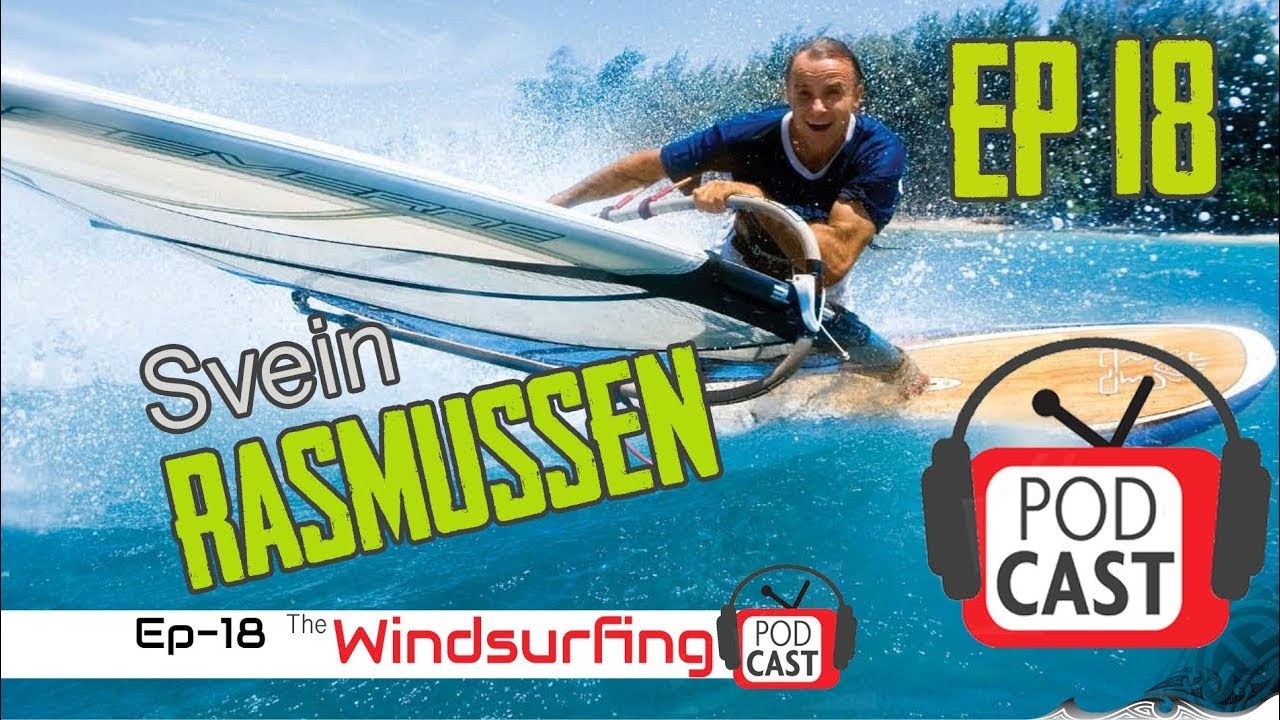
Svein Rasmussen, founder of the water sports equipment company Starboard, admitted to feeling "super guilty" about the environmental impact of his business, which manufactures products from styrofoam and epoxy. He stated that each board produced is responsible for about one ton of CO2 emissions. To address this, Starboard has launched a series of counter-initiatives, including a plastic offset program, a project to replant 3,000 hectares of mangroves, and the employment of 56 people to clean plastic from beaches daily.
This strategy attempts to position corporate responsibility not merely as mitigation but as a blueprint for systemic change. Rasmussen explained that Starboard is collaborating with the Thai government and the United Nations to promote these environmental models. A key effort involves advocating for tax reductions for companies that meet CO2 emission targets, aiming to embed green incentives directly into economic policy. The company claims to be "10 times carbon-net positive," a standard that significantly outpaces the goals of tech giants like Apple, which aims for carbon neutrality by 2030.
"We are polluters... but we're trying to at least face it and see what the heck can we do about it."
▶ Watch this segment — 1:04:50
How Starboard Upended Windsurfing With the 'Short and Wide' Board Revolution
Starboard founder Svein Rasmussen recounted how his company defied the prevailing industry trend of long, narrow boards to pioneer the "short and wide" design revolution in windsurfing. In collaboration with team rider Jamie Lever, Starboard developed a board that was radically wider and shorter than the norm. To validate the unconventional concept, Rasmussen enlisted Jim Drake, the co-inventor of windsurfing. This partnership led to the creation of the Formula board, which went on to dominate the 2000 Formula Windsurfing Worlds by securing the top six places.
The decisive victory provided the critical proof needed to convince a skeptical industry and public of the new design's superior performance. This was a strategic turning point, demonstrating that a radical innovation could be validated through competitive success. The implications of this are that the "short and wide" concept quickly cascaded across all disciplines of the sport, fundamentally reshaping equipment design in free ride and wave riding and setting the template for modern board development.
"People won't believe us unless we win something... we just have to win the World Championships."
Starboard Founder Sees Wingboarding and Youth Development as Keys to Windsurfing's Future
Svein Rasmussen, founder of Starboard, envisions the future of windsurfing as an expansive "mother sport" encompassing diverse disciplines, with wingboarding representing its most exciting evolution. He views the inflatable rigs of wingboarding as a natural progression, referencing a 1982 photo of windsurfing co-inventor Jim Drake with a similar concept. Rasmussen expressed immense personal enthusiasm for wingboarding's growth, noting he spends his time teaching new participants and working to refine the equipment for greater accessibility.
Beyond equipment innovation, Rasmussen outlined a strategic mission to revitalize the sport through a focus on junior development. The plan involves integrating windsurfing and wingboarding programs into the world's 162 national sailing federations and their affiliated clubs. This represents a systematic effort to combat the sport's aging demographic by creating a large-scale youth pipeline, similar to established sailing classes like the Optimist. We're seeing a dynamic where the goal is to build foundational interest at the club level, ensuring the sport's long-term health.
"This wingboarding is wind surfing, it's the same family. I can't stop dreaming about it. It's so freaking amazing and I'm over the moon about it."
▶ Watch this segment — 1:23:28
Starboard Founder Concedes Production Failures on Eco-Friendly Board Design
Svein Rasmussen acknowledged that product longevity is the most important element of environmental sustainability while addressing a past production failure with Starboard's Flux Balsa boards. He explained that these boards, intended to be more eco-friendly by replacing PVC with balsa wood, suffered from widespread delamination. The root cause, he said, was a manufacturing error at the Cobra factory where the balsa was sanded instead of being single-shot molded. This deviation from the specified process compromised the boards' structural integrity.
This admission highlights the inherent tension between environmental innovation and the complexities of outsourced mass production. It's about the notion that even with clear intentions, supply chain and manufacturing processes can undermine a product's sustainability goals. Rasmussen's inability to directly oversee the production line, a change from past practice, underscores the challenges of maintaining quality control with third-party manufacturers. The failure not only damaged a product line but also tarnished the reputation of a novel, sustainable material, making future adoption more difficult.
"We shot ourselves in the foot... We can probably not go back to balsa because it has a bad taste because of this production issue."
▶ Watch this segment — 1:17:19
Windsurfing's Versatility Could Be Key to Wider Media Appeal, Industry Leader Says
Windsurfing's unique versatility is a key asset that could be leveraged for greater media exposure, according to Starboard founder Svein Rasmussen. He pointed to past successes, such as the large-scale Era* sponsored events in Poland, as evidence of the sport's potential to capture a broad audience. The sport can be marketed in multiple ways: as a laid-back beach lifestyle, a high-performance athletic competition, or a glamorous activity adjacent to the world of yachting. This flexibility allows it to connect with a diverse range of sponsors and audiences.
The primary challenge for the sport is to create a formal structure that can consistently capitalize on this potential, which it currently lacks compared to mainstream sports like football. A potential path forward lies in better coordination between the professional (PWA) and Olympic divisions, especially with the rise of foiling. We're seeing a dynamic where the visual excitement of foiling, combined with a unified promotional strategy, could make windsurfing more "sellable" to mainstream media and sponsors, potentially breaking it out of its niche status.
"Windsurfing is amazing in the sense of you can promote it as a Beach sport, as a lifestyle, you can sell it to a travel agency, you can be close to yachting... and it's also a sport."
▶ Watch this segment — 1:31:50
Summarised from The WindsurfingTV Podcast · 1:40:18. All credit belongs to the original creators. Windsurfing TV Podcast summarises publicly available video content.