🌐 Also available in: 🇫🇷 Français
Original source: The WindsurfingTV Podcast
This video from The WindsurfingTV Podcast covered a lot of ground. Streamed.News selected 8 key moments and summarises them here. Everything below links directly to the timestamp in the original video.
Could betting on windsurfers transform the niche sport into a mainstream spectacle? A veteran rider thinks it's time to learn from the NFL.
Kai Katchadourian Proposes Fantasy Leagues and Gambling to Boost Windsurfing's Appeal
Veteran windsurfer Kai Katchadourian suggests that the Professional Windsurfing Association (PWA) could dramatically increase spectator engagement by adopting models from mainstream American sports, specifically by incorporating fantasy leagues and gambling. He observes that the current competitive landscape features greater parity among top athletes, with races often decided by fractions of a second. This unpredictability, he argues, makes the sport an ideal environment for betting and would create a more compelling spectacle for fans.
This proposal taps into a broader trend of sports leagues leveraging gambling to drive viewership and revenue. The implications of this are that it could transform the largely European-based PWA tour, making it more dynamic and commercially viable by creating a higher-stakes 'show' for a global audience. It's about the notion that allowing fans to have a financial stake, however small, can significantly deepen their emotional investment in the events and the athletes' performances.
"I like my perch as some sort of fantasy gambler. I'm going to put money down on this guy and turn it into a betting thing and really get into it. Why not? Let's gamble on slalom racing."
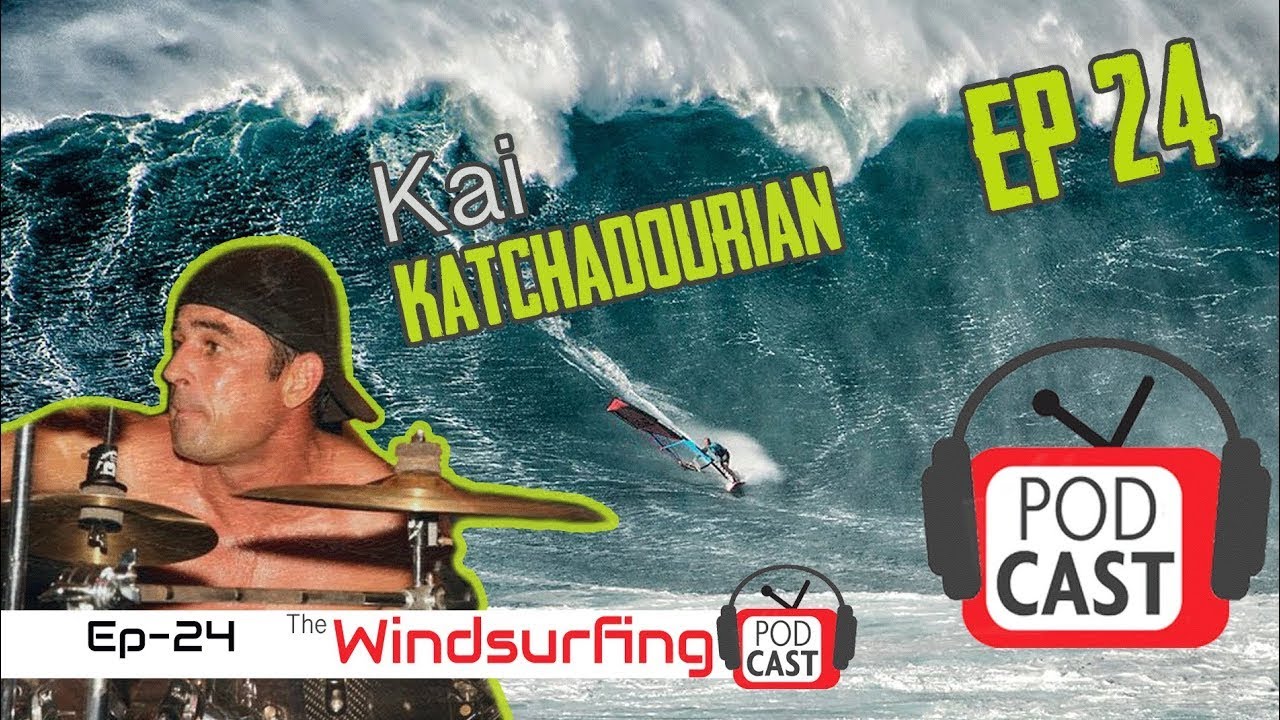
Windsurfer Kai Katchadourian Reveals Past Title as 'World's Fastest Drummer'
Professional windsurfer Kai Katchadourian confirmed a lesser-known facet of his career, revealing he once won the 'World's Fastest Drummer' title at the NAMM Trade Show. He achieved the distinction by executing 907 single strokes in 60 seconds, a feat measured by a specialised device called a 'Drumometer'. The competition requires clean, individual hits rather than a sustained 'buzz roll', making it a test of pure speed and precision.
Beyond the competitive achievement, Katchadourian draws a clear line between what he terms 'sport drumming' and genuine musicianship. He explains his passion for metal drumming, which engages both feet and hands, is rooted in musical expression and creativity. This perspective offers an interesting parallel between the technical execution demanded in elite sports and the artistic expression central to music, highlighting how one person can excel in two vastly different disciplines.
"I did win the world's fastest drummer title. This was an organized competition that took place at the NAMM Trade Show. 907 in 60 seconds, baby. Number one."
▶ Watch this segment — 1:45:01
Veteran Windsurfer Shares Pro-Travel Hack: Intentionally Abandoning Luggage for Airline Delivery
Drawing from decades of experience travelling with cumbersome equipment, windsurfer Kai Katchadourian shared a story of a recent gambit to avoid hauling his 30-kilogram board bag during an 18-hour layover in San Francisco. Aware that the forecast in his final destination of Maui showed no wind for over a week, he deliberately left his gear at the airport upon arrival. He gambled that the airline's lost luggage system would eventually deliver it to his doorstep, a strategy that ultimately paid off when the bag arrived four or five days later.
This anecdote highlights a clever, if risky, manipulation of airline systems that many frequent flyers might have considered but few would dare to attempt. The implications are twofold: it's a commentary on the logistical burdens athletes face when travelling with oversized equipment, and a testament to the creative problem-solving that arises from such challenges. It's about the notion that sometimes, working with the inherent flaws in a system is more effective than fighting against them.
"I'm gonna play the old missing bag trick. So I get to San Fran and I'm like, I don't really feel like carrying this thing around and I am going to just leave."
▶ Watch this segment — 2:18:20
Kai Katchadourian on the Psychology of Big Wave Riding: 'I Actually Just Really Like Sailing Scared'
Professional windsurfer Kai Katchadourian offered a candid look into the mindset required for big-wave riding, stating, 'I actually just really like sailing scared.' He describes this fear not as a hindrance but as a mental hurdle that creates a state of 'enhanced alertness.' While acknowledging the critical role of knowledge and experience in preventing hesitation—which he warns can cause one's worst fears to come true—he frames the act as a deliberate confrontation with fear itself, which is essential for performance in extreme conditions.
The implications of this are a deeper understanding of risk management in high-stakes environments. Katchadourian notes that as he has gotten older, his mindset has shifted toward more measured risk-taking, emphasising the ultimate goal of returning home safely. We're seeing a dynamic where the initial thrill-seeking evolves into a more profound experience of feeling small against the immense power of nature. He contrasts his approach with riders like Thomas Traversa, whose extreme commitment and positioning on massive waves seem to 'defy logic,' continually pushing the sport's boundaries.
"Fear will make you hesitate, and if you hesitate, your worst fears will come true. That's what you have to avoid."
▶ Watch this segment — 1:20:01
Single-Athlete Dominance and Lack of Reinvention Contributed to Windsurfing's Decline, Says Kai Katchadourian
Reflecting on the evolution of professional windsurfing, Kai Katchadourian suggests that the era of overwhelming dominance by single racers like Bjorn Dunkerbeck may have played a role in the sport's shrinking public profile. He notes that while impressive, this level of predictability came as windsurfing failed to innovate its competitive format. This stagnation was particularly notable given that in its peak in the early 1990s, the professional windsurfing tour was so commercially successful that the surfing world looked to it as a model for growth.
The implications of this are that any sport must constantly reinvent itself to maintain relevance. While windsurfing's tour structure remained static, the professional surfing tour strategically evolved by focusing on premier global locations and securing major corporate sponsorships. We're seeing a dynamic now where the most visible watermen, such as Kai Lenny, are multi-sport athletes who defy easy categorization. By showcasing windsurfing alongside other disciplines, they are helping to elevate the sport's public perception once again.
"Nothing ever lasts like that unless it reinvents itself constantly. In the early 90s, the surfing world was looking at windsurfing like, 'How can we be like that?'"
▶ Watch this segment — 1:03:07
Kai Katchadourian on a $1 Million Windfall: Invest in Land, Not a Lavish Lifestyle
Asked how he would spend a hypothetical million dollars, veteran windsurfer Kai Katchadourian prioritised long-term, tangible assets over immediate luxury. His plan would involve purchasing raw land on Maui and a small property in Cabo Verde. He envisioned the Maui property as a hands-on building project for his family, instilling the value of creating something from the ground up rather than simply buying a finished product.
This practical approach reflects a mindset grounded in sustainability over fleeting wealth. Katchadourian humorously contrasted this grounded plan with the fantasy of owning a private jet to chase swells around the globe, a dream requiring a much larger fortune of around $100 million. It's about the notion that true wealth lies in creating lasting assets and experiences, a perspective he notes is sometimes lost on Maui, where money can create a false sense of entitlement.
"I would just buy land. I'm going to buy raw land and I'm going to, you know, do a long-term project."
▶ Watch this segment — 2:33:52
Simmer Style Shifts Gear Release to Later in Year, Prioritising Shelf Life and R&D
Windsurfing brand Simmer Style is deliberately pushing its new equipment releases to the end of the calendar year, a strategic shift away from the industry's trend of increasingly early launches. According to veteran rider Kai Katchadourian, this move is designed to give products a longer shelf life, a change that benefits retail shops and consumers. It also allows the development team more time to create meaningful improvements rather than simply releasing something new for the sake of adhering to an annual cycle.
This strategy is a counter-current to the high-pressure, seasonal product cycles common across many consumer industries, from fashion to automobiles. The implications of this are a potential shift toward more sustainable business practices that prioritise genuine innovation over perceived novelty. We're seeing a dynamic where a brand with a dedicated following can step off the marketing treadmill, confident that its customers value substantive improvements and will wait for a product that is demonstrably better, not just newer.
"We've got to give ourselves some time to come up with something better. Don't just come up with something new for the sake of it being new."
▶ Watch this segment — 2:12:50
Passion for the Sport is Key to a Successful Windsurfing Brand, Says Simmer Style Veteran
With over 30 years of involvement with Simmer Style, Kai Katchadourian has transitioned from a sponsored rider to an integral part of the business. He attributes his long-standing loyalty to a shared belief that a genuine passion for windsurfing is what ultimately drives product quality. Katchadourian argues that if a brand's primary motivation is money, its products will likely suffer; conversely, if the love of the sport comes first, financial success is a natural byproduct of creating superior equipment.
In an increasingly diversified market where major brands offer gear for a wide range of water sports, Katchadourian asserts that Simmer Style's identity as a core windsurfing brand is a key strength. It's about the notion that specialisation and authenticity resonate deeply with a dedicated customer base. This focused approach allows the brand to maintain its integrity and appeal to a clientele that values high performance and heritage over a broad, all-encompassing product catalogue.
"I think that if you do it for the sailing and the love of the sport, the money will come. If you're only doing it for the money, then you're probably not putting out a product that will maximize your sailing."
Summarised from The WindsurfingTV Podcast · 2:42:29. All credit belongs to the original creators. Windsurfing TV Podcast summarises publicly available video content.