🌐 This article is also available in Spanish.
Original source: John Barrows
This article is an editorial summary and interpretation of that content. The ideas belong to the original authors; the selection and writing are by Streamed.News.
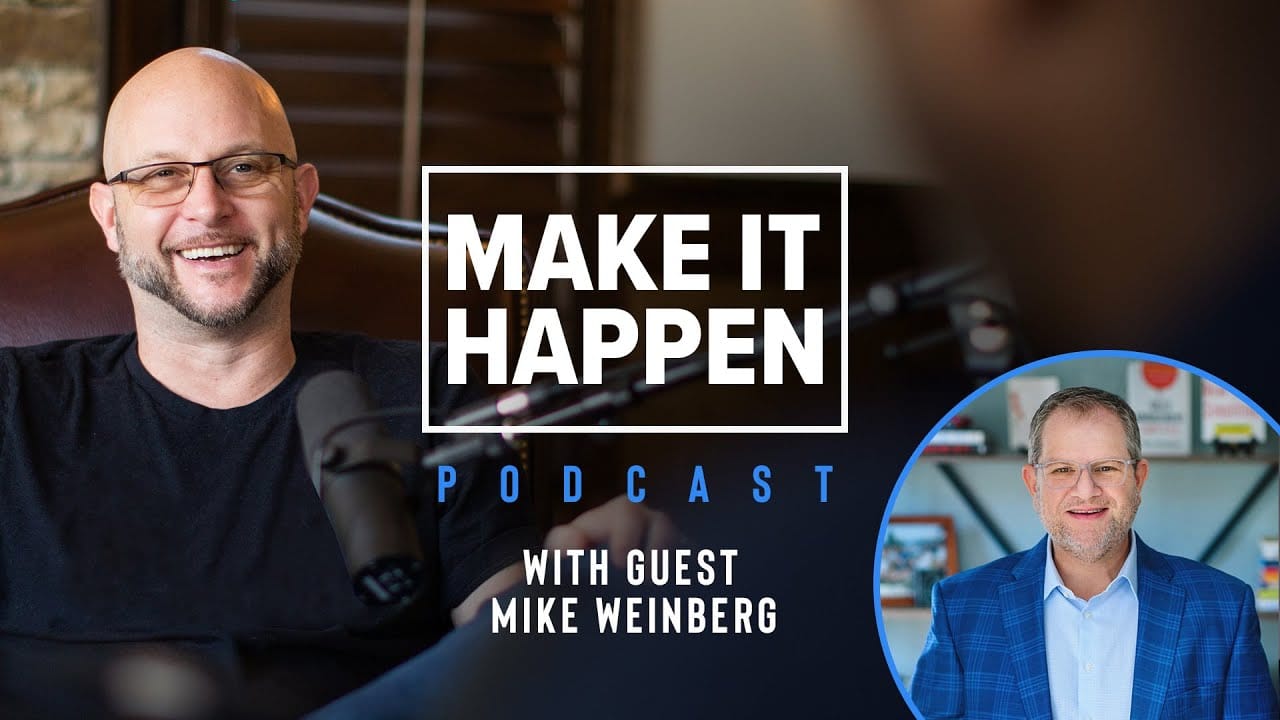
This video from John Barrows covered a lot of ground. 6 segments stood out as worth your time. Everything below links directly to the timestamp in the original video.
The best coaching moment in this conversation doesn't involve a CRM or a slide deck — it happens on a golf course, and it quietly indicts how most sales managers actually spend their time.
Sales Coach Mike Weinberg Says Managers Should Treat Sellers Like a Golf Pro Treated Him
A round of golf with a world-class instructor left Mike Weinberg shooting a personal best by four strokes the next day — and convinced him that the gap in sales management is almost never technique. It was the coach's method that did it: careful preparation before the round, quiet whispers of strategy mid-game, and a detailed debrief over dinner that painted a picture of what Weinberg could become. He argues that sales managers who replicated that level of deliberate, one-on-one attention — watching their reps, prepping them before calls, debriefing honestly afterward — would produce outsized results without a single new training program.
The argument cuts against a widespread management habit: deploying coaching only at crisis points, with struggling reps or on high-stakes deals, rather than systematically across the whole team. Weinberg also recommends a concrete substitute for business acumen — having reps call their three best customers and ask why they bought, letting real customer language replace polished marketing copy in prospecting conversations.
"If sales managers would do for their people what my golf coach did for me in a couple of hours — just working alongside, watching, asking questions — I broke my personal record by four strokes the very next day."
John Barrows: A Manager Who Can't Do the Job Has No Right to Demand It
John Barrows once turned on his manager during a Friday cold-call blitz, asking publicly how many cold calls the manager himself had made that day — a response he acknowledges was borderline fireable. What redeemed the dynamic wasn't a reprimand but what happened the following week: the manager sat at his desk, door open, headset on, and proceeded to make cold calls that Barrows describes as among the best he has ever heard. He put his own headset on immediately. The episode anchors Barrows' conviction that a trainer or manager's authority depends entirely on whether they are currently in the game, not on past wins or a polished presentation.
The point lands harder given how rapidly sales conditions are shifting. Barrows argues that coaching based on methods learned a decade ago and never stress-tested since is nearly worthless to a modern rep navigating a changed environment. He backs this with personal accountability, publicly disclosing a deal he lost after spending $10,000 on business-class flights to the UK — admitting after two days of anger that he had ignored a senior executive stakeholder his own team had flagged, and that the failure was entirely his.
"When I tell you he was one of the best cold callers I had ever heard in my life — I immediately put my headset on and went to work."
Mike Weinberg's View of Sales Flipped When He Watched the Slim-Fast Owner Sell to Walmart
Mike Weinberg grew up watching his father's sales team stack nail-polish displays in drugstores and wanted nothing to do with the profession. His conversion came when he joined Slim-Fast Foods — then the fastest-growing company in the world — as assistant to its owner, and flew with him on a private jet to call on Walmart in Bentonville, Arkansas and Target in Minneapolis. The owner never pitched, pushed, or manipulated. He asked questions, understood the retailers' businesses, and built relationships. Weinberg left that experience understanding sales as consulting rather than transaction.
The origin story matters because it explains why Weinberg has spent his career arguing against the product-pitcher model of selling. He eventually pivoted out of consumer packaged goods into commission-based hunting roles, combining the relationship philosophy he absorbed watching the Slim-Fast owner with a willingness to make cold calls and initiate contact without apology — a combination he credits for his early success and the framework he later turned into books and consulting work.
"Watching that guy sell changed my mind about whether I wanted to be in sales — he showed me that real salespeople are consultants who understand the customer's business."
Weinberg: Promoting Top Sales Reps Into Management Is Setting Them Up to Fail
The qualities that make an outstanding individual sales contributor — single-minded focus, a large ego, competitive drive, the instinct to close personally — are almost precisely the wrong qualities for a sales manager. Mike Weinberg makes this case directly, describing the transition as one where every instinct has to reverse: from winning alone to winning through others, from protecting your own time to making yourself perpetually available, from taking credit to quietly enabling someone else to take the stage. He looks for one trait above all others when identifying a potential leader from within a team: evidence that a person genuinely gets satisfaction from watching colleagues succeed, rather than needing to be the one collecting the trophy.
The observation has structural consequences. Weinberg says he regularly counsels high-performing reps to reconsider whether they actually want management — questioning whether ego or genuine desire is driving the ambition — because the politics, administrative burden, and reduced earning potential often make the role a poor trade for someone who excels at hunting. The alternative he advocates is keeping great hunters in the field where they generate real money, rather than promoting them into roles that destroy both their performance and the team beneath them.
"The only thing similar between salesperson and sales manager is the word sales. Everything else is opposite."
Barrows Applies the 'JOLT Effect' to Sales Management: Show Candidates the Worst Case First
John Barrows draws a parallel between a sales research framework called the JOLT Effect — which argues that buyers stall not from indecision but from fear of making the wrong choice, and that the antidote is explicitly naming worst-case scenarios rather than painting utopian outcomes — and how companies should prepare sales reps considering a move into management. Rather than selling the promotion, Barrows says the honest approach is to map out everything difficult about the role: more responsibility, less recognition, probable pay reduction, and constant focus on others' performance over your own. If a candidate still wants it after that conversation, the decision is real.
The framework connects to a broader critique both Barrows and Weinberg make about sales culture's tendency to avoid hard questions out of discomfort. Barrows notes that when he asks salespeople why they skip thorough discovery conversations, they admit it's because they don't know where the conversation will go — so they retreat to the demo or pitch where the script is safe. The JOLT approach demands the opposite: surface the fear, name it directly, and let the customer or candidate decide from a position of honesty rather than manufactured enthusiasm.
"Let me literally map out this bag of what you're about to get into — are you cool with that? Because if you're not, stay an individual contributor."
Weinberg Blames Executives, Not Managers, for the Sales Coaching Crisis
Sales managers are buried under hundreds of daily emails, back-to-back virtual meetings, and redundant forecasting spreadsheets demanded by finance teams that ignore the CRM — leaving no time to do the two things that actually move sales performance: holding people accountable and coaching. Weinberg directs his frustration at the executives above sales managers, arguing that leadership has lost sight of what the role requires and has instead treated managers as middle-layer administrators. The result is a vicious cycle: managers don't develop their reps, so they compensate by inserting themselves into individual deals, doing the prep, leading the presentation, and writing the proposal themselves — a pattern Weinberg labels the hero syndrome, which is non-scalable and corrosive to team culture.
Barrows adds a systemic root cause: most onboarding is still product-centric, certifying reps on slide decks and value propositions rather than developing genuine selling skills. Reps who never learn to adapt a script to their own style keep running the same canned presentation because that is what they were evaluated on. Without coaching to bridge that gap, the 10 percent who are self-directed enough to improve on their own will, and the rest will not.
"The coaching is the first thing that gets cancelled — and part of the problem is not the manager, it's the C-suite who've lost sight of what the sales manager's job actually is."
Summarised from John Barrows · 55:25. All credit belongs to the original creators. Streamed.News summarises publicly available video content.
Streamed.News
This publication is generated automatically from YouTube.
Convert your full video library into a digital newspaper.
Get this for your newsroom →