Original source: Rick Beato
This video from Rick Beato covered a lot of ground. Streamed.News selected 6 key moments and summarises them here. Everything below links directly to the timestamp in the original video.
What does it take for a band to bet its entire career on a single, uncompromising album? For Rush, it was the only option they had left.
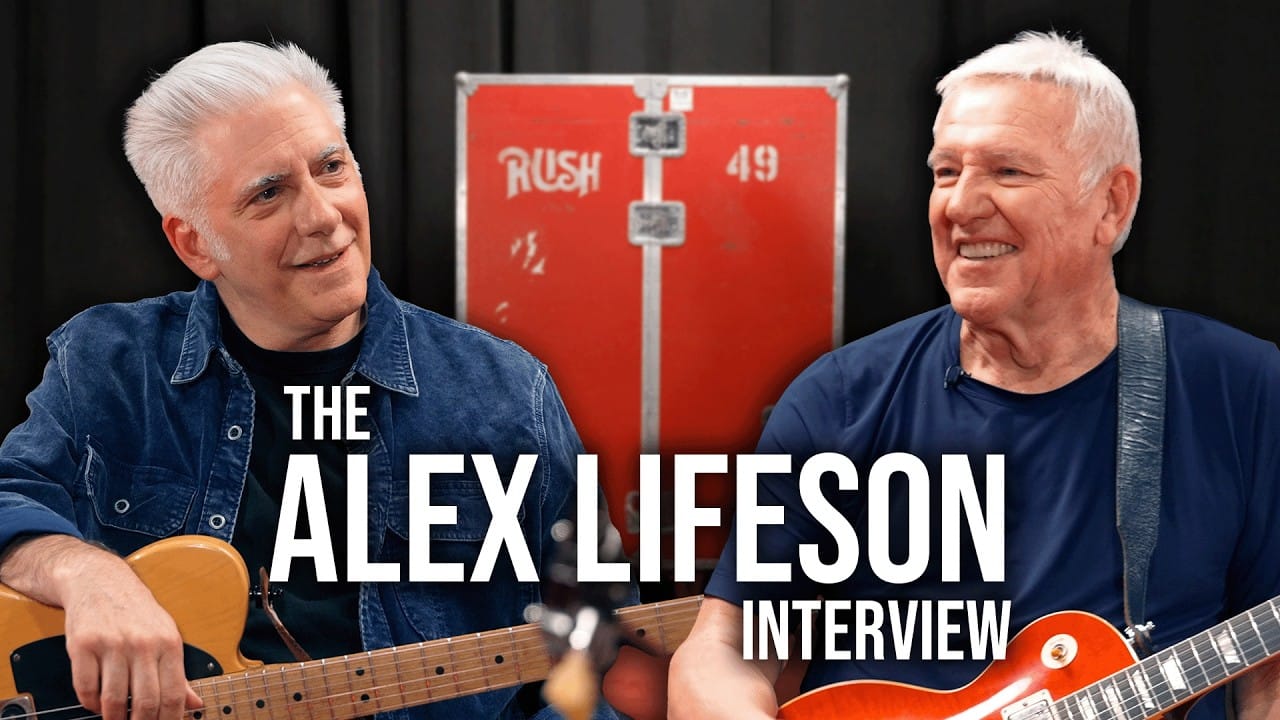
Alex Lifeson Reveals Rush Defied Label Pressure to Create ‘2112’ After ‘Caress of Steel’ Failure
The moment Alex Lifeson’s parents, who were Yugoslavian refugees, finally accepted his career was when they saw Rush on a local TV show in 1974—they were entertainers with a real job. But that legitimacy was threatened after the commercial failure of ‘Caress of Steel’, which left the band heavily in debt and pressured by their label to write a more straightforward rock record.
Instead of capitulating, the band made a defiant choice: make the album they wanted, and if it failed, at least it would be on their own terms. That protest record was ‘2112’, which after a year of touring went platinum, buying them the creative independence they protected for the rest of their career.
"We're just going to make the record that we want to make and if it fails then... at least it's our thing. We did it and that was 2112. So that was our protest record."
Alex Lifeson Recalls Unknowingly Filming a Viral Clip About His Musical Dreams at Age 17
At 17, Alex Lifeson participated in a Canadian cinema verité film called 'Come on Children', where a camera crew filmed him and other teens living on a farm for 10 weeks. During a visit from his parents, a camera captured a spontaneous lunch conversation where he passionately defended his choice to be a musician over pursuing a more stable, lucrative career.
That footage, shot on 16mm film, remained unreleased for nearly two decades. The filmmakers behind the Rush documentary later discovered the clip, which perfectly encapsulated the defiant, pure artistic spirit of a teenager who just wanted to play his guitar.
"It's so perfectly teenage, right? Don't tell me what to do. I know better than you. I'm going to be a musician. I don't need money. I don't need a fancy car."
How a Guitar Amp Placed Outdoors in the Mountains Created the Sound of the ‘Limelight’ Solo
The iconic solo for “Limelight” was meticulously crafted to express the fragility of fame described in Neil Peart's lyrics. Recorded late at night at Le Studio, the guitar cabinet was placed outside to capture a natural echo off the surrounding Laurentian mountains. Lifeson used a Hamer* Sports Caster guitar, leveraging its vibrato arm to create an unstable, wavering pitch.
What people don't realise is that this setup was a deliberate production choice to mirror the song’s emotional core. The lack of control in the bending, echoing sound sonically represented the feeling of being ungrounded and unstable while living on the road.
"There's a lack of control in it because it's bending and it's not stable and that's kind of how it feels sometimes when you're on the road... you feel like you're bending all the time to everything."
Alex Lifeson Details Opposing Creative Styles That Fueled Rush's Songwriting with Geddy Lee
Alex Lifeson describes himself as a spontaneous and emotional improviser, a personality that guides him in music and in life. This stands in direct contrast to Geddy Lee, whom he characterizes as methodical, needing to explore every wrong option before he knows an idea is right.
The reason this worked is that their opposing natures created a perfect songwriting balance. Lifeson often brought the rockier, wilder ideas, while Lee contributed more melodic and warmer concepts, forming a complementary tension that became essential to the band's signature sound.
"He's very methodical. He has to hear everything wrong before he knows it's right. And that's been a really key thing to the way we work."
Producer Kevin Shirley Pushed Alex Lifeson to Ditch ‘Dinky Direct Sounds’ and Return to Loud Amps
During the mixing process for one of their records, producer Kevin Shirley challenged Alex Lifeson to abandon the “dinky stupid direct sounds” he had grown accustomed to from recording in the control room. Shirley, known for his raw rock aesthetic, pushed him to re-record guitars by standing in the room with the amps turned “up to a million.”
Lifeson found the experience revelatory. The physical vibration of the guitar, his body, and the room itself created a sound he describes as “so pure and complete,” reconnecting him with the raw, resonant power that Shirley was seeking for the band’s sound.
"When you're in the room and the amps are turned up to a million... The guitar is just vibrating like crazy. The neck's vibrating, you're vibrating, your teeth are vibrating. There's something that's so pure."
Alex Lifeson on Serving the Song by Simplifying His Guitar Work in Rush
Rush's core principle was to always progress musically and never repeat themselves. For Alex Lifeson, this forced him to constantly develop new chord voicings and, counter-intuitively, to simplify his playing to support the hyperactive rhythm section of Geddy Lee and Neil Peart.
His primary focus became serving the song rather than showcasing his own ability. Often, the best way to do this was to pull back and simplify, creating the space necessary for the bass and drums. This philosophy is perfectly captured in the famously simple yet deeply emotive solo for “Limelight.”
"A lot of times it's simplifying. When you have two active players who are as great as those two guys are, it's important, I think, to just pull it back a little bit and simplify things."
Also mentioned in this video
- The 'Alex Lifson chord,' identifying it as an F#7sus4 and recalling hearing a… (0:00)
- Rush's songs were challenging to play live due to their complexity, despite his… (1:02)
- His touring guitars, favoring a custom shop 1960 reissue tobacco sunburst Les… (2:50)
- His double-neck guitar was for live performances of specific songs like… (4:59)
- Alex Lifeson details his early guitar rig from 1970-1974, starting with a… (8:15)
- Alex Lifeson details his transition from analog pedals like the Echoplex to… (13:00)
- His guitar journey, starting with classical guitar lessons at 17, which… (21:39)
- The collaborative dynamics within Rush during recording, where he preferred to… (24:20)
- The challenge of fitting his guitar into Rush's keyboard-dense records of the… (30:31)
- Alex Lifeson names "Moving Pictures" as the Rush record where songs and… (45:06)
- The creation of the iconic opening lick for "The Spirit of Radio," noting its… (46:46)
- Rush's approach to creating setlists for their current tour, starting with… (48:22)
Summarised from Rick Beato · 51:03. All credit belongs to the original creators. Streamed.News summarises publicly available video content.