🌐 Also available in: 🇪🇸 Español
Original source: DECODE con DaniNovarama
This video from DECODE con DaniNovarama covered a lot of ground. Streamed.News selected 7 key moments and summarises them here. Everything below links directly to the timestamp in the original video.
International conflicts are not decided by military strategy alone. The economic leverage of powers like China can shape the outcome of wars — rattling global financial markets and, ultimately, your wallet.
China Uses Economic Leverage to Press U.S. on Iran Conflict
China, the largest holder of U.S. debt and a major buyer of Iranian oil, is wielding its economic clout against the Trump administration. Beijing wants the Iran conflict ended — partly because China absorbs 20% of Iranian crude and sources 50% of its total oil consumption from Iran. A prolonged war would disrupt China's supply chains and threaten its energy security.
China's sharpest lever is its vast holdings of U.S. Treasury bonds. The implicit threat to dump them could trigger severe global financial instability — a significant constraint on the White House that, in game-theory terms, sets this conflict apart from Russia's position in Ukraine. Energy dependence and financial exposure are converging to force a quick resolution.
"China grabs Trump, calls him up and says, 'Hey, if you don't end this war, I start selling U.S. bonds — and you'll see the chaos that unleashes across the planet.'"
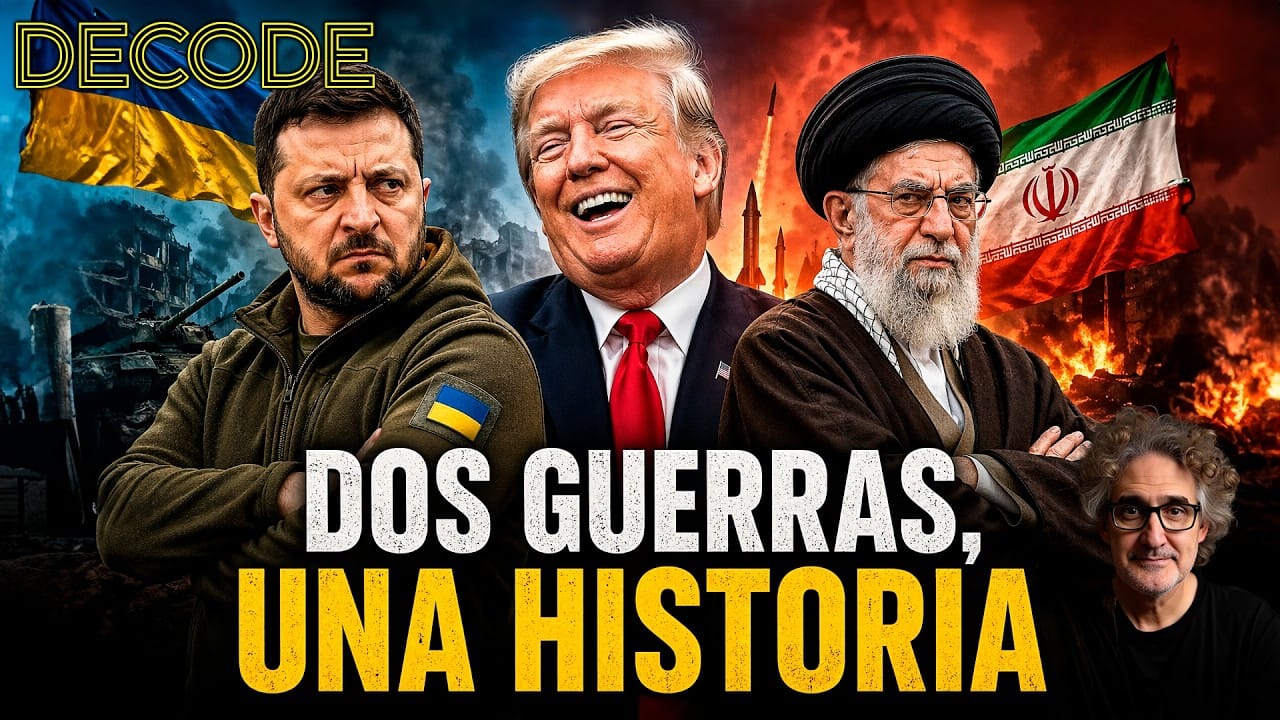
Differential Pressure Shapes the Fate of the Ukraine and Iran Wars
Despite surface similarities, the Ukraine and Iran conflicts diverge sharply on one factor: the pressure bearing down on their leaders. Vladimir Putin faces little meaningful internal or external pressure, leaving him free to drag out the war in Ukraine. Donald Trump faces the opposite — 61% of Americans oppose war with Iran, according to Gallup, plus what analysts describe as "brutal external pressure."
That external pressure comes from China, India, South Korea, Japan, and much of the EU — economies that depend heavily on Iranian oil or on shipments through the Strait of Hormuz. These global players cannot afford a prolonged war and are pushing Washington toward a quick settlement. In game-theory terms, that dramatically limits Trump's ability to sustain the conflict.
"Putin can stretch the war out. Trump cannot."
Iran War Likely to End Soon — and the Weaker Side Stands to Gain
While the Ukraine conflict is expected to drag on, the Iran war will likely end quickly — global actors simply cannot sustain its continuation. Countries like Pakistan and China are already pushing for negotiations, as prolonged fighting would inflict unacceptable economic and political damage on the international community.
A forced negotiated settlement, the most probable outcome, tends to favor the weaker party. Iran has already shown a considerable capacity to apply pressure. That means the Trump administration is unlikely to achieve its stated goals: dismantling the ayatollah regime, promoting democratic elections, or curbing Iran's nuclear and regional ambitions.
"I predict the Iran war won't last long. And be careful — when you take an asymmetric war like this one, between a strong side and a weak side, and you force them to end it at the negotiating table, that generally favors the weak."
Global Pressure Will Determine the Different Endings of the Wars in Ukraine and Iran
Game theory holds that pressure is a decisive factor in decision-making — and a key to understanding the divergent trajectories of the wars in Ukraine and Iran. The Ukraine conflict may drag on because pressure on Russia's leader remains low. The Iran war, by contrast, cannot last because "the global system won't sustain it," placing immense pressure on the U.S. administration.
This fundamental difference in environmental pressure — comparable to the built-in difficulty of certain video games — shapes the options and time available to decision-makers. Global dynamics, with their economic and political interdependencies, are forcing a faster end to the Iran conflict while Ukraine remains locked in a more prolonged stalemate.
"The Ukraine war can last because there is no pressure, or very little. The Iran war cannot last because the system won't sustain it — and that difference in pressure will completely change how either of these two wars ends."
"Double Asymmetry" in Ukraine and Iran Is Stalling Superior Armies
The wars in Ukraine and Iran both display "double asymmetry" — conflicts where a strong military (Russia or the United States) faces a weaker one (Ukraine or Iran), yet the weaker side fights on home ground. That home advantage significantly offsets the invader's military superiority, blocking a swift decisive victory. History backs this up: Vietnam and Afghanistan followed the same pattern.
Terrain inflicts logistics and morale costs on the invading force; fighting thousands of kilometers from home is unsustainable. A force defending its homeland is inherently more motivated. The defender cannot abandon its territory, so even after losing battles it cannot be fully defeated — while the invader can always withdraw. Powerful armies routinely underestimate this resistance, and routinely pay for it.
"In military conflicts, the home-field factor — playing on your own terrain — carries far more weight than the stronger side typically estimates."
Game Theory Exposes Hidden Similarities Between the Wars in Ukraine and Iran
At first glance, the wars in Ukraine and Iran look nothing alike — one fought in Europe with trenches and drones, the other in the Middle East with airstrikes and missiles. Yet a game-theory analysis reveals deep structural similarities. By looking past the surface to identify the shared "war system," this framework helps explain why one conflict drags on indefinitely while the other may resolve relatively quickly.
The explanation hinges on a single fundamental difference. Treating both situations as a "game system" gives game theory its predictive power — offering a lens to understand how intrinsically similar wars can produce such different outcomes, and a sharper way to read today's geopolitical dynamics.
Ukraine and Iran Leaders Undone by Flawed Intelligence
A third parallel between the Ukraine and Iran conflicts is the "imperfect information" their leaders relied on when making critical decisions. Both Vladimir Putin and Donald Trump built their strategies on distorted data — often fed by yes-men — without stress-testing realistic scenarios. In Ukraine, the West's response was badly underestimated; in Iran, Tehran's capacity to strike the Persian Gulf was equally misjudged.
These blind spots were not the product of unforeseeable events. They reflected a failure of rigorous analysis, despite organizations like the RAND Corporation having spent decades war-gaming the complexities of a conflict with Iran. Leaders fixated on legacy and seduced by the promise of quick wins found themselves mired in wars whose true implications they had never seriously examined — proof that wars are won or lost first in the minds of decision-makers.
"There is a difference between acting on imperfect information and having your own team distort that information so completely that every decision you make rests on a fundamentally flawed foundation."
Also mentioned in this video
- First parallel between Ukraine and Iran wars lies in their... (1:50)
- Second parallel: both Putin and Trump underestimated their... (4:06)
- In both wars, leaders Putin and Trump had an 'awakening' when they realized... (15:28)
- Host summarizes that Ukraine and Iran wars share common patterns... (30:02)
Summarised from DECODE con DaniNovarama · 33:04. All credit belongs to the original creators. Streamed.News summarises publicly available video content.