🌐 Also available in: 🇪🇸 Español
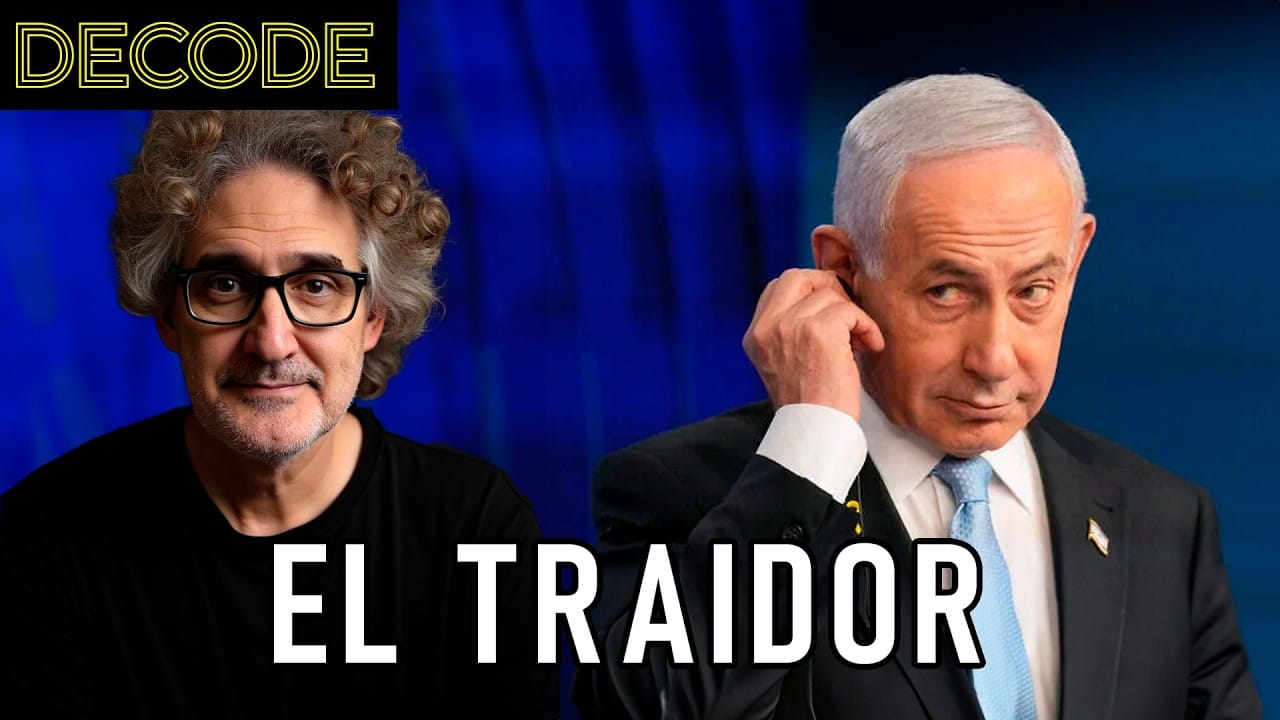
Original source: Diego Ruzzarin
This video from Diego Ruzzarin covered a lot of ground. Streamed.News selected 5 key moments and summarises them here. Everything below links directly to the timestamp in the original video.
Could Iran's attrition-focused defense strategy reshape regional power dynamics and confound Western expectations?
Iran prepares attrition strategy against the US in a prolonged conflict
Iran has long prepared for military conflict with the United States, anticipating a scenario that will stretch well beyond Washington's projected four to five weeks. Iran's strategy centers on gradually exhausting US and Israeli defensive capabilities in the region — the inverse of Washington's goal of rapid regime change, a tactic that has worked in other historical contexts but may fail against Iran's level of preparation.
This asymmetric confrontation exploits geographic distance and the steep logistical cost of sustaining a prolonged US offensive. At stake is Iran's ability to turn aggression into a war of attrition, defying the logic of quick, low-cost interventions. The approach reflects a sharp understanding of the structural pressures shaping regional geopolitics, where local resilience can erode the will of outside powers.
"Iran has long been preparing for this war, and so has the United States. What I investigated this week is that the US was prepared for a conflict of around four to five weeks — but Iran is pursuing prolonged attrition."
Iran highlights its cultural and religious differences from Saudi Arabia and slams media double standards
Iran — a Persian, majority-Shia nation — permits artistic depictions of sacred figures and allows Christian communities to worship freely, build churches, and celebrate holidays publicly. Saudi Arabia, an Arab Sunni kingdom, restricts or bans such practices. The contrast underscores Islam's internal diversity and challenges the sweeping generalizations that dominate Western media coverage.
At the core of the issue is the selective lens through which Western outlets treat religion and culture — criticizing Iran while overlooking far stricter practices in allied states like Saudi Arabia. This media imbalance is not accidental; it sustains a terrorism narrative that masks a deeper struggle for power and regional hegemony, shaping public perception in ways that serve specific geopolitical interests.
"Iranians are Persian; Saudis are Arab. Iran is Shia, not Sunni like Saudi Arabia. In Iran, Christians can build churches, celebrate their holidays, and hold services publicly. Anything you want to condemn in Iran you can find a hundred times worse in countries the US considers allies — Saudi Arabia being the prime example."
Iran fires 'junk missiles' to drain US and Israeli defenses while accusing Washington of bombing civilians
Iran has launched cheap, obsolete 'junk missiles' at military bases and defense systems in Israel and across the region, pursuing two goals at once: mapping US defensive capabilities and burning through adversaries' resources. The cost asymmetry is stark — Iranian missiles priced at $20,000 force the use of defense systems costing between $1 million and $5 million each, a structural strain that Western powers cannot sustain indefinitely.
Meanwhile, the US stands accused of deliberately bombing schools and hospitals in Iran — not by accident, according to the analysis. Iran has refused any peace deal that does not include lifting sanctions, removing US bases from the region, and eliminating Israel's nuclear arsenal. What hangs in the balance is whether Iran's attrition strategy can push the conflict past the four-to-five-week window the US planned for, triggering an economic and political crisis in Washington.
"The first phase of this conflict will see Iran bombarding with junk missiles — old, outdated, small projectiles with limited power and range. These junk missiles cost around $20,000 each, while the defense systems needed to stop them cost between one and five million dollars apiece."
Ayatollah Khamenei martyred in strike; new Iranian leader Ali Larijani faces nuclear dilemma
The death of Ayatollah Khamenei has been cast as martyrdom, hardening Iranian nationalist sentiment and resolve. His reported decision to remain in his modest home despite the danger — contrasted with leaders like Netanyahu seeking safety — has been framed as an affirmation of Islamic values against foreign aggression. Far from destabilizing the regime, the martyrdom narrative has fueled calls for vengeance and resistance, confounding U.S. expectations of government collapse.
New Iranian leader Ali Larijani — a philosopher with a doctorate in Western philosophy and expertise in Kantian mathematics — inherits a critical moment. The central question: will he maintain Khamenei's opposition to building a nuclear bomb? For 30 years, Israel has justified its hostility by claiming Iran is days away from a weapon — an assertion analysts consistently dispute. Whether this leadership transition shifts the calculus on nuclear development matters enormously; Fidel Castro once warned such a shift could trigger a global nuclear conflict.
"The late Ayatollah Khamenei, now martyred and immortalized, opposed building the atomic bomb. The question now is whether this Kantian philosopher of mathematics will also oppose it."
China and Russia stay out; Iran aims to humiliate U.S. as American public opinion shifts
China and Russia have chosen not to intervene militarily on Iran's behalf — constrained by limited power-projection capabilities and a preference for economic stability. That absence strengthens Iran's hand. Well prepared for a war of attrition, Tehran aims to humiliate the United States: blocking regime change and exposing the futility of a costly, open-ended intervention. For major powers, economic interests and stability consistently outweigh the risks of direct military involvement.
The situation grows more complex as U.S. public opinion shifts in a way not seen in 30 years, turning more favorable toward Palestinians and more hostile toward the Zionist project, according to recent polls. That shift erodes the propaganda foundation supporting Israel and the U.S., pushing pro-Israel forces to accelerate their goals before support erodes further. What hangs in the balance is American hegemony in the region — now facing determined Iranian resistance and a global public increasingly skeptical, signaling a balance of power in real-time transformation.
"China and Russia lack the military development to project force in defense of other countries. Iran is well prepared to bleed the United States and make it look ridiculous. For the first time in 30 years, American opinion favors the Palestinian people — and holds hatred and contempt for the Zionist project."
Summarised from Diego Ruzzarin · 1:02:23. All credit belongs to the original creators. Streamed.News summarises publicly available video content.