🌐 Also available in: 🇫🇷 Français
Original source: Meike Babel Tennis
This video from Meike Babel Tennis covered a lot of ground. Streamed.News selected 6 key moments and summarises them here. Everything below links directly to the timestamp in the original video.
To make the 'Four Rs' routine effective in a match, you must practice it repeatedly in drills and lessons until it becomes automatic. This requires treating your mental preparation with the same discipline as your physical strokes.
The 'Four Rs' Mental Routine Must Be Drilled Consistently to Become a Match-Play Habit
The four-step mental routine—Response, Relax, Refocus, Ready—must be executed within the 20 seconds between points, but this sequence is not an instinct that will simply appear under pressure. It must be actively practiced and built into a habit, just like a forehand or backhand, to be available when it is needed the most.
Players should integrate this routine into every practice session, running through the steps during drills or when waiting for the next ball. It is even advisable to ask a coach for extra time during a lesson specifically to perform the routine, ensuring the next shot is prepared and productive rather than reactive and frustrated.
"It's not just going to show up when you need it the most. Just like your forehands and your backhands, you have to build this as a habit."
The 'Relax' Step of the Mental Routine Involves Conscious Physical Actions to Release Tension
The second step in the between-point routine is to relax, a crucial action to counteract the physical tension that follows a frustrating error. Players should consciously walk away from the baseline, switch their racket to their non-dominant hand, and take several deep breaths. A light bounce can also help shake loose any residual tightness in the body.
Consistency in this step is key, as demonstrated by professional Leylah Fernandez, who performs the same relaxation ritual regardless of whether she wins or loses the point. This prevents opponents from reading her emotional state and gaining a psychological advantage.
"Walk away from the court, maybe change your racket into your other hand, and take a couple of deep breaths. Maybe even bounce a little bit to just shake loose."
The Final 'Ready' Step Combines Physical Ritual with a Simple Strategic Goal for the Next Point
The fourth and final step is the 'Ready' phase, which encompasses the familiar pre-point rituals such as bouncing the ball before a serve or getting into a return position. While these actions are important, they are the culmination of the three preceding mental steps. A small fist pump before returning, as Leylah Fernandez uses, can also project confidence.
The critical detail that is actually missing for most players is formulating a simple, clear goal for the next shot. This could be serving wide to open the court or returning deep through the middle, providing a sharp focus that also disorients an opponent.
"When you're getting ready to serve or to return, you should formulate a quick simple goal what to do with the next ball. So, for instance, if you're serving, 'I'm serving out wide, next ball open court.'"
'Refocus' Is the Most Difficult Step, Requiring a Shift From Self-Criticism to Actionable Solutions
The third step, 'Refocus', is potentially the most difficult part of the routine because it demands a mental shift away from destructive self-criticism. Instead of dwelling on a bad shot, the player must ask what they can do differently to succeed on the next similar ball. The key is to move from frustration to productive problem-solving.
Players usually know why they missed a shot and should give themselves a quick, actionable piece of technical advice, such as 'toss the ball higher' or 'turn more'. If the reason for the error is unclear, positive self-talk like, 'Come on, I got this,' serves to reset the mind.
"Ask yourself, 'What can I do next time I have this ball to make it go in?' Because, quite honestly, most of us know exactly why we missed a ball."
The First Step in Managing On-Court Emotions is a Controlled, Neutral 'Response' After a Point
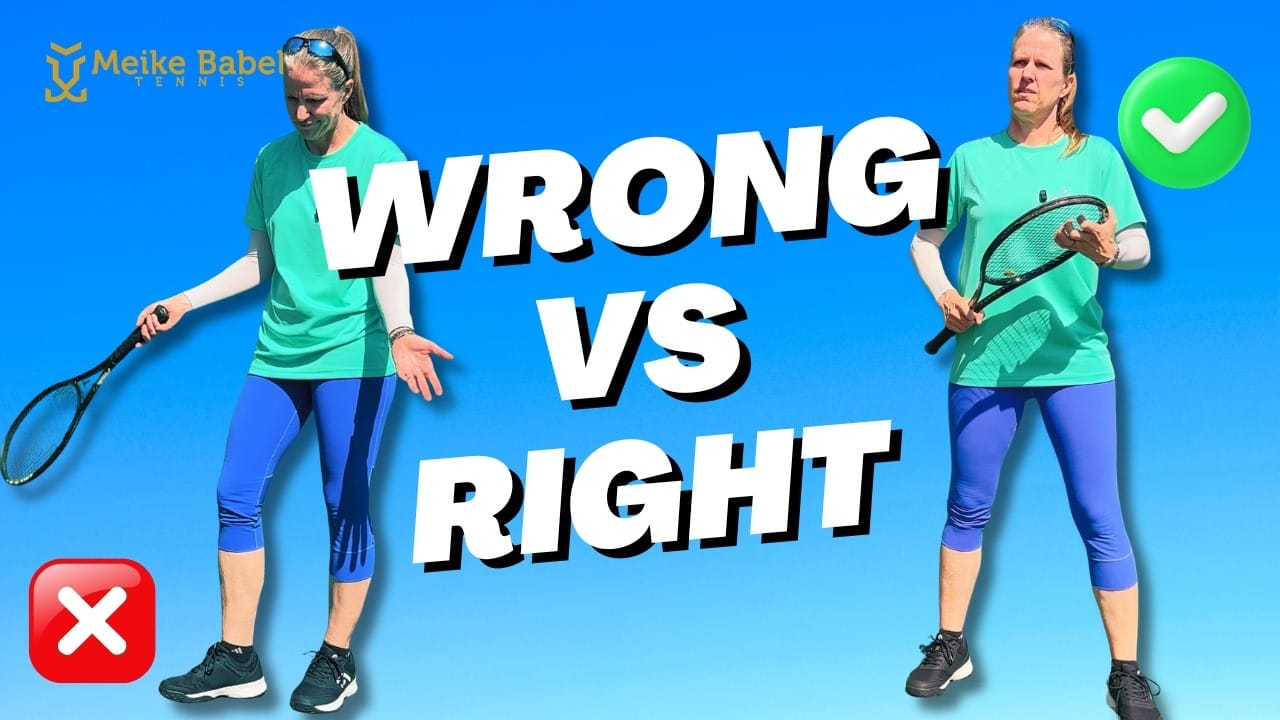
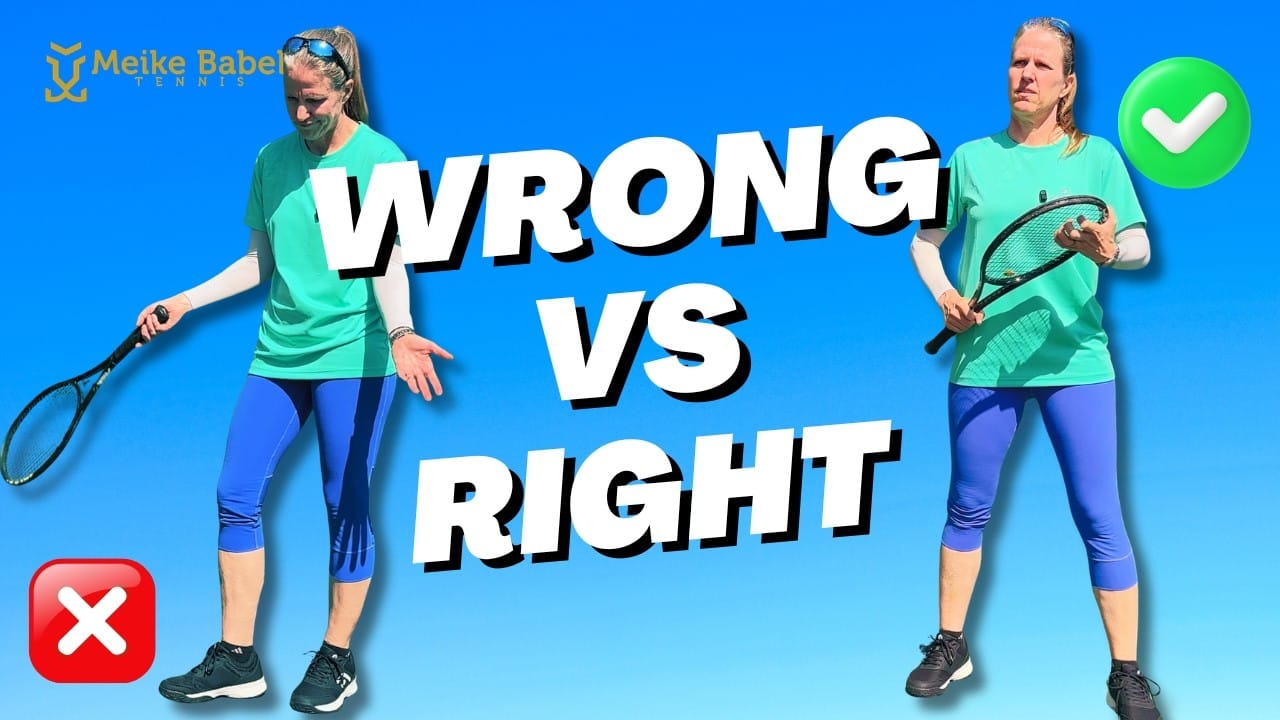
The first step of the four-part routine, based on work by Dr. Jim Loehr, is the 'Response'. Immediately after a point, particularly a missed shot, the goal is to exhibit controlled body language. This does not mean forcing fake positivity, but rather maintaining at least a neutral posture to avoid displaying outward frustration to an opponent.
Specific actions include keeping the head and racket up, pulling the shoulders back, and walking away from what one coach called the 'scene of the crime'. This disciplined physical response prevents an opponent from gaining a psychological advantage from your visible disappointment.
"Let's start with at least neutral body language. Keep your head up, shoulders back, keep your racket up, and just walk away from what one of my coaches said, the scene of the crime."
Celebrating Won Points, Even Subtly, Alters Body Chemistry and Projects Strength
In contrast to the neutral response after a lost point, it is vital to celebrate a won point. This does not require an outrageous display; a quick, subtle fist pump or a look towards one's support team is sufficient to be effective. Top players consistently use these small celebrations from the very beginning of a match.
These positive physical actions help alter body chemistry in a beneficial way and send a message of strength to the opponent. Recreational players often wait for major points to show emotion, but consistent, small celebrations build momentum throughout a match.
"If you win a point, celebrate it. Again, it doesn't have to be super outrageous, but you see a ton of top players giving themselves a quick fist pump."
Also mentioned in this video
- Many recreational tennis players focus too much on stroke mechanics and not… (0:00)
- The video will share a routine for between-point management, largely based on… (0:46)
- Players often exhibit negative body language and internal self-criticism after… (1:21)
- Practicing the 'Response' and 'Relax' steps at home can help players develop… (4:06)
Summarised from Meike Babel Tennis · 7:33. All credit belongs to the original creators. Streamed.News summarises publicly available video content.